Wuxi Weineng Automation Technology Co., Ltd. / Shandong Weineng Automation Technology Co., Ltd.
-
 [email protected]
-
 +86-18961722255


 English
 русский
 Español

Coil Spring Machine Guide: Hot Winding, Heating, Forming, and Finishing Equipment
Content
A coil spring machine sits in the middle of a process chain, not at the end of one. The coiling unit decides the spring's diameter, pitch and number of active coils, but everything before it, such as bar heating or wire preparation, and everything after it, such as end flattening, quenching, tempering, shot peening and load testing, decides whether the part survives a few hundred thousand suspension cycles.
That is why the question "which coil spring machine should we buy?" usually turns into several smaller questions about spring size, material, volume and the finishing steps you plan to keep in-house. This guide walks through those questions in the order they tend to come up on a shop floor.
What a Coil Spring Machine Actually Does
A coiling machine forms a spring by feeding wire or heated bar against a rotating arbor while a pitch tool controls the gap between coils. On a cold coiling machine, straightened wire is pulled from a feed unit and pushed against a coiling point, with cams or servo axes moving the point, the pitch tool and the cut-off blade. On a hot winding machine, a bar heated to forging temperature is wrapped around a mandrel by a rotating head, and the pitch is set mechanically as the coils form.
Both types share the same core controls, namely coil diameter, pitch pattern, number of coils and end position, but they behave very differently in practice:
- Cold coiling suits wire and small bar, holds tight tolerances and runs fast, but the material must be ductile enough to bend without cracking.
- Hot winding suits larger bar diameters where cold forming would exceed the material's forming limits or demand unrealistic press forces.
- Hot wound springs almost always need a defined temperature at the moment of coiling, so the heating stage and the coiler have to be matched rather than chosen separately.
Machine size is usually quoted as the maximum bar or wire diameter it can handle, but the more useful figure is the working range you expect to run day to day. A machine rated for 20 mm bar that spends most of its life on 12 mm work is not really a 20 mm machine.
Hot Wound or Cold Coiled: Which Process Fits
The choice between the two process families is decided by the spring itself, not by the machine catalogue. The table below summarises where each route tends to sit.
| Item | Hot wound | Cold coiled |
|---|---|---|
| Stock | Larger bar, heated before forming | Wire and small bar, formed at room temperature |
| Heating | Bar brought to forging temperature in an induction or gas heater | None required before coiling |
| Coiling method | Wrapped around a mandrel by a rotating head | Wire fed against a coiling point |
| Typical springs | Suspension coil springs, heavy-duty coils | Valve springs, small compression and extension springs |
| Key equipment | Heater, coiler, end processing, quench and temper | CNC coiler, stress relief oven, end grinding, shot peening |
| Main risk | Temperature variation between heater and coiler | Wire surface quality and tool wear |
If your production leans toward hot wound springs, our practical guide to CNC spring coiling machines for hot wound production goes deeper into tooling, temperature control and the issues that tend to appear in the first months of operation.
Inside a Hot Wound Coil Spring Line
A hot wound line is a chain of stations, and the coiler is only one link in it. These are the three stages that decide the quality of everything downstream.
Bar heating before coiling
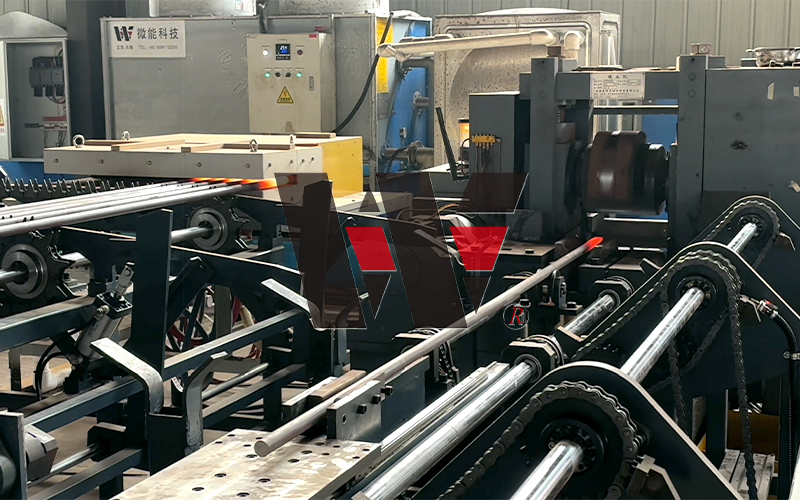
The heater's job is to deliver a bar at a consistent temperature along its whole length. Uneven heating shows up later as inconsistent coil diameter and, more seriously, as hardness variation after quenching. Induction heating gives fast, repeatable control and can be switched between bar sizes without a long warm-up, while gas furnaces react more slowly to changes but can be cheaper to run in some regions.
The coiling station itself
The coiler sets diameter and pitch, and it also sets how much manual correction the rest of the line will need. Servo-controlled pitch and diameter axes let one machine cover a family of springs, while mechanical cam machines cost less but are tied to a single geometry. On mixed production, tooling changeover time matters more than theoretical cycle time.
Quenching, tempering and presetting
After coiling, the spring is quenched and tempered to reach the required hardness and relieve forming stress. Presetting then loads the spring beyond its working range so it settles before it reaches the vehicle. Rushing this stage is one of the most common reasons a spring that passes a dimensional check still fails in service.
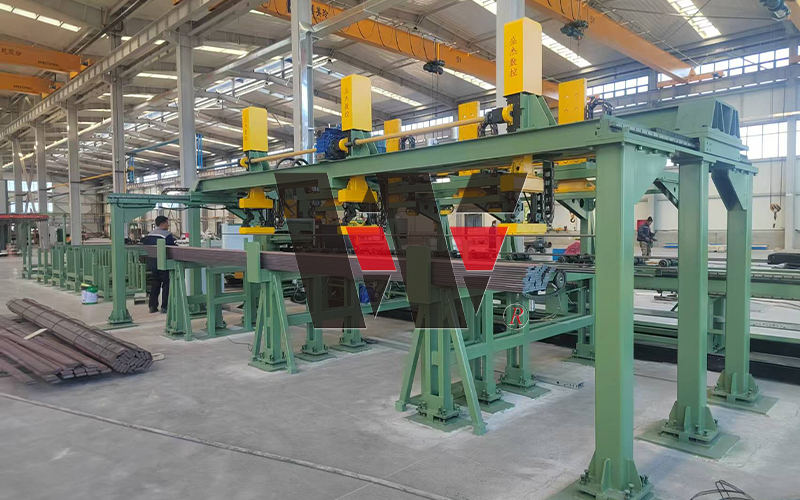
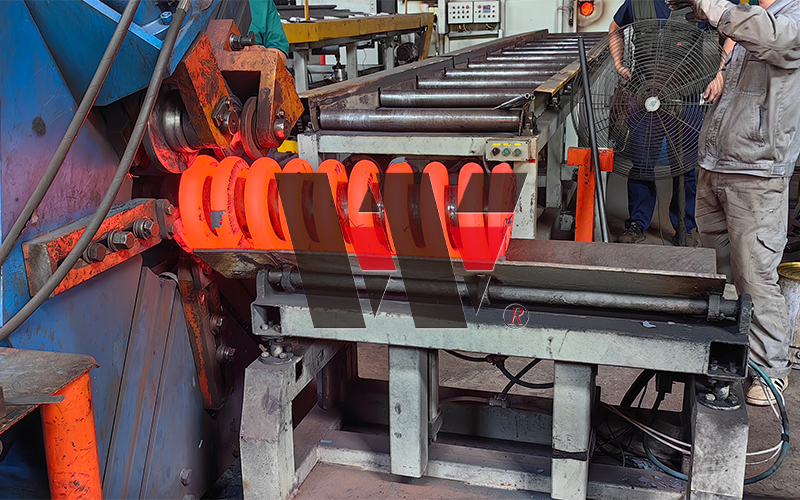 Hot Coiled Spring Production Line for Automotive Suspension SpringsIntegrated automated line covering cutting, induction heating, coiling, heat treatment and hot-setting, with consistent temperature and handling for automotive suspension coil springs.View Product →
A hot coiled spring production line links these stations so that temperature, timing and handling stay consistent from the first heated bar to the finished spring.
End Processing, Heat Treatment and Testing
Coiling gives you a shape; the finishing stages give you a part. Most rework in a spring plant is created, and prevented, at the end processing station:
- End flattening or grinding, so the spring stands square and transfers load evenly
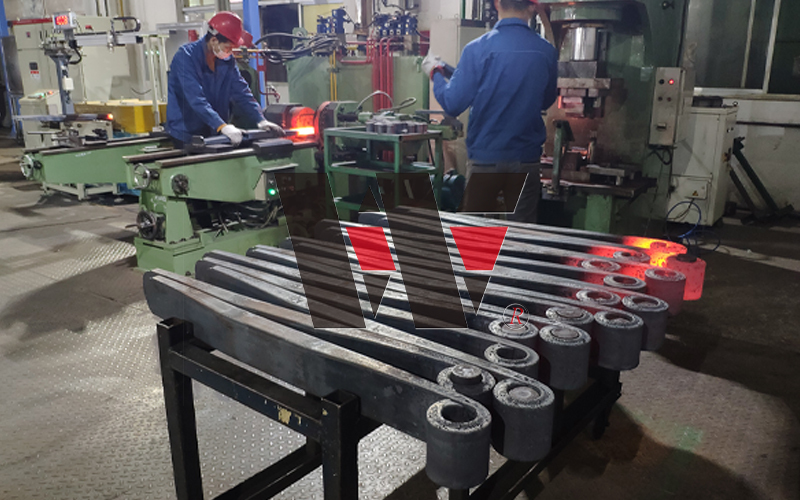
- End induction heating, where the end coils are heated locally for forming, tapering or closing without disturbing the rest of the spring
- Shot peening, to introduce compressive stress at the surface and improve fatigue life
- Coating and painting, for corrosion protection
- Load and fatigue testing, to confirm rate, free length and durability
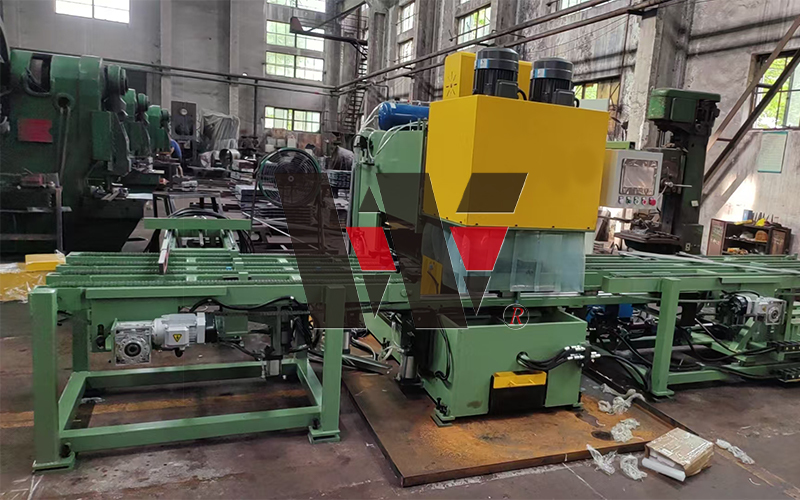
End induction heating often decides how flexible a line can be, because one heating station with adjustable coil geometry can serve several spring families. We usually suggest running sample springs through the end processing station before the line is specified, since that reveals far more about tooling needs than a drawing does.
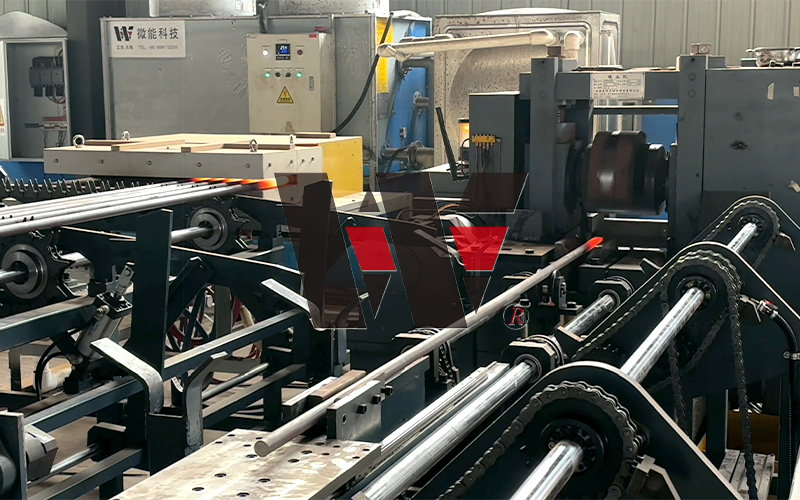 Automobile Spring End Induction Heating Equipment for Suspension SpringsMedium-frequency induction unit for end-zone heat treatment, using customized inductors for flexible, localized heating in automotive suspension spring production.View Product →
Matching a Coil Spring Machine to Your Production Plan
Before comparing quotations, it helps to write down honest answers to the following points:
- Spring family and size range: stock diameter, finished outer diameter, free length and pitch patterns.
- Volume and mix: a line that runs one spring type for weeks and a line that changes over twice a day need different automation levels.
- Heating method: induction, gas or a combination, and how much of the heating should be integrated into the line rather than done offline.
- Downstream operations: which finishing steps you keep in-house and which you outsource.
- Testing and traceability: what records your customers expect for load, hardness and fatigue results.
- Service and support: spare parts, remote diagnostics and on-site commissioning matter more on a line than on a single machine.
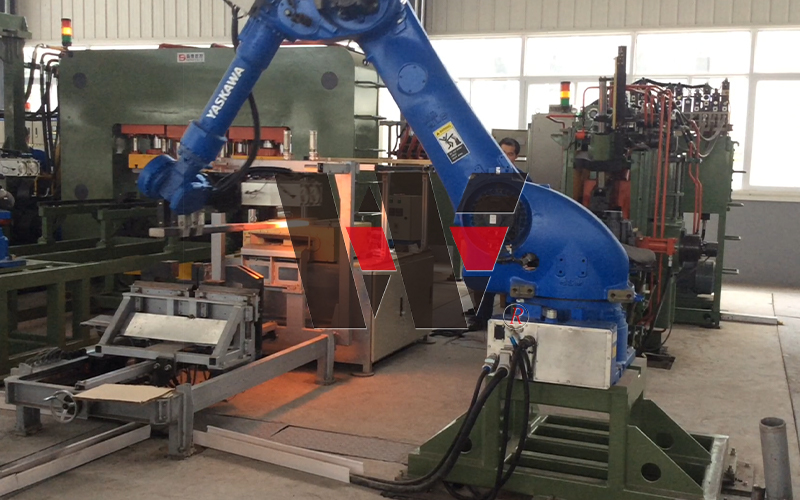
Working through these points narrows the field quickly. A suspension spring production line is configured around those answers rather than sold from a catalogue, and it is normal for the final scope to look quite different from the first enquiry.
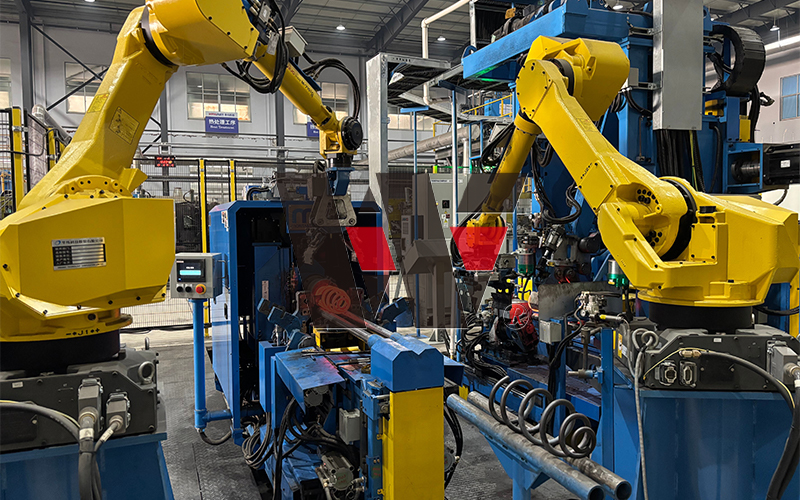 Automated Suspension Spring Production Line for Automotive Coil SpringsComplete automated line integrating induction heating, hot coiling, end grinding, heat treatment and hot-setting for high-volume helical coil spring manufacturing.View Product →
Questions Buyers Ask Before Signing Off
How much floor space does a coil spring machine need?
A standalone coiler has a modest footprint, but the heater, cooling circuit, quench tank and handling equipment around it are what really fill a bay. Plan the layout around material flow, not around the machine footprint alone.
Can one machine make both hot wound and cold coiled springs?
Rarely. The two processes use different feed systems, tooling and material conditions, so most plants keep them on separate equipment.
Which stage causes the most downtime?
In our experience, end processing and tooling changeover, rather than the coiler itself. That is why we look at changeover time and tool holding before we look at maximum speed.
A coil spring machine is only as good as the process around it. Start from the spring you need to make, its material, its size and its duty cycle, then work backwards through heating, coiling, end processing and heat treatment, and the equipment choices tend to sort themselves out. We have been building forming, heating and automation equipment for automotive springs and stabilizer bars since 2016, and we are glad to review a drawing or a sample with you and say plainly which stages a line needs and which it does not.
-
Do You Have Any Questions?
Let's
Discuss! -
Quick
Home Products / Equipment About Us Services Application News Contact Us -
Product Categories
Automobile Leaf Spring Complete Equipment Automobile Stabilizer Bar Complete Equipment Automobile Spring Complete Equipment Automotive guide arm complete equipment Oil Drilling Pipe Complete Equipment
-
Email Us
[email protected] [email protected] -
Address
Yangxiyuan Village, Luoshe Town, Huishan District, Wuxi City, Jiangsu Province, China -
Call Us Now
+86-18151713891 +86-18961722255 +86-18961507976 -
WhatsApp
+86-18151713891 +86-18961507976
Copyright © 2026 by Wuxi Weineng Automation Technology Co., Ltd. All Rights Reserved.
 Automotive Suspension Spring Production Line Turnkey Solutions