Wuxi Weineng Automation Technology Co., Ltd. / Shandong Weineng Automation Technology Co., Ltd.
-
 [email protected]
-
 +86-18961722255


 English
 русский
 Español

CNC Spring Coiling Machine: A Practical Guide for Hot Wound Suspension Springs
Content
- 1 What CNC Really Means at the Coiling Station
- 2 Hot Coiling and Cold Coiling Are Not the Same Machine
- 3 The Main Modules of a CNC Spring Coiling Machine
- 4 Process Parameters That Decide Coil Quality
- 5 The Steps That Surround the Coiling Station
- 6 Standalone Machine or Complete Production Line
- 7 How to Specify a CNC Spring Coiling Machine
- 8 Why the Equipment Builder Matters as Much as the Machine
A CNC spring coiling machine is the station where a straight steel bar becomes a helix. In hot wound suspension spring production, the bar is heated to forging temperature, fed into the coiling head, and formed by tooling whose motion is driven by servo axes and coordinated by a controller. Because each axis follows a stored program instead of a fixed cam, the same machine can run different bar diameters, coil diameters and pitch profiles after a recipe change rather than after a mechanical rebuild.
That flexibility is why coiling is both the most demanding and the most rewarding part of a spring line. When temperature, feed length and the pitch curve are right, every downstream operation behaves predictably. When they drift, the shop pays for it in scrap, extra straightening and unstable fatigue results.
This guide explains what a CNC spring coiling machine does, how hot coiling differs from cold coiling, which process parameters dominate quality, and how the coiling station fits into a complete line. It is written from the perspective of Wuxi Weineng Automation Technology, a builder of hot coiled spring, leaf spring and stabilizer bar equipment with about a decade of experience in automotive spring automation.
What CNC Really Means at the Coiling Station
In a conventional coiling setup, the helix geometry is built into the hardware: a mandrel of a given diameter, a pitch block, a set of guide rolls. Moving to another spring means changing parts, resetting tooling and spending hours on trial coils. CNC changes the basis of that work.
Servo axes instead of fixed cams
On a modern machine, feed, rotation, pitch and forming motions are separate servo axes. The controller interpolates them, so the pitch curve, the coil diameter and the end coil geometry come from synchronized motion rather than from the shape of a cam. Corrections that once required grinding a new part are now made in the program.
Recipes instead of rebuilds
Spring geometry, feed length, speeds and temperature setpoints are stored as recipes. A changeover becomes a recall, a first article check and a fine adjustment. That matters when a line runs several spring families in short batches, and it matters even more when the same machine has to keep a record of what it actually did.
Hot Coiling and Cold Coiling Are Not the Same Machine
Both routes end in a helix, but they belong to different worlds of force, temperature and equipment. The table below summarizes the differences that matter most when equipment is specified.
| Aspect | Hot coiling | Cold coiling |
|---|---|---|
| Bar or wire size | Heavy bar, often 12 mm and above | Small wire, typically below 12 to 16 mm |
| Material condition | Heated to forging temperature before forming | Formed at room temperature from drawn wire |
| Forming force | Lower, because steel is soft at temperature | High, with faster tooling wear |
| Springback | Small and fairly predictable | Significant, must be compensated by the program |
| Typical products | Suspension springs for trucks, buses, rail and heavy vehicles | Valve springs, small clutch springs, light suspension springs |
| Post-forming route | Quench and temper, then end processing and testing | Stress relief and surface treatment |
Because a hot coiling cell also has to carry a heating station, a transfer device and often a quenching arrangement, layout decisions are usually made at the same time as the machine decision.
The Main Modules of a CNC Spring Coiling Machine
Builders arrange them differently, but most hot coiling machines share the same functional blocks.
- Bar feeding and measuring unit: feeds the heated bar to a programmed length and holds the cut length repeatable.
- Heating station: raises the bar to coiling temperature, either along the full length or in defined zones.
- Coiling head: grips, rotates and forms the bar around the coiling axis.
- Pitch axis: controls axial spacing of the coils and shapes the end coils.
- Forming rolls or guide tools: support the bar and set the finished coil diameter.
- Cut-off and transfer: separates the finished spring and moves it to the next station.
- CNC controller and HMI: runs the motion programs, stores recipes and logs process data.
Process Parameters That Decide Coil Quality
Once the machine is installed, a small number of variables explain most of the variation in finished springs.
- Coiling temperature: too cold and the bar may crack or overload the tooling; too hot and grain structure and surface quality suffer.
- Feed and cut length: sets the number of active coils and the free length.
- Pitch profile: distributes load along the spring and influences both rate and stress distribution.
- Coil diameter and spring index: a tight index raises stress and demands tighter tooling control.
- Rotation and forming speed: affects cycle time, but also the temperature drop between heating and forming.
- Cooling and transfer: uncontrolled cooling before quenching can ruin the hardness pattern.
- Tool offsets and wear compensation: small drift accumulates over a shift and appears in the last springs of a batch.
The Steps That Surround the Coiling Station
A coiling machine performs at its best when the operations before and after it are designed as one process rather than as separate purchases.
Heating before forming
In a hot coiling line, the bar ends and the forming zone are brought to temperature by induction, which puts energy into the material quickly and locally. Controlling that heat is what makes the coiling program repeatable from the first piece to the last. The principles behind it are covered in our article on induction heating in automotive spring manufacturing.
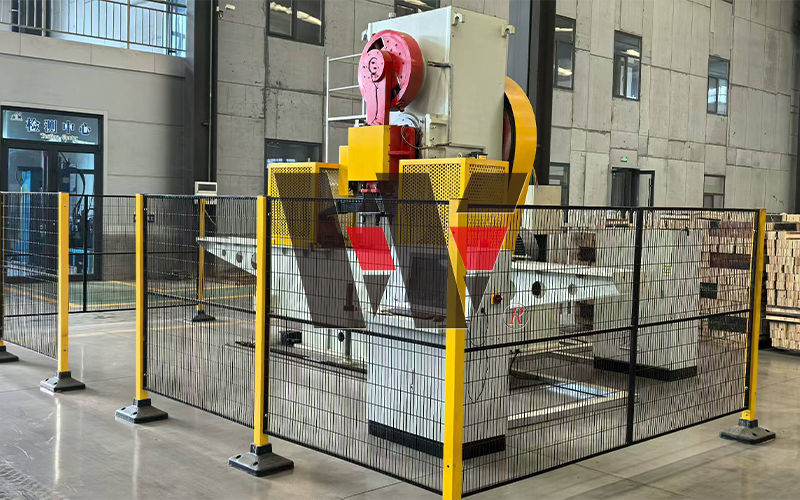
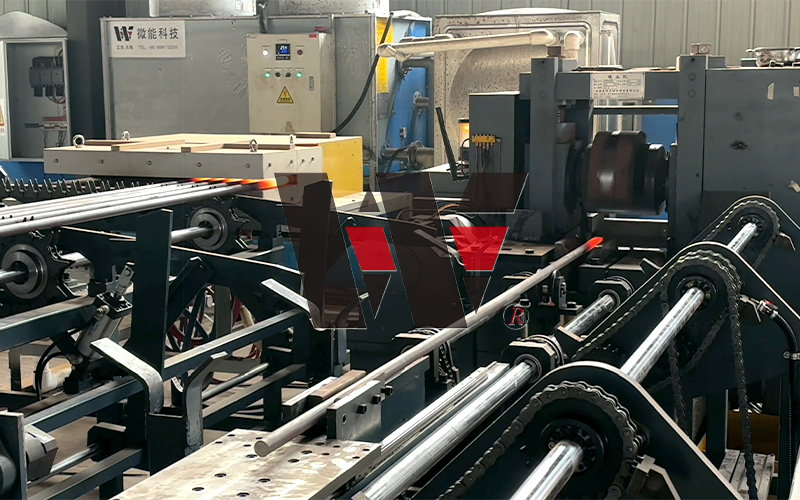 Automobile Spring End Induction Heating EquipmentThe Automobile Spring End Induction Heating Equipment is purpose-engineered for the end-zone heat treatment of spring components used in automotive suspension systems....View Product →
End flattening and end forming
Hot wound suspension springs almost always need their end coils flattened or ground so that the spring seats squarely under load. Hydraulic and mechanical end flattening stations take the spring straight from coiling, hold it on axis and press the end coils to the required plane, which is faster and more consistent than manual dressing.
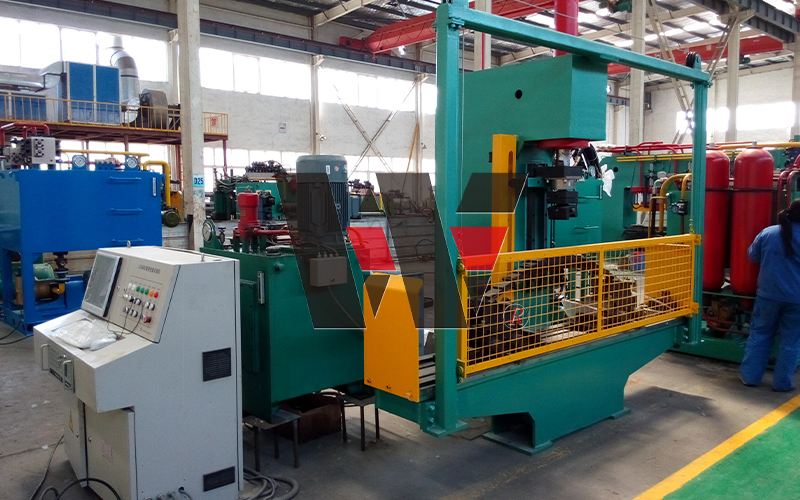
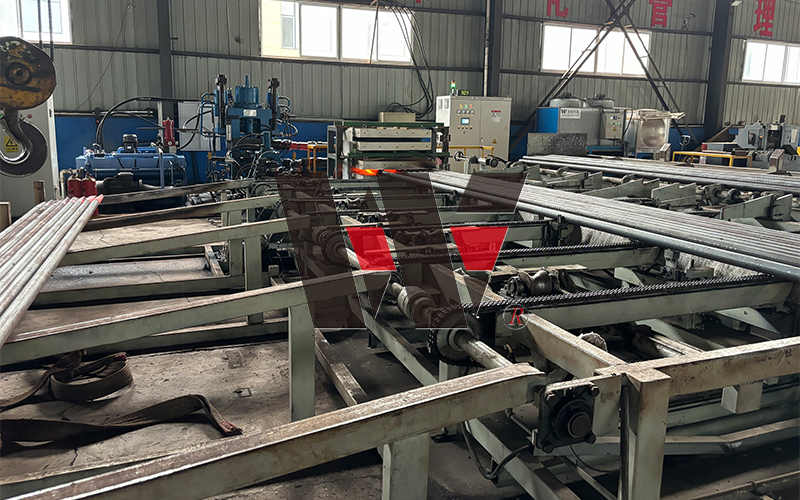 Hydraulic End Flattening Production LineHydraulic end flattening production line is engineered for precision end-forming of round bar or tubular workpieces such as springs and stabilizer bars, using a hydrau...View Product →
Quenching, tempering and verification
After forming, the spring is quenched and tempered to reach its working hardness and to relieve forming stress. Shot peening, preset or scragging, and then fatigue and performance testing follow. Each of these steps depends on the coil that came out of the coiling station, which is why dimensional control at the machine is worth more than any amount of sorting later.
Standalone Machine or Complete Production Line
Many buyers start with a single coiling machine and add upstream and downstream equipment in stages. That approach suits modest volumes, frequently changing products and limited floor space. A complete line, by contrast, links heating, coiling, end processing, heat treatment and testing with automatic transfer, so cycle times are matched and handling is minimized.
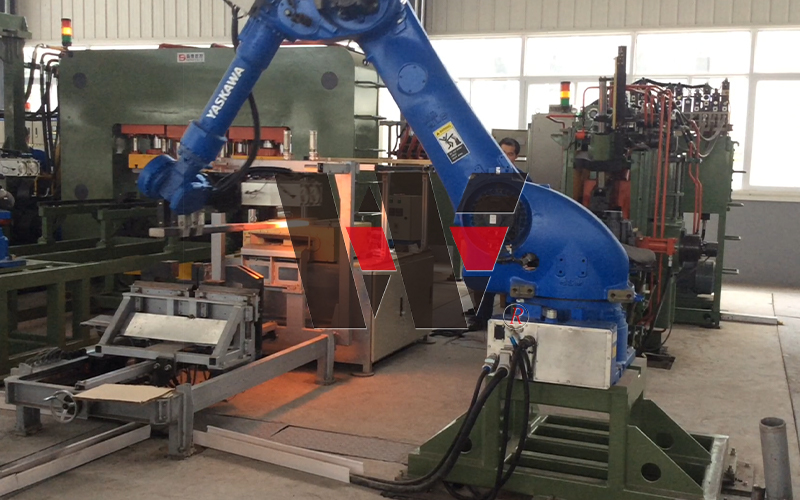
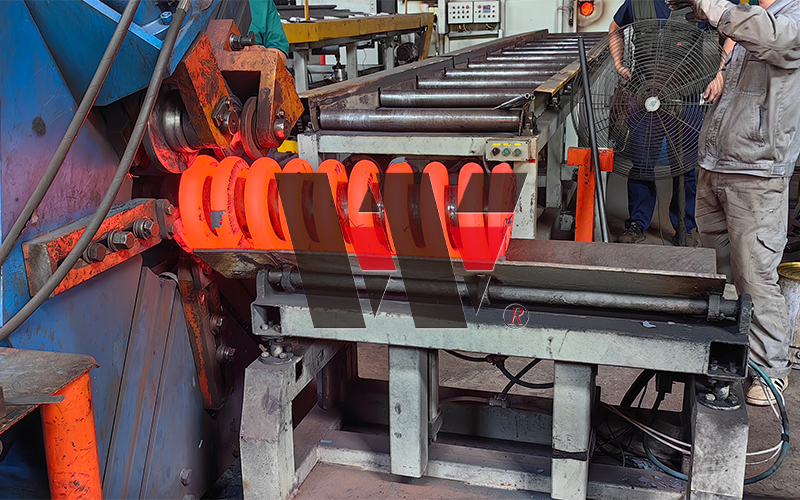 Hot Coiled Spring Production LineThe hot-coiled spring production line is engineered for the complete manufacturing process of coil springs (automotive suspension damping springs), covering material c...View Product →
The right answer usually depends on how stable the product mix is and how much labor the plant wants to remove from the process. A builder who supplies both single machines and full lines can compare the two options honestly instead of steering every project toward the larger purchase.
How to Specify a CNC Spring Coiling Machine
A specification becomes useful only when it is tied to the springs that will actually be produced. A few questions do most of the work.
- Which spring families and which bar diameter range must the machine cover?
- What finished output per shift is required, including changeover time?
- Which dimensional tolerances must be held, and how will they be measured?
- Will the machine run as a standalone unit or as part of an automated line with automatic loading and transfer?
- Which heating method and power level suit the bar sizes involved?
- How long should a product changeover take, and who performs it?
- What service, spare parts and operator training are included after installation?
Answers to these questions define the axis configuration, the heating capacity, the control level and the layout far more accurately than a generic catalogue comparison.
Why the Equipment Builder Matters as Much as the Machine
Hot coiling equipment is judged over years, not over the first week of production. A builder with a background in automotive spring automation understands how coiling interacts with end processing, heat treatment and testing, and can design the interfaces instead of leaving them to the customer.
Our own experience runs along that path. Since 2016 our team has worked on complete equipment for automotive leaf springs, hot coiled springs and stabilizer bars, operating from a 6,000 square meter facility with more than 60 employees and recognized as a specialized and sophisticated enterprise. Equipment has been delivered to spring and automotive component manufacturers in China and to customers in Turkey, South Korea, India, Brazil, Egypt, Dubai, Tunisia, Morocco and other regions, supported by turnkey project delivery, remote assistance and on-site service.
That combination of process knowledge and delivery capability is what turns a coiling machine purchase into a production asset that still performs well after the warranty period ends.
A CNC spring coiling machine is only one link in the chain that turns bar stock into a reliable suspension spring, but it is the link that determines how much work the rest of the chain has to do. When heating, coiling, end forming and heat treatment are planned together, tolerances stay tight, changeovers stay short and scrap stays low. Whether the next step is a single machine or a complete hot coiled spring line, the sensible starting point is a clear picture of the springs to be made and an equipment partner who has built that process before.
Related Products

-
Do You Have Any Questions?
Let's
Discuss! -
Quick
Home Products / Equipment About Us Services Application News Contact Us -
Product Categories
Automobile Leaf Spring Complete Equipment Automobile Stabilizer Bar Complete Equipment Automobile Spring Complete Equipment Automotive guide arm complete equipment Oil Drilling Pipe Complete Equipment
-
Email Us
[email protected] [email protected] -
Address
Yangxiyuan Village, Luoshe Town, Huishan District, Wuxi City, Jiangsu Province, China -
Call Us Now
+86-18151713891 +86-18961722255 +86-18961507976 -
WhatsApp
+86-18151713891 +86-18961507976
Copyright © 2026 by Wuxi Weineng Automation Technology Co., Ltd. All Rights Reserved.
 Automotive Suspension Spring Production Line Turnkey Solutions