Wuxi Weineng Automation Technology Co., Ltd. / Shandong Weineng Automation Technology Co., Ltd.
-
 [email protected]
-
 +86-18961722255


 English
 русский
 Español

Automatic Stamping Machines for Automotive Parts Selection Guide and Key Specs
Content
You are evaluating a new automatic stamping line for leaf springs. The supplier quotes a 250-ton press and promises it can handle blanking, punching, and end forming. Six months later, the line struggles because the press runs faster than the induction heater can preheat the blanks. The material reaches the die before it reaches the forming temperature, and rejection rates climb.
The immediate conclusion is simple: choosing an automatic stamping machine for automotive parts is not about buying the biggest press. It is about matching the machine to the part, the heating process, the tooling, and the rest of the production line. The following guide explains what matters and where suppliers commonly miss the mark.
What Automatic Stamping Machines Actually Do in Automotive Parts
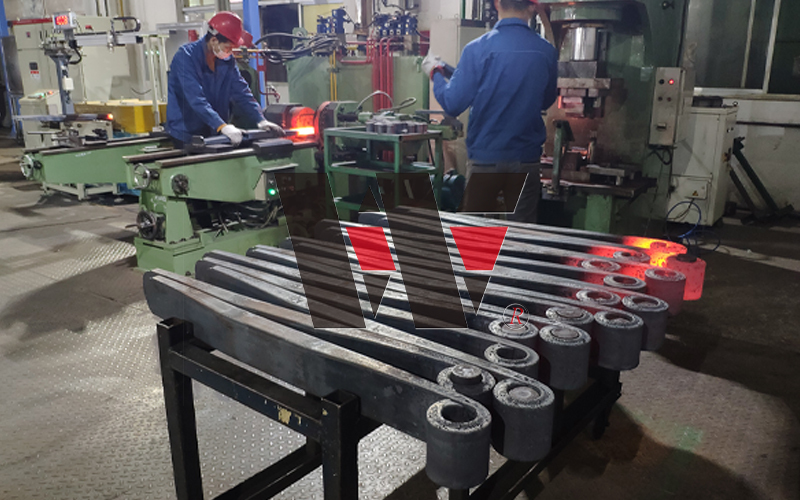
In automotive parts manufacturing, automatic stamping machines rarely work alone. They are usually one station in a continuous process. For leaf springs, a fully automatic blanking and punching line takes coil steel or flat bar, cuts it to length, punches holes, and prepares the ends for later forming. For hot-formed parts, the stamping station must receive heated material and carry out the forming stroke before the temperature drops out of the process window.
Weineng builds equipment that covers this range. A fully automatic blanking and punching line, for example, integrates feeding, blanking, punching, and unloading into one cycle. When the part is a leaf spring or a suspension spring, the machine must also accept a certain material thickness and width. When the part is a stabilizer bar, the process moves into hot bending and end processing. The common thread is that the stamping machine must be designed around the part and the manufacturing sequence.
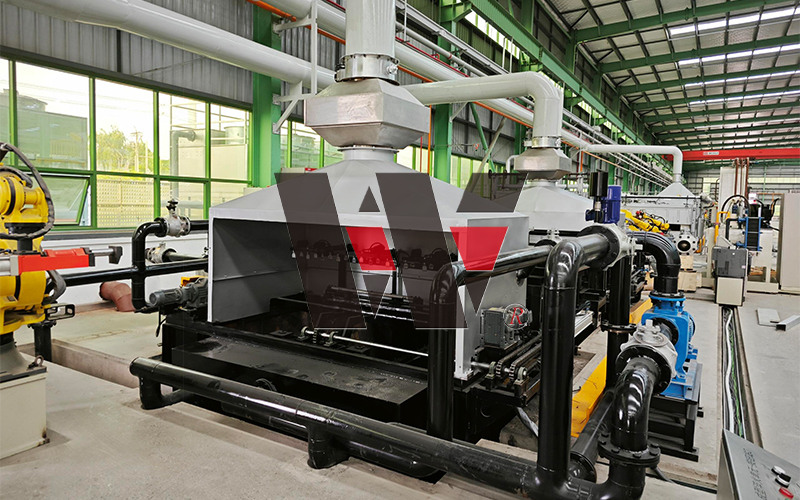
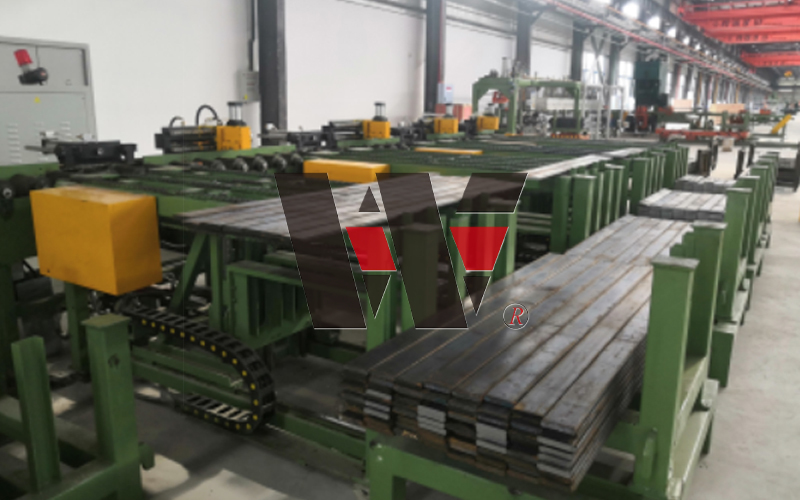 Fully Automatic Leaf Spring Blanking And Punching LineThis line integrates blanking and hot punching with induction heating, optimizing material use and precision for leaf spring manufacturing. Its PLC control and safety features support continuous, efficient production.View Product →
This is why the first step is to define the actual tasks: blanking, punching, hot stamping, ear curling, ear wrapping, end processing, or a combination of these. Each task places different demands on the press, the die, and the automation system.
Key Specifications That Should Drive Your Decision
There are practical specifications that affect performance. Tonnage determines whether the machine can carry out the required operation at the required thickness. Stroke rate sets the theoretical output per hour, but only if the material supply and removal systems can sustain it. Die height and shut height determine whether your existing tooling can be used. Press bed dimensions limit the die footprint. For hot stamping, the critical feature is whether the machine has the clearance and stroke control to work with heated blanks.
The table below compares the three press drive types most commonly considered for automatic stamping operations. It is a starting point for evaluation, not a replacement for real production data.
| Drive type | Advantages | Limitations | Best suited for |
|---|---|---|---|
| Mechanical press | High stroke rate; low unit cost; stable stroke curve | Limited forming force control; more difficult for deep draw or hot forming; higher noise and vibration | High-speed blanking and punching of simple profiles |
| Hydraulic press | Full tonnage over the entire stroke; adjustable speed; better for deep draw | Slower cycle; higher energy consumption during holding; more hydraulic maintenance | Hot stamping, thick-section parts, and operations requiring force without impact |
| Servo press | Programmable slide motion; precise speed and stroke control; lower energy consumption at partial loads | Higher capital cost; requires skilled programming; maintenance training needed | Multi-step forming, rapid die change, and integrated automation |
Once the drive type is clear, look at the automation interface. Does the machine accept material from an upstream heater? Does it have a fast enough slide cycle to keep up with the heating cycle? Does it support quick die change? Answers to these questions will determine whether the machine becomes an asset or a bottleneck.
For a deeper view of how these decisions affect the whole process, see the guide on leaf spring production line from blanking to heat treatment. It covers the sequence that automatic stamping machines must fit into.
Why the Line Matters More Than the Machine
A stamping machine that works perfectly in a press shop can fail when installed in a continuous line. The reason is not the machine itself. It is the mismatch between the press cycle and the heating or handling cycle. In hot stamping, the induction heater must deliver a blank at the exact interval the press can accept. If the press waits too long, the blank cools. If the heater waits too long, the blank over-heats or the line loses output.
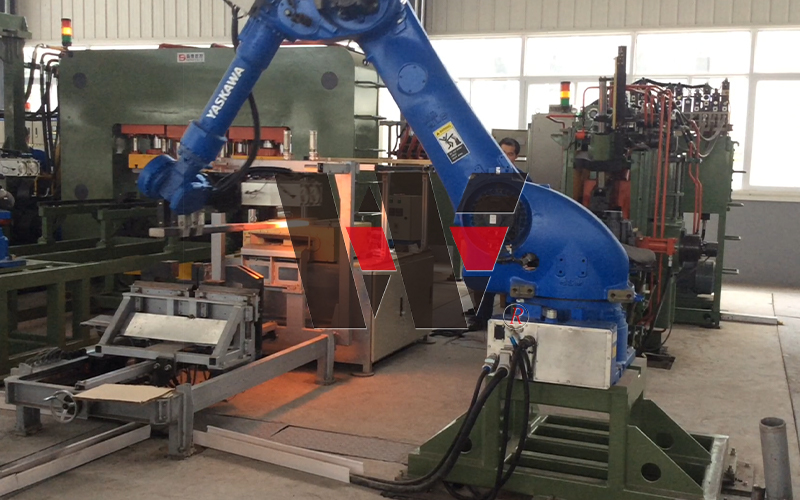
Weineng addresses this by designing the automatic line as a single system. The fully automatic hot stamping production line, for example, combines material handling, induction heating, hot stamping, and unloading into one controlled sequence. The press parameters are linked to the heater parameters, so the operator can set a consistent operating window instead of adjusting two machines independently.
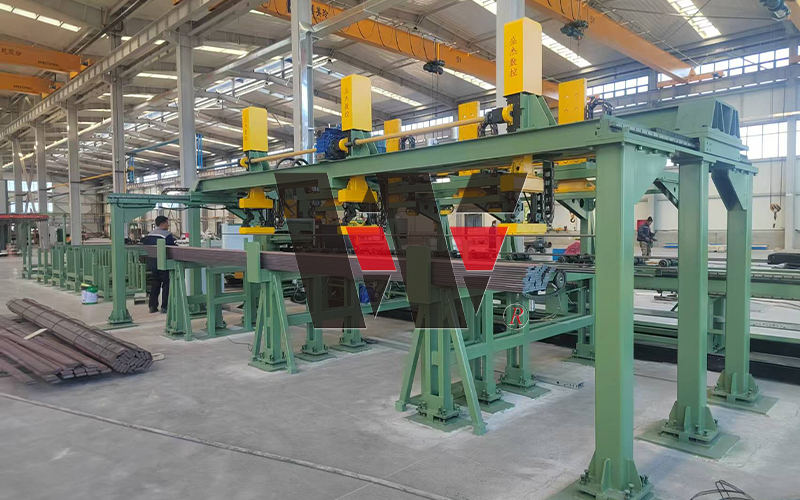
 Fully Automatic Leaf Spring Hot Stamping Production LineThis system combines induction heating and hot stamping into one controlled sequence, with a rapid cycle and high precision. It reduces manual handling and improves consistency for mass production.View Product →
This integration is also why auxiliary services matter. Equipment suppliers that offer turnkey service can install the line, commission it, and train operators. Remote service and on-site service allow problems to be diagnosed without long shutdowns. When comparing automatic stamping machines, ask specifically about the planned delivery model: single machine only, machine plus tooling, or complete line with commissioning.
Common Buying Mistakes and How to Avoid Them
Based on common failures in automotive parts stamping projects, the following mistakes appear most often.
- Choosing a press supplier instead of a process supplier. A press supplier can deliver a machine. A process supplier understands the part, the heating stage, the die, and the output quality required. If the supplier cannot discuss the whole process, the project may stall.
- Ignoring the synergy between tonnage and stroke rate. A high-tonnage press with a slow stroke may still produce fewer parts per hour than a lighter press with a faster cycle. Match the machine to the required takt time.
- Underestimating die change time. Automatic stamping is only profitable when downtime is low. Quick die change provisions, such as a properly designed die storage and clamping system, should be planned before purchase.
- Forgetting about testing and sorting. For leaf springs, after stamping the part may need preloading, sorting, or fatigue testing. If the stamping machine is not compatible with these downstream steps, the line will need extra handling.
- Choosing the wrong number of workstations. Some parts require more than one pressing operation. A three-station or four-station press can reduce transfer time and improve consistency. The decision between three and four stations depends on the part geometry and the number of forming stages.
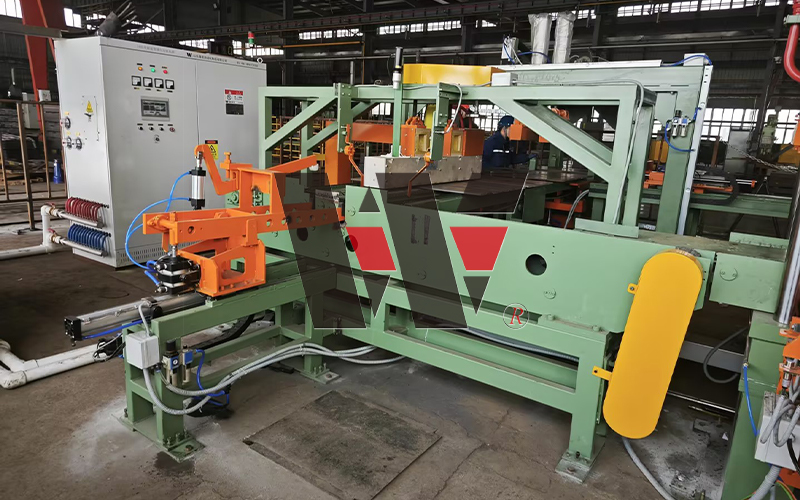
 Four-Station Punching PressThis press performs multiple processing steps in one cycle, increasing efficiency and reducing material waste. Its high rigidity and automation level ensure precision and safety in continuous operations.View Product →
A useful exercise is to ask the supplier for a takt time calculation for your specific part, including the upstream heating time and the downstream unloading time. If the supplier cannot provide one, or provides a simple machine-only cycle time, treat it as a warning sign.
How to Evaluate an Automatic Stamping Machine Supplier
Selecting a supplier for automatic stamping machines requires more than reading a brochure. Ask about the manufacturing experience in your specific part family. For automotive leaf springs, springs, stabilizer bars, and guide arms, the supplier should have experience with production lines rather than only single presses.
Look at the range of equipment. A supplier that offers blanking lines, drilling lines, ear curling and wrapping lines, heat treatment lines, and standalone machine tools can provide a more coherent solution than one that only sells one type of press. This is because the stamping machine is rarely the only step.
Also evaluate the service model. Turnkey delivery, remote service, and on-site service are not optional in a continuous line. They are the mechanisms that keep the line running after the installation week. For an automated line, the quality of the control system and the response time for remote diagnostics matter as much as the press tonnage.
In summary, the purchase decision should be based on process fit, line integration, and long-term service, not on press size alone. A machine that fits the process, the heating cycle, and the downstream steps will pay for itself. A machine that only fits the price sheet will create problems for years.
-
Do You Have Any Questions?
Let's
Discuss! -
Quick
Home Products / Equipment About Us Services Application News Contact Us -
Product Categories
Automobile Leaf Spring Complete Equipment Automobile Stabilizer Bar Complete Equipment Automobile Spring Complete Equipment Automotive guide arm complete equipment Oil Drilling Pipe Complete Equipment
-
Email Us
[email protected] [email protected] -
Address
Yangxiyuan Village, Luoshe Town, Huishan District, Wuxi City, Jiangsu Province, China -
Call Us Now
+86-18151713891 +86-18961722255 +86-18961507976 -
WhatsApp
+86-18151713891 +86-18961507976
Copyright © 2026 by Wuxi Weineng Automation Technology Co., Ltd. All Rights Reserved.
 Automotive Suspension Spring Production Line Turnkey Solutions