Wuxi Weineng Automation Technology Co., Ltd. / Shandong Weineng Automation Technology Co., Ltd.
-
 [email protected]
-
 +86-18961722255


 English
 русский
 Español
Upset Forging Explained: Process, Materials, and Equipment Selection Guide
Content
A finished drill pipe looks like a long, even tube, yet measure it and each end is noticeably thicker than the wall in the middle. That thicker zone, called the upset, exists because the pipe has to carry bending, torsion, and clamping loads at the tool joints, and there is no practical way to bolt extra strength onto the end of a tube. The strength has to be forged there. The process that does it, upset forging, is one of the most widely used forming methods in metalworking, and how well it is executed directly decides whether a pipe, a bolt, or a shaft passes inspection.
The logic behind the process is simple: when a part needs more metal at one end of a bar, move metal there instead of cutting it away. Upset forging compresses the heated end of a bar along its axis, so the bar shortens and its diameter grows exactly where the design needs it. Run well, the process delivers a dense structure with continuous grain flow and wastes almost none of the raw bar. Run carelessly, it delivers folds, laps, and cracked ends that go straight to scrap. The gap between those two outcomes comes down to three things: how the metal is heated, how it is clamped, and how much of it must move in a single stroke.
What Upset Forging Changes in the Metal
In upset forging, force is applied along the axis of a bar or pipe while the workpiece is held at the deformation zone. The length shortens, the cross-section thickens, and the die cavity controls where the extra metal ends up. Horizontal upsetting machines handle this with gripper dies that clamp the bar and a sliding punch that delivers the pressure. Because the bar stays clamped and horizontal, workpieces of considerable length can be processed, which is exactly what drill pipe and long shaft work require.
One physical limit shapes the whole process. A widely used shop rule holds that the unsupported portion of the bar should not exceed roughly three times its diameter; beyond that, the bar tends to buckle and fold instead of thickening cleanly. Larger accumulations of metal are therefore built in stages, with the machine gathering metal through a programmed sequence of blows, each with its own die cavity. This is why upsetting machines are specified by how much metal they can gather per blow and per cycle, not by tonnage alone.
The Process, Step by Step
From raw bar to inspected part, the sequence is short, which is one of the method's economic advantages. Each step, however, has to be held tightly:
- Cutting: the bar or pipe is sheared or sawn to length with square, burr-free ends, because an uneven end seats badly and produces a lopsided upset.
- Heating: only the deformation zone reaches forging temperature, typically by induction heating or a gas-fired furnace, so the rest of the part stays cold and dimensionally stable.
- Clamping: the gripper dies close on the workpiece and set the unsupported length for the first blow.
- Upsetting: the punch advances axially and metal flows into the die cavity; a programmed series of blows builds the required upset volume.
- Finishing: flash is trimmed where present, and the part moves to heat treatment such as annealing, followed by dimensional and ultrasonic inspection.
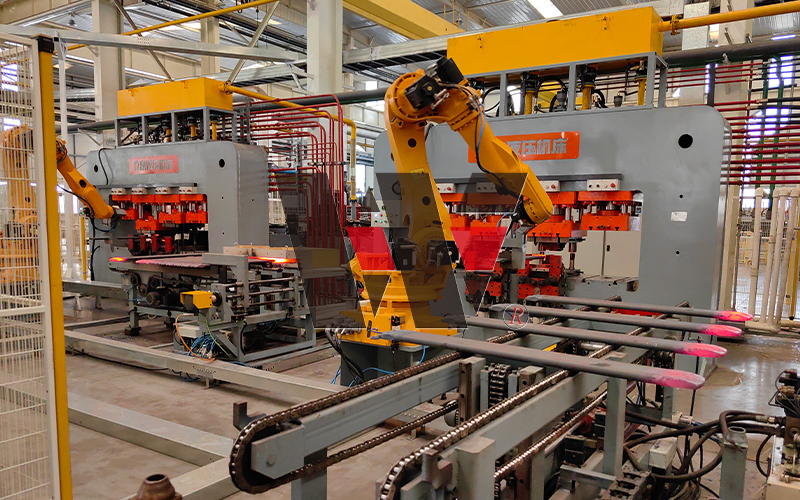
Each step feeds the next. A drifting heating curve shows up as variation in wall thickness, and a slipping clamp shows up as a bend no downstream operation fully corrects. This is the practical reason buyers increasingly evaluate complete cells rather than an isolated press. At the center of such a cell sits the upsetting machine itself, a unit that integrates clamping, punching, and multi-stage tooling in one frame.
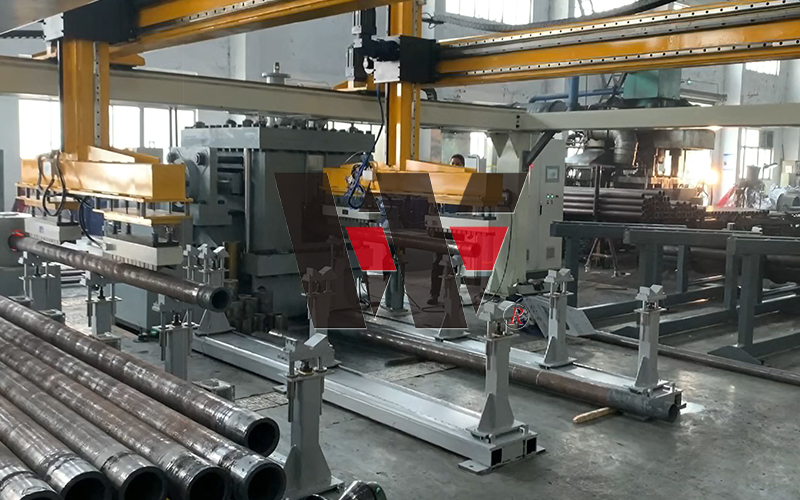 Hydraulic Drill Rod Upsetting Machine for Pipe End Upset ForgingA high-tonnage servo-controlled hydraulic press dedicated to end upsetting of oil drill pipe, with integrated clamping, multi-stage dies, and adjustable pressure and stroke settings. It anchors the complete forming cell, delivering consistent upset volume and wall thickness across changing pipe diameters.View Product →
On drill pipe work, machines of this class are matched to a defined range of pipe diameters and upset volumes, with grippers and dies changed out when the plant switches sizes.
Why Forge the End Instead of Machining It
The obvious alternative to upsetting is machining the thicker section from solid bar, and the comparison explains why production shops rarely choose that route.
| Method | How the material moves | Structural result | Best suited to |
|---|---|---|---|
| Hot upset forging | Heated end compressed axially into shaped dies | Grain flow follows the part contour; compressive stress closes voids and refines the structure | Large upsets on bars and pipe, alloy steels, drill pipe, shaft and valve stems |
| Cold heading | Metal displaced between dies at room temperature in fast blows | Work-hardened surface finish; deformation per blow is limited | Fasteners, rivets, and small hardware in high volume |
| Machining from solid bar | Excess metal cut away to reach the final shape | Grain lines cut through; no refinement where strength is needed | Prototypes, repairs, and very short runs |
The structural column decides most purchases. Forging under heat breaks up segregation, closes internal voids, and aligns grain flow with the contour of the upset, so the thickened zone is strongest along the exact paths where loads travel. Machining reaches the same outer dimensions by cutting through those grain lines and paying for the removed metal as scrap. At drill pipe volumes, the difference in material use and cycle time is not marginal; it shapes the economics of the entire plant.
Materials That Upset Well
Most upset forging is done in steel. Medium-carbon grades are the workhorses for bolts, shafts, and general machine parts because they combine forgeability with heat-treatable strength. Low-alloy steels of the chromium-molybdenum family are standard for drill pipe and other oil-country products, where the upset has to survive fatigue in a corrosive environment. Stainless grades are upset for valve stems and fittings where corrosion resistance governs the design.
Material choice drives the heating specification. Carbon steels have a forgiving temperature window, while alloy grades need tighter control to avoid decarburization at the surface and grain coarsening inside the section, both of which weaken the finished upset. That is one of the quiet advantages of induction heating: dwell time is measured in seconds, so the metal spends far less time in the range where surface damage develops.
Heating Is Where Tolerances Are Won or Lost
Ask the operators of an upsetting line what causes most scrap, and the answer is rarely the press. It is heating. A deformation zone that is too cold resists flow, loads the dies, and starts surface laps; a zone that is too hot or uneven lets the pipe wall slump, so wall thickness wanders out of tolerance. Upsetting is a single-shot forming event, which means a bad temperature cannot be corrected on the next pass.
Induction heating has become the default in automated lines because it heats only the end zone, repeats the same temperature curve on every part, and adjusts within seconds when the line changes size or speed. The same physics support hot forming across other product families; we look at the principle in more depth in our overview of induction heating in automotive spring manufacturing.
In drill pipe production, the heating unit is therefore specified together with the press, so that frequency, coil design, and dwell time match the wall thickness and upset volume of the pipe range being run.
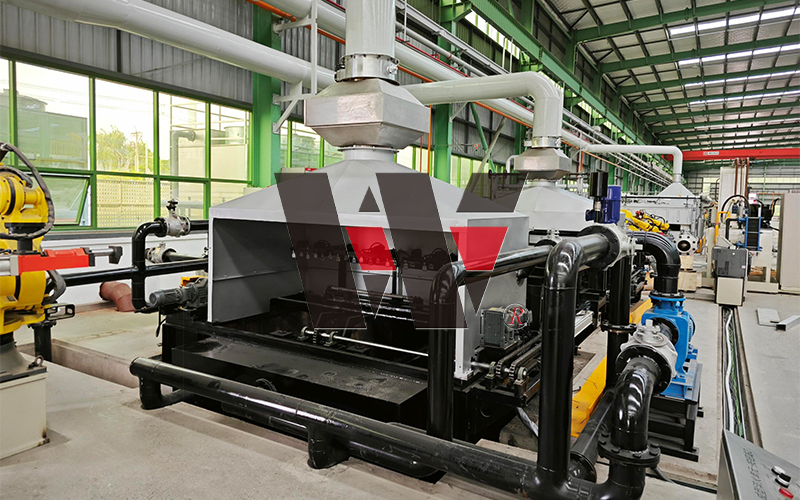
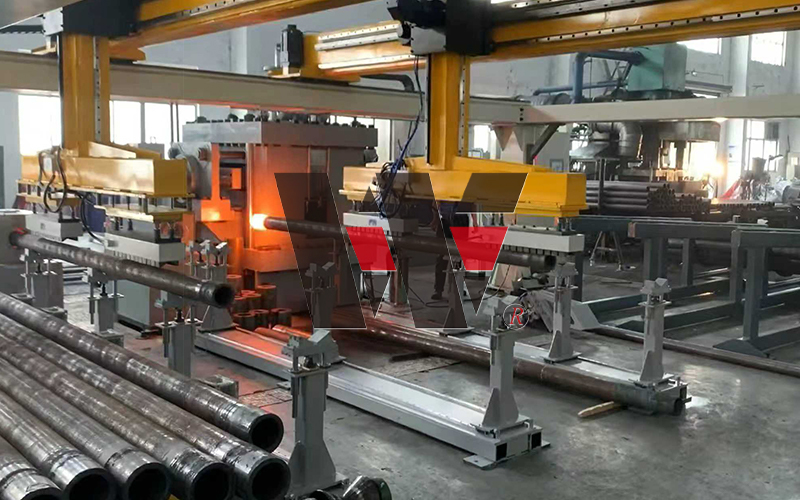 Medium-Frequency Induction Heating Equipment for Drill Pipe UpsettingThis medium-frequency induction unit heats pipe ends to upsetting temperature within seconds, with custom coils and closed-loop infrared monitoring limiting the heat-affected zone. Specified together with the press, it ensures uniform temperature for accurate, crack-free forming of each pipe.View Product →
One Machine or a Complete Line
A standalone machine suits plants that already own heating, handling, and heat treatment equipment, or that run mixed job work. At dedicated production volumes the calculation changes: every transfer between machines is a chance for the pipe to cool unevenly, pick up marks, or sit long enough to disturb the schedule. That is why drill pipe plants running one or two sizes at volume increasingly ask for the chain as a single system.
A complete upsetting line links bar preparation, induction heating, the upsetting press, and downstream heat treatment, usually an annealing stage that softens and stabilizes the upset zone before inspection, with automatic transfer between stations. Purchased as one project, the line is commissioned as a whole, with speeds, heating curves, and handling tuned to each other instead of negotiated between separate suppliers.
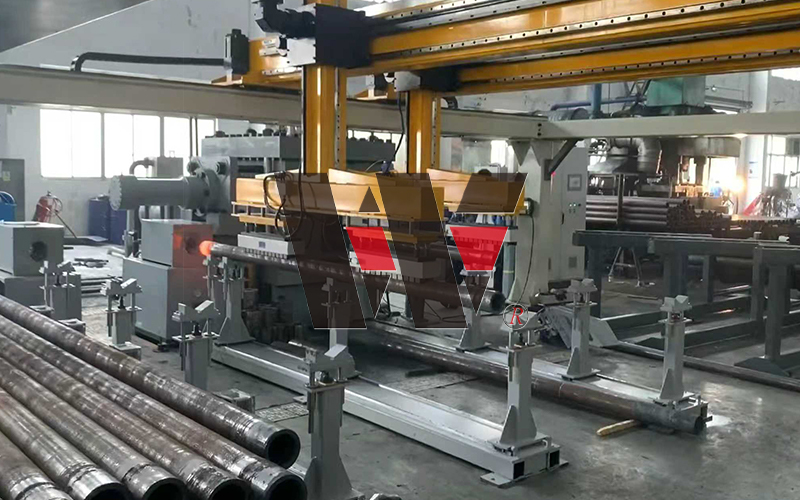
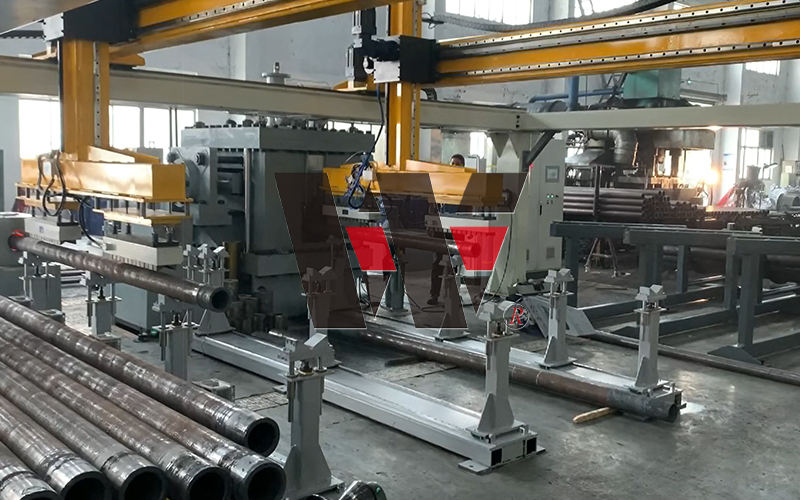 Complete Drill Pipe Upsetting Production Line with Automated TransferAn integrated line linking bar preparation, induction heating, hydraulic upsetting, and annealing with automatic transfer between stations. Purchased as one project, it is commissioned as a whole, so heating curves and handling are tuned together, letting pipes move from cut blank to welded-ready ends without manual handling.View Product →
Lines of this type reflect how most drill pipe plants operate today: the pipe enters as a cut blank and leaves with both ends upset and annealed, ready for tool joint welding, with no manual handling between stages.
What to Verify Before You Commit
An upsetting line is a serious capital decision, and most disappointments trace back to specifications that were never tested against real production conditions. A short checklist keeps the negotiation concrete:
- Capacity match: confirm the machine's gather capacity per blow against the largest upset volume in your size range, not the average one.
- Heating control: ask for temperature uniformity data at the deformation zone rather than power ratings alone, and check how coils change over between pipe sizes.
- Tooling changeover: establish how long it takes to switch dies and grippers across your product mix, since changeover time defines real output.
- Automation fit: verify loading, transfer, and downstream interfaces so the line does not bottleneck at a handoff nobody specified.
- Service terms: installation, commissioning, remote diagnostics, and spare part availability should be written into the offer, not promised afterwards.
The Practical Takeaway
Upset forging remains the most economical way to put extra strength at the end of a bar or pipe, and it holds that position through physics rather than convenience. Metal moved under heat and pressure carries grain flow and density that no cutting operation can restore. Whether the finished upset holds tolerance, however, is decided by heating precision, clamping stability, and how well the equipment around the press handles the part between steps.
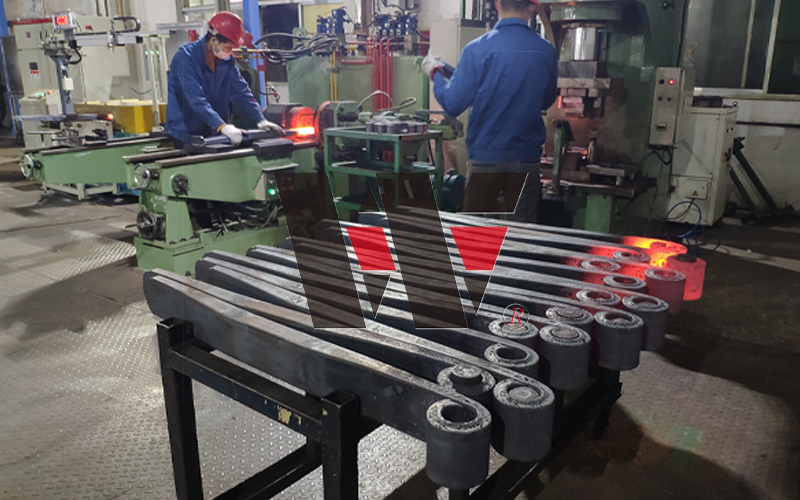
That equipment-first view is how we approach the topic at Wuxi Weineng Automation Technology Co., Ltd., where drill pipe upsetting equipment sits alongside complete lines for leaf springs, coil springs, stabilizer bars, and guide arms, all built around the same core of controlled heating and automated forming. Buyers comparing suppliers will get further by asking how those elements integrate as one line than by comparing press tonnage figures in isolation.
Related Products
-
Do You Have Any Questions?
Let's
Discuss! -
Quick
Home Products / Equipment About Us Services Application News Contact Us -
Product Categories
Automobile Leaf Spring Complete Equipment Automobile Stabilizer Bar Complete Equipment Automobile Spring Complete Equipment Automotive guide arm complete equipment Oil Drilling Pipe Complete Equipment
-
Email Us
[email protected] [email protected] -
Address
Yangxiyuan Village, Luoshe Town, Huishan District, Wuxi City, Jiangsu Province, China -
Call Us Now
+86-18151713891 +86-18961722255 +86-18961507976 -
WhatsApp
+86-18151713891 +86-18961507976
Copyright © 2026 by Wuxi Weineng Automation Technology Co., Ltd. All Rights Reserved.
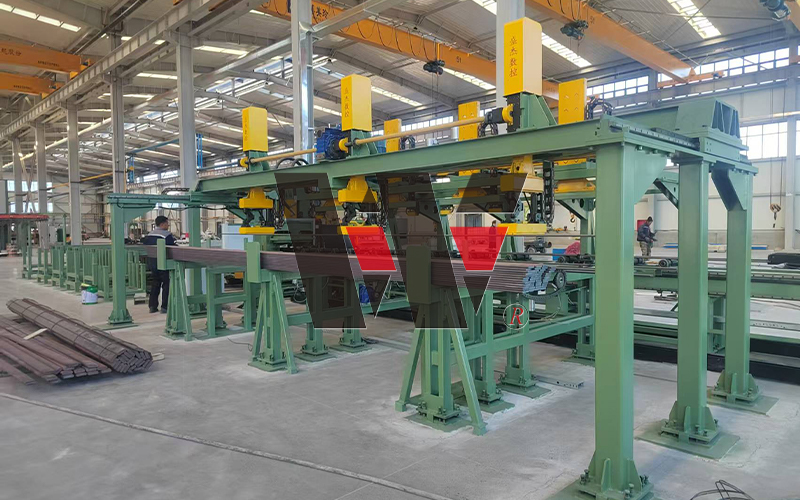
 Automotive Suspension Spring Production Line Turnkey Solutions
Automotive Suspension Spring Production Line Turnkey Solutions