Wuxi Weineng Automation Technology Co., Ltd. / Shandong Weineng Automation Technology Co., Ltd.
-
 [email protected]
-
 +86-18961722255


 English
 русский
 Español

Adjustable Stroke Press: How Variable Stroke Length Boosts Spring Output
Content
- 1 What an Adjustable Stroke Press Actually Changes
- 2 Fixed Stroke Versus Adjustable Stroke: A Practical Comparison
- 3 Where Adjustable Stroke Presses Earn Their Keep in Spring Manufacturing
- 4 Choosing Stroke Range, Tonnage, and Die Space
- 5 Fitting the Press into an Automated Line
- 6 Keeping the Adjustment Mechanism Reliable
If your shop forms leaf springs, stabilizer bars, or coil springs, you already know that no single press stroke suits every job. Blanking wants a generous stroke so the part clears the die. Coining and sizing want a short, controlled stroke close to the bed. Trimming usually sits somewhere in between. An adjustable stroke press lets one machine cover all three without being tied to a single crank radius, and for a plant running mixed orders, that flexibility is often worth more than a few extra tonnes of force.
At Wuxi Weineng Automation Technology Co., Ltd., we have been building forming, heating, and heat treatment equipment for automotive spring, stabilizer bar, and guide arm manufacturers since 2016. That work puts us in daily conversation with the people who actually own these buying decisions, so we wrote this page to explain what adjustable stroke really means on a mechanical press, how it stacks up against a fixed stroke machine, and where it earns its keep in spring and bar production. If you want the broader picture first, you can review our complete equipment range and then come back here.
What an Adjustable Stroke Press Actually Changes
On any mechanical press, the stroke is the distance the ram travels from top dead center down to bottom dead center and back. On a conventional press, that distance is baked into the crankshaft geometry, so it stays the same for the life of the machine. An adjustable stroke press adds an eccentric sleeve, or a movable eccentric portion on the crankshaft, so the effective throw can be shortened or lengthened. The operator turns a handwheel or presses a button, the eccentric moves, the mechanism locks, and the same machine can now run a long stroke for blanking and a short stroke for coining.
Why does that matter in practice? A long stroke gives the ram speed and enough opening to clear the die after a blank is cut. A short stroke keeps the ram closer to the workpiece, cuts the idle travel out of every cycle, and reduces ram velocity at the moment of contact. That last point is easy to overlook. When you are coining an eye, flattening a spring end, or sizing a hot part, hitting the material slower and holding the load near the bottom of the stroke produces a more consistent result than slamming it at full speed.
One thing worth separating in your head is stroke versus shut height. Adjusting the stroke changes how far the ram travels. Adjusting shut height changes where the bottom of the stroke sits relative to the bed. They are different settings, and confusing them is one of the most common mistakes we see when a new operator takes over a press.
On the machines we specify and integrate into spring lines, a manual stroke change typically takes about fifteen minutes: stop the press, switch to inch mode, release the locking device, turn the eccentric to the required position, re-lock, and verify. Motorized versions shorten that further and let you store stroke positions in the recipe for each part number.
Fixed Stroke Versus Adjustable Stroke: A Practical Comparison
Neither design is universally better. The right choice depends on how many different operations and part numbers your press has to handle in a typical week.
| Aspect | Fixed Stroke Press | Adjustable Stroke Press |
|---|---|---|
| Stroke length | Set permanently by crank geometry | Set by an eccentric sleeve or movable eccentric |
| Changeover | Requires different tooling or another machine | Minutes with a handwheel, faster if motorized |
| Best fit | High volume, single operation, one part family | Mixed work: blanking, stamping, coining, sizing |
| Tooling flexibility | Die design must match the fixed stroke | One die set can run at several stroke settings |
| Maintenance focus | Crank, main bearings, slide guides | Eccentric mechanism, locking device, lubrication |
| Overall throughput | Very high on one repeated operation | High across the week, because changeovers drop |
In spring plants, the adjustable version usually wins once a single line has to produce more than two or three part numbers, or when blanking, forming, and coining all happen on the same machine.
Where Adjustable Stroke Presses Earn Their Keep in Spring Manufacturing
Leaf spring production is a natural home for this technology. A blade is blanked from flat bar, punched for the center bolt and clamps, hot formed or rolled, then heat treated. Each of those steps prefers a different stroke characteristic, and a press with variable stroke can serve several of them instead of sitting idle behind one dedicated die.
The same logic applies to stabilizer bars, where end flattening and coining benefit from a short, controlled stroke, and to hot coiled springs, where end flattening and trimming are sensitive to ram speed at contact. Guide arm and oil drill pipe work follow similar patterns: heavy sections, short working strokes, and a real cost penalty every time a machine has to be swapped out.
When blanking and punching dominate the workload, we usually pair an adjustable stroke press with a dedicated automated line so the stroke setting travels with the part recipe rather than being set by hand at every changeover.
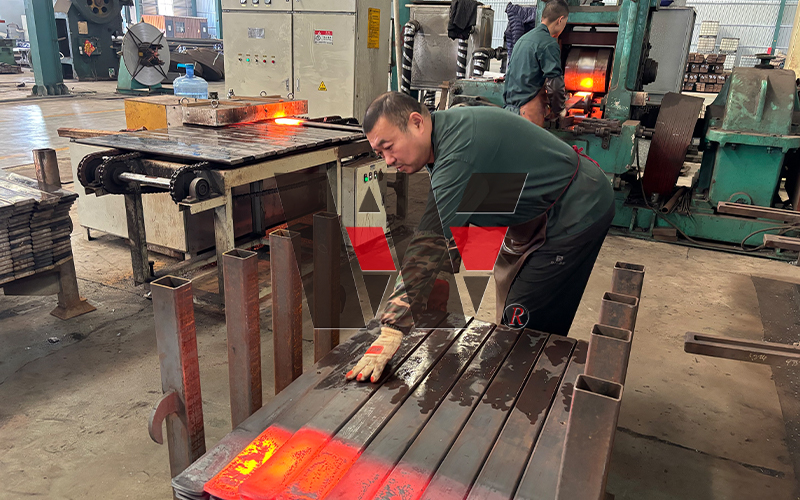
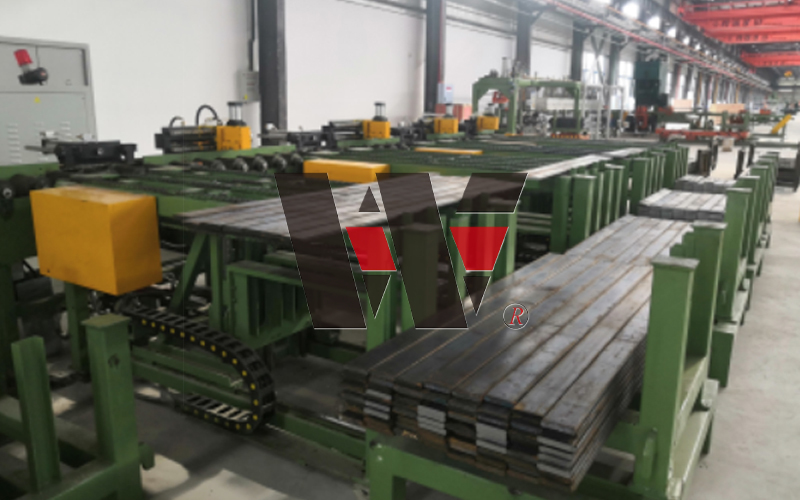 Fully Automatic Leaf Spring Blanking And Punching LineIntegrated High-Efficiency Operation: This production line integrates fully automatic blanking and hot punching processes, enabling continuous production from raw mate...View Product →
That combination gives you the flexibility of the press and the repeatability of an automated material handling and transfer system.
Choosing Stroke Range, Tonnage, and Die Space
Before you request a quotation, it helps to collect a few numbers. The more of these you can put on paper, the closer the first proposal will be to the machine you actually need.
- Maximum and minimum stroke length you expect to use, including the long stroke needed for the largest blank you will cut.
- Required tonnage at the bottom of the stroke, not just peak tonnage, since coining and sizing loads build up near bottom dead center.
- Die space: bed size, shut height range, and the largest die you intend to mount, including any quick change fixture.
- Strokes per minute for each operation, because a short stroke generally allows a faster cycle than a long one on the same frame.
- Adjustment method: manual handwheel, motorized, or recipe driven from the line controller.
- Safety and control features, including inch mode for stroke changes, two hand control, and light curtain integration.
If you are still deciding how many stations the press should carry, it is worth reading our note on three-station versus four-station punching presses for leaf springs before you fix the specification.
For shops that need a single press to cover several forming steps rather than one dedicated operation, a multi-station frame with adjustable stroke is often the most economical answer.
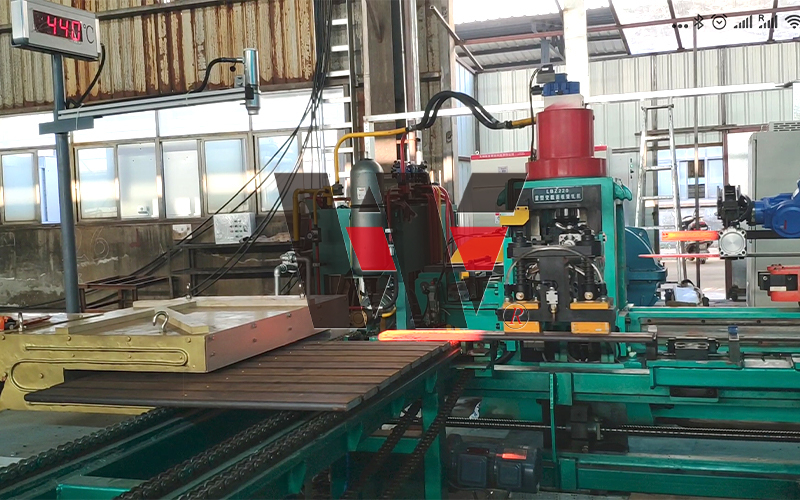
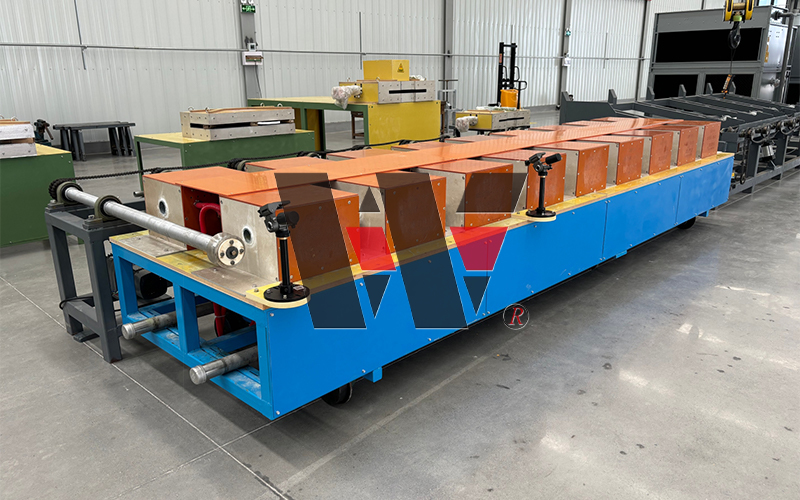
 Four-Station Punching PressThe machine features four distinct workstations, allowing it to complete four different processing steps in a single operational cycle, which greatly enhances producti...View Product →
Fitting the Press into an Automated Line
An adjustable stroke press rarely works alone in a modern spring plant. It sits between a heating station and a downstream operation, fed by a transfer or robot, and its cycle has to synchronize with everything around it. That is where stroke adjustability pays a second dividend: because you can shorten the non-working portion of the cycle, the press no longer forces the rest of the line to wait on it.
In hot forming processes, the press is only one part of a chain that includes induction heating, transfer, and quenching. A slower contact speed near the bottom of the stroke helps the material fill the die before it cools, and a shorter stroke keeps the part hot all the way through the forming window. This is the same principle behind several of our hot forming references.
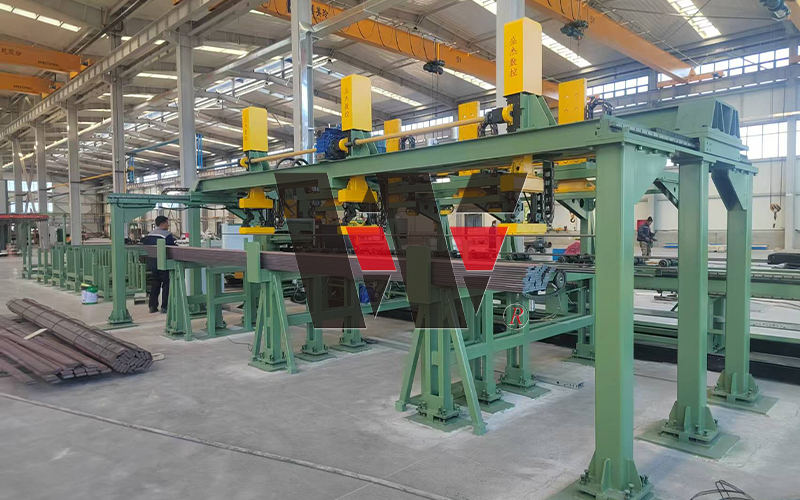
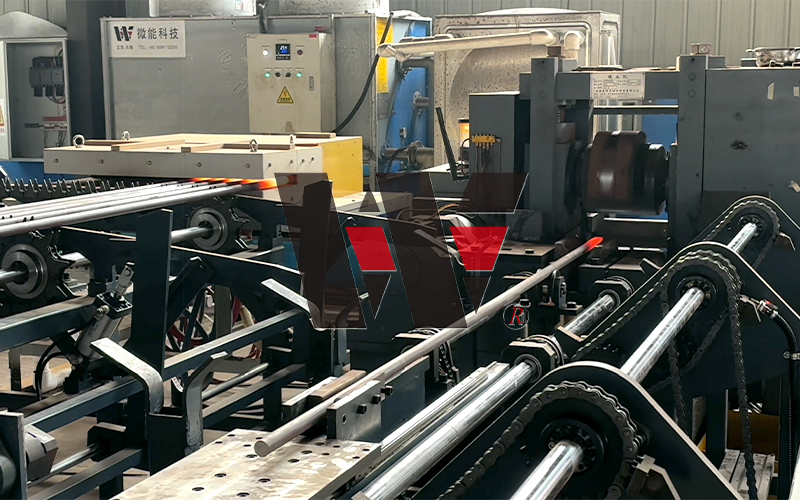
 Fully Automatic Leaf Spring Hot Stamping Production LineEfficient Integrated Production: Designed for hot stamping automotive leaf springs and similar components, this line integrates medium-frequency induction heating with...View Product →
When we commission that kind of line, we normally write the stroke position, shut height, and cycle parameters into one recipe per part number, so switching from one blade profile to another is a matter of loading a program rather than re-setting the machine by feel.
Keeping the Adjustment Mechanism Reliable
The eccentric and its locking device are the parts that make an adjustable stroke press worth owning, and they are also the parts that suffer when maintenance is treated as an afterthought. A few habits keep them healthy.
- Verify the locking device engages fully before production starts, and never run the press with the eccentric partially released.
- Follow the lubrication schedule for the eccentric sleeve and its bearing surfaces, using the grade specified in the manual.
- Check stroke position after any die change, since a setting that drifted during the previous run may not match the current tool.
- Record the stroke position used for each part number so that a proven setting can be restored instead of rediscovered.
- Train operators to make stroke changes in inch mode only, with the press stopped and the flywheel isolated.
Machines that are adjusted carefully and lubricated on schedule commonly run for many years without intervention on the eccentric assembly. Machines that are adjusted in a hurry tend to show wear quickly, and replacement parts for the stroke mechanism are far more expensive than the fifteen minutes a proper changeover takes.
Adjustable stroke is not a gimmick. It is a mechanical answer to a real production problem: one press frame, many operations, and not enough floor space to dedicate a machine to each one. If you are planning a leaf spring, stabilizer bar, or guide arm line and want to know which press configuration fits your part mix, send us your part drawings, tonnage requirements, and cycle targets. Our engineering team will come back with a stroke range and a machine layout that matches the way your shop actually works.
Related Products
-
Do You Have Any Questions?
Let's
Discuss! -
Quick
Home Products / Equipment About Us Services Application News Contact Us -
Product Categories
Automobile Leaf Spring Complete Equipment Automobile Stabilizer Bar Complete Equipment Automobile Spring Complete Equipment Automotive guide arm complete equipment Oil Drilling Pipe Complete Equipment
-
Email Us
[email protected] [email protected] -
Address
Yangxiyuan Village, Luoshe Town, Huishan District, Wuxi City, Jiangsu Province, China -
Call Us Now
+86-18151713891 +86-18961722255 +86-18961507976 -
WhatsApp
+86-18151713891 +86-18961507976
Copyright © 2026 by Wuxi Weineng Automation Technology Co., Ltd. All Rights Reserved.
 Automotive Suspension Spring Production Line Turnkey Solutions