Where Heat Enters the Leaf Spring Process
A leaf spring goes through heat at three separate points before it's finished: once before rolling and hot stamping, again during ear forming, and a third time during quenching. Each of these stages used to rely on gas-fired or resistance furnaces that heated the whole part — or the whole batch — regardless of where the heat was actually needed. Induction heating changed that by putting energy directly into the section of steel being worked, and the shift shows up in measurable ways across cycle time, scrap rate, and hardness consistency.
The value of induction heating in spring manufacturing isn't abstract. It's tied to three specific process points, and the gains look different at each one.
Heating Before Hot Stamping and Rolling
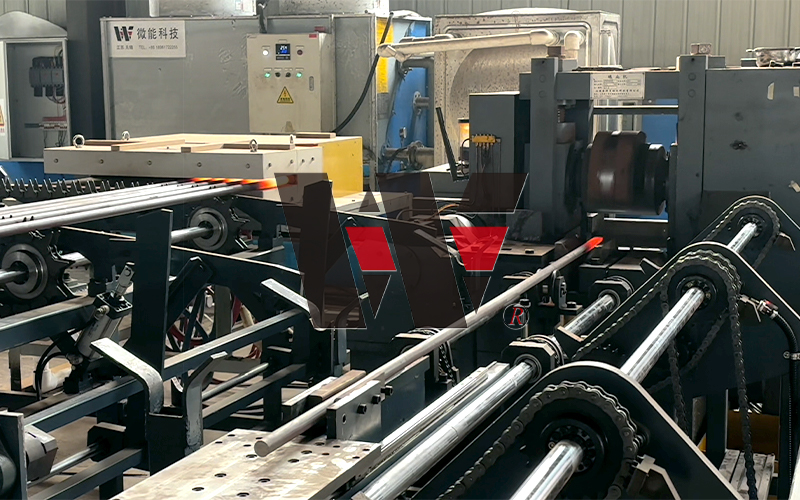
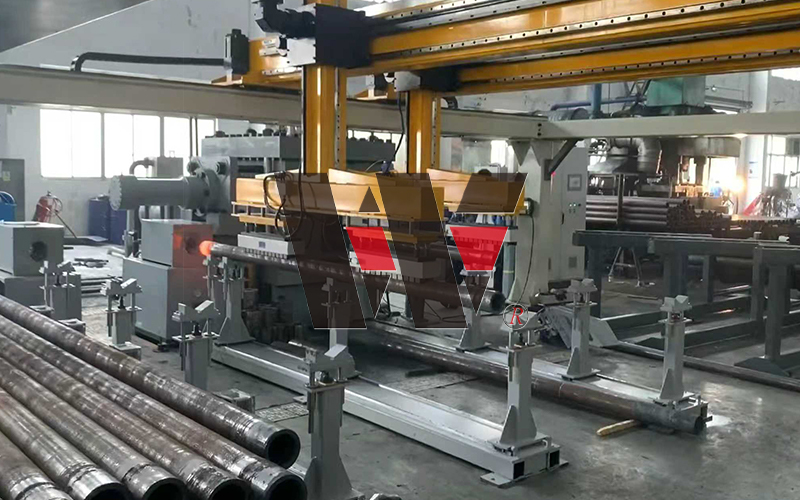
Before a blank can be rolled into a tapered or variable-thickness profile, it has to reach a uniform forming temperature across its full length. Gas furnaces do this by soaking the part in a heated chamber, which takes minutes and heats far more mass — the furnace lining, the surrounding air — than the steel itself. An induction coil integrated into a fully automatic hot stamping production line heats the blank directly, cutting that soak time down to seconds and letting the line run at the press's actual cycle rate instead of the furnace's.
The quality benefit runs alongside the speed benefit. Shorter time at temperature means less time for scale to form on the surface, and less scale means less material lost to descaling and less risk of scale getting rolled into the surface finish. For variable cross-section rolling specifically, temperature uniformity along the blank's length determines how consistently the steel responds to the rolling profile — a cold spot rolls thicker than intended, and that shows up as a stiffness deviation in the finished spring.
Localized Heating for Ear Rolling and End Forming
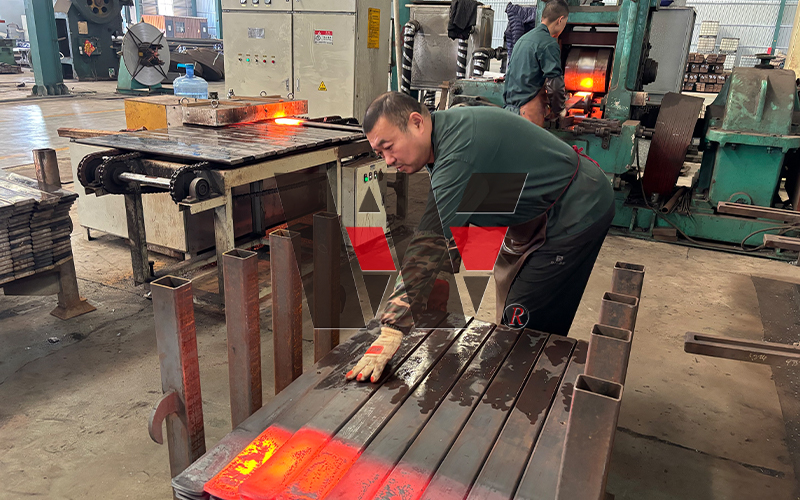
Only the end of the spring needs to be hot when it's time to curl or wrap the eye — the rest of the part should stay at or near ambient temperature so it doesn't lose the properties set earlier in the process. This is where induction heating's localization matters more than its speed. A properly designed coil heats a tightly controlled zone at the spring's end, leaving the body of the part outside the heat-affected area entirely.
Purpose-built leaf spring end induction heating equipment is designed around this constraint: coil geometry and power density are matched to the eye section specifically, rather than relying on a general-purpose heating zone that risks tempering the adjacent body of the spring. That distinction is the difference between an ear that forms cleanly and a spring that comes out of ear rolling with an unplanned soft zone just past the eye.
Heating Uniformity and Its Link to Quenching Quality
Hardness after quenching is only as consistent as the temperature the part reached right before the quench. If different sections of a spring reach the austenitizing temperature at different rates, they harden to different degrees, and that inconsistency doesn't show up until hardness testing — by which point the part has already gone through every prior process step. Induction heating's fast, direct energy transfer makes it easier to hit a narrow temperature band across the full part just before it enters the quench, compared to a furnace where parts near the door heat differently than parts in the center.
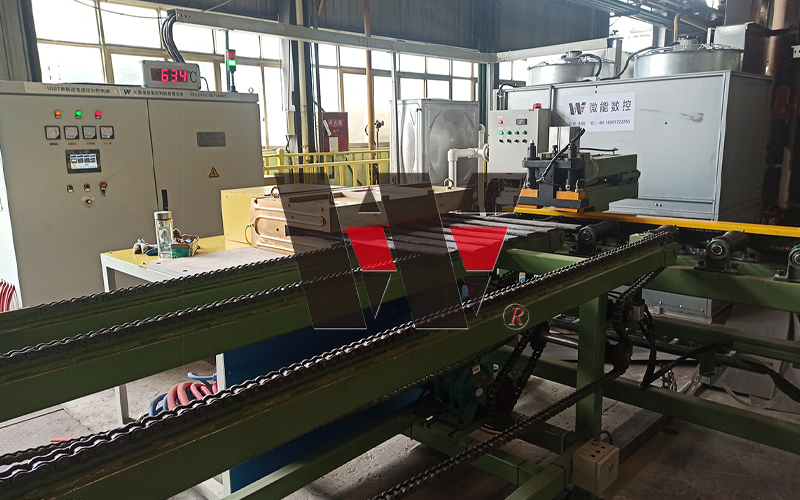
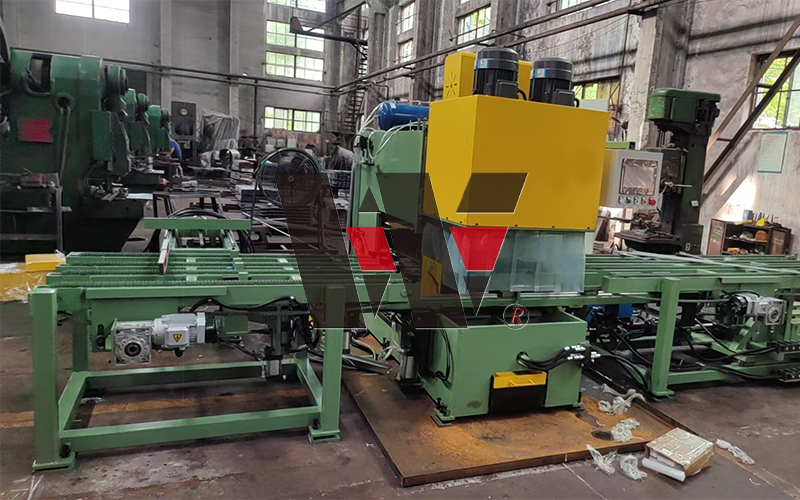
This is why induction pre-heating is increasingly paired with the quenching stage itself rather than treated as a separate upstream step. A fully automatic heat treatment production line that integrates induction heating directly ahead of the quenching furnace removes the transfer delay between heating and quenching, which matters because any lag lets the part start cooling unevenly before it even reaches the quench medium.
Efficiency Gains Compared to Gas-Fired Heating
The efficiency case for induction heating comes down to where the energy goes. A gas furnace spends a meaningful share of its fuel heating refractory brick, furnace atmosphere, and the chamber itself before any of that heat reaches the workpiece. Induction coils couple energy into the steel directly, so a much higher share of input power ends up doing useful work on the part rather than warming the surrounding equipment.
That translates into two practical differences on a production floor. First, start-up and idle costs drop — an induction system reaches working temperature in seconds and draws minimal power between parts, while a gas furnace typically stays hot continuously to avoid long reheat cycles. Second, floor-level heat load drops, which matters for both working conditions and the cooling burden on any climate control nearby.
Deciding Where to Upgrade First
Not every plant needs to convert all three heating points at once. If hardness testing is showing inconsistent results, the priority is the pre-quench heating stage — that's where uniformity has the most direct effect on the final property that actually gets measured. If scrap or scale-related rework is the bigger cost driver, the forming-stage heating ahead of rolling is usually the better first target.
End-forming heating tends to be the easiest conversion to justify on its own, since the equipment is self-contained and doesn't require resequencing the rest of the line. Whichever point comes first, the underlying question is the same one that applies to any production line upgrade: which heating stage is currently limiting either your cycle time or your consistency, and does the current equipment even make that visible before the part fails downstream.
 [email protected]
 +86-18961722255


 English
 русский
 Español
 Automotive Suspension Spring Production Line Turnkey Solutions