Wuxi Weineng Automation Technology Co., Ltd. / Shandong Weineng Automation Technology Co., Ltd.
-
 [email protected]
-
 +86-18961722255


 English
 русский
 Español

Blanking Press Guide: How Automated Blanking Lines Shape Leaf Spring Blanks
Content
- 1 What a Blanking Press Actually Does
- 2 Where Blanking Sits in the Spring Production Flow
- 3 Punching, Drilling or Both?
- 4 Common Blanking Press Configurations
- 5 Key Specifications to Compare Before You Buy
- 6 What to Check on Every Blank
- 7 From a Standalone Press to a Fully Automatic Blanking Line
- 8 How to Choose the Right Blanking Press
- 9 Building the Whole Line, Not Just the Press
Every leaf spring, stabilizer bar and guide arm begins life as a flat bar of steel that has to be cut to length and shaped before a single forming pass can happen. That first operation is blanking, and the machine at its heart — the blanking press — quietly sets the tolerance budget for everything downstream. Get the blank right and the rest of the line runs smoothly; get it wrong and you spend the next three shifts chasing camber, burrs and hole position. At Wuxi Weineng Automation Technology Co., Ltd. we have spent the past ten years building equipment for exactly this step, so here is what we have learned about how a blanking press works, what to look for, and where it fits in a modern spring plant.
What a Blanking Press Actually Does
A blanking press is a machine tool that supplies controlled vertical force to a die set, which shears a flat blank out of a coil, strip or pre-cut bar. The word "blanking" describes which half of the cut material matters: in blanking, the piece that drops through the die is the part you keep, while in punching the slug that falls away is scrap. Most spring steel blanks are produced with a compound or progressive die, so one stroke of the press can cut the bar to length and punch the centre bolt hole and end holes at the same time.
Three elements decide what a press can do. The first is tonnage, the force available at the bottom of the stroke. The second is the working envelope — bed size, shut height and stroke — which sets how large a die and how long a blank you can run. The third is the drive system, which controls how force, speed and dwell time are delivered. Everything else, from the frame to the control cabinet, exists to hold those three variables steady across tens of thousands of strokes.
Where Blanking Sits in the Spring Production Flow
In a leaf spring plant, blanking is the gate every later operation passes through. Blank length, hole location, edge squareness and initial camber are all set here, and because spring steel is subsequently heated, rolled or curled, small errors at the press tend to grow rather than cancel out. A typical sequence looks like this:
- Decoil, straighten and feed the flat bar to length.
- Blank the bar to finished length inside the die.
- Punch the centre hole, end holes and locating features in the same cycle.
- Trim, taper or nib the ends and process the leaf profile.
- Prepare the blank for hot forming, rolling, curling or wrapping.
- Quench, temper and shot peen the formed part.
- Assemble, pre-load and test the finished spring pack.
Because blanking is first in line, it also behaves as a quality gate. A well set press delivers blanks that feed the next station without manual adjustment, which is why so many plants now prefer an integrated line to a standalone press fed by hand. Our engineers have written a step-by-step guide to the leaf spring production line from blanking to heat treatment if you want the full picture.
Punching, Drilling or Both?
Holes can be created in two ways. The faster route is to punch them in the same die that blanks the bar, which suits thin to medium sections and high volumes. The alternative is to blank first and drill afterwards, which is often better for thick bars, harder material or hole patterns that would overload a single die. Many plants run both: the press removes metal quickly and a dedicated drilling station finishes critical holes to final size and position.
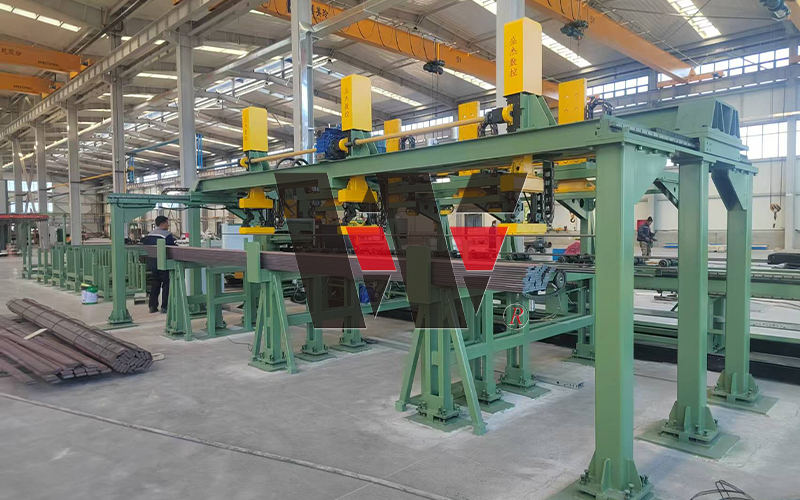
Whichever route you choose, decide both together, because the tolerance chain runs from the press to the drill. Our automated drilling stations are engineered to accept blanks straight from a blanking press, so hole position carries through without a second manual set-up.
 Fully Automatic Leaf Spring Drilling Production LineHigh Automation and Intelligence: The entire line integrates advanced PLC control systems and HMIs, enabling full automation from feeding to drilling. It supports real...View Product →
Common Blanking Press Configurations
Mechanical presses
A flywheel and crank convert rotary motion into a fixed stroke. Mechanical presses are fast, repeatable and inexpensive to maintain, and they suit high-volume blanking where material and die are stable. The trade-off is that force peaks near the bottom of the stroke and cannot be adjusted mid-cycle.
Hydraulic presses
Force comes from a cylinder and can be held at full tonnage anywhere in the stroke, which makes hydraulic presses forgiving with thick sections, long blanks and dies that need dwell time for coining or setting. Stroke and speed are programmable — useful when many part numbers share one machine.
Servo-driven presses
A servo press drives the ram directly, so the slide can accelerate, slow, dwell or reverse at any point. The result is a flexible stroke profile, lower energy consumption and less noise. For manufacturers mixing thin and thick bar on the same line, a servo press often keeps both jobs economical.
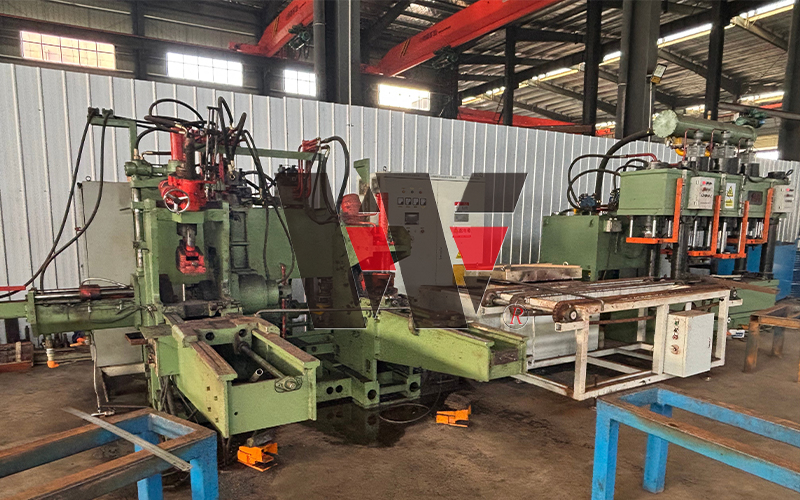
Multi-station presses sit alongside those three categories. Instead of blanking in one hit, a three- or four-station press moves the bar through a series of dies, so cutting, punching, trimming and forming happen in sequence on one machine. That reduces die load, improves edge quality on thick material and shortens the line.
 Four-Station Punching PressThe machine features four distinct workstations, allowing it to complete four different processing steps in a single operational cycle, which greatly enhances producti...View Product →
Key Specifications to Compare Before You Buy
The figures below are indicative ranges for automotive spring steel flat bar. Use them as a checklist when comparing quotations, and always verify them against the thickest and the longest blank you expect to run.
| Specification | Typical range | Why it matters |
|---|---|---|
| Nominal tonnage | 100 – 800 t | Must exceed the shear force of the thickest bar, with margin for die wear. |
| Bed length | 1,000 – 4,000 mm | Sets the longest blank and how many stations a die can hold. |
| Strokes per minute | 10 – 45 spm | Drives output; higher speed demands better feeding and slug control. |
| Blank length tolerance | ± 0.5 – 1.0 mm | Affects camber consistency after hot forming. |
| Hole position tolerance | ± 0.3 – 0.8 mm | Determines whether the pack assembles without reaming. |
| Burr height | ≤ 0.1 mm | Helps prevent edge cracking during later rolling and forming. |
| Control | PLC with recipe storage | Keeps changeover between part numbers short and repeatable. |
What to Check on Every Blank
Inspection after blanking is quick, and it is the cheapest quality control in the plant. These checks catch almost every problem that would otherwise appear as scrap after heat treatment.
- Overall length, measured against the drawing and against the previous blank in the run.
- Hole diameter, position and roundness, checked with a pin gauge or calliper.
- Burr height on both the cut edge and the hole edge.
- Flatness and straightness of the blank before it enters the furnace.
- Edge condition — cracks, tears or roll-over that signal a worn or badly set die.
- Die wear indicators such as a polished band on the punch or rising slug pull.
Trending these measurements across a shift tells you more than any single reading. A hole position that drifts slowly usually points to thermal growth in the press or a loose die clamp, not to a worn punch.
From a Standalone Press to a Fully Automatic Blanking Line
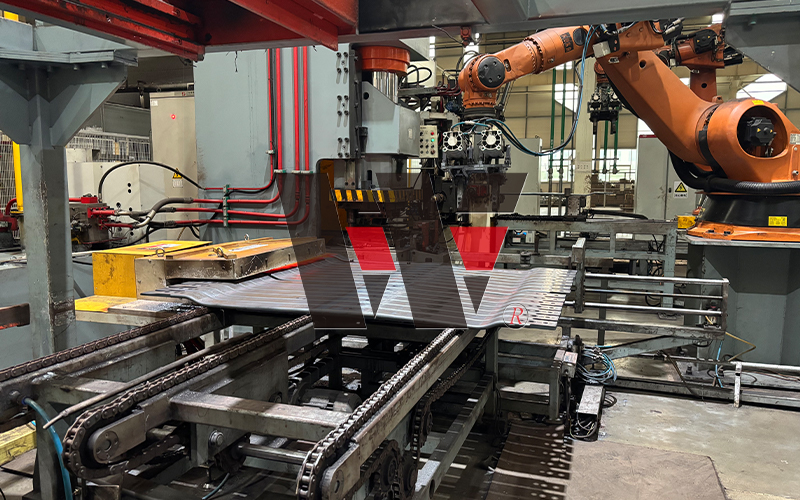
A press on its own is only half the story. Feeding, blank handling, slug removal and inter-station transfer decide the real output of the cell, because a fast press that waits for an operator is simply an expensive one. In an automated configuration, a coil or bar magazine feeds the press, a servo feeder sets the cut length, and a transfer unit or robot moves the blank to the next process without stacking or re-gripping.
Automation also makes the process repeatable. Because feed length, press stroke and punch sequence are held by the same controller, the blank leaving the line at hour one matches the blank leaving it at hour ten. For plants running several part numbers per shift, recipe storage is what makes that possible without manual re-setting.
We build complete blanking and punching lines that combine press, feeder, die handling and controls into one continuous process, sized around the part family you actually produce.
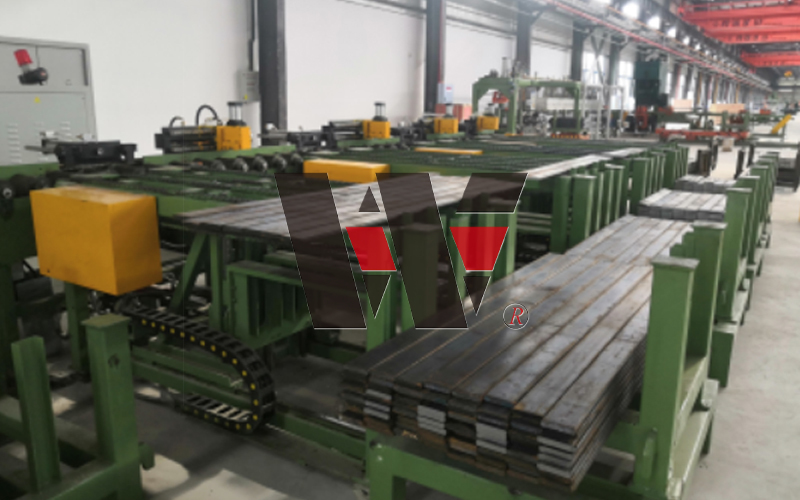
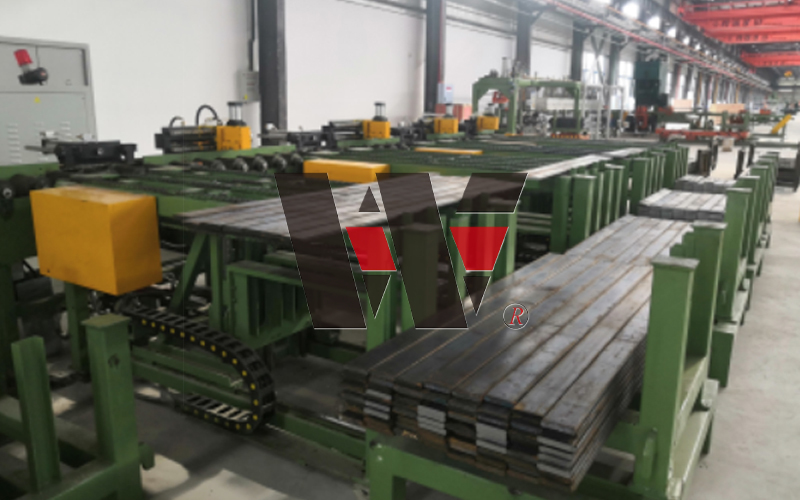 Fully Automatic Leaf Spring Blanking And Punching LineIntegrated High-Efficiency Operation: This production line integrates fully automatic blanking and hot punching processes, enabling continuous production from raw mate...View Product →
How to Choose the Right Blanking Press
Start with the part, not the machine. Working through these questions in order normally narrows the field to two or three sensible options.
- What is the thickest and longest blank in the family, and what is the shear strength of that material?
- How many holes and cut features must be produced per stroke, and can a compound die carry them?
- What annual volume do you expect, and how many changeovers per week?
- Which downstream operations follow — hot forming, rolling, curling or wrapping — and what tolerance do they need?
- How much floor space, power and foundation capacity can the press be given?
- What level of automation fits your labour situation: manual feed, semi-automatic cycle or a fully linked line?
- What support will you need after commissioning — remote diagnostics, spare parts, on-site service?
Answer honestly about changeover frequency and part mix; those two factors influence the choice between a mechanical and a servo press more than anything else.
Building the Whole Line, Not Just the Press
Wuxi Weineng Automation Technology Co., Ltd. has been developing equipment for automotive leaf springs, hot coiled springs and stabilizer bars since 2016, and we now work from a 6,000 square metre facility in Wuxi with a team of more than sixty engineers, technicians and service staff. Our range covers complete equipment sets for leaf springs, springs, stabilizer bars, guide arms and oil drill pipes, together with the automatic production lines and standalone machines that fill the gaps between them.
Because we supply the blanking stage, the drilling stage, the heating and forming stages and the heat treatment stages, our engineers can size a blanking press against the tolerances the rest of your line actually needs. That is a different conversation from buying a press in isolation, and usually a shorter one. Turnkey delivery, remote support and on-site service are all part of how we work.
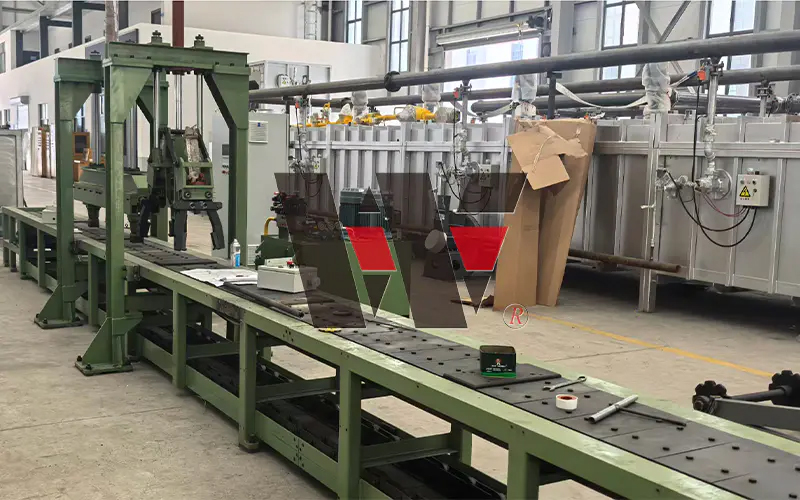
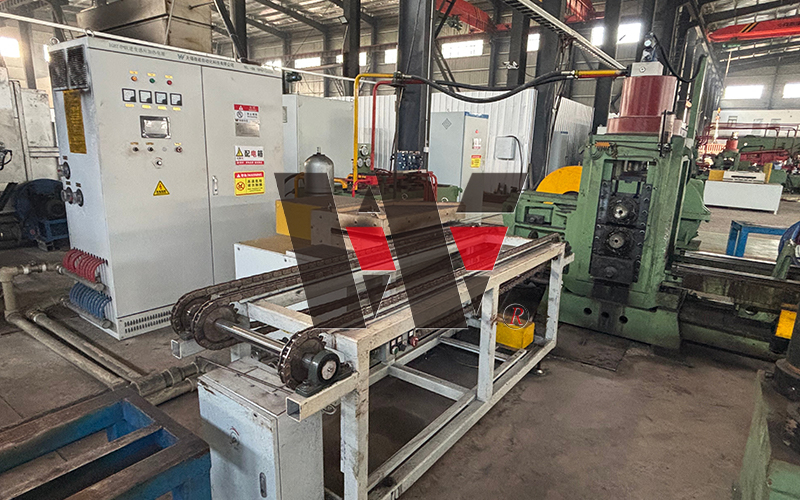
If you are planning a new line or replacing an ageing press, send us your part drawing and target output. We will come back with a configuration that fits the part rather than the catalogue. You can also browse our full range of spring manufacturing equipment to see how the individual machines fit together.
-
Do You Have Any Questions?
Let's
Discuss! -
Quick
Home Products / Equipment About Us Services Application News Contact Us -
Product Categories
Automobile Leaf Spring Complete Equipment Automobile Stabilizer Bar Complete Equipment Automobile Spring Complete Equipment Automotive guide arm complete equipment Oil Drilling Pipe Complete Equipment
-
Email Us
[email protected] [email protected] -
Address
Yangxiyuan Village, Luoshe Town, Huishan District, Wuxi City, Jiangsu Province, China -
Call Us Now
+86-18151713891 +86-18961722255 +86-18961507976 -
WhatsApp
+86-18151713891 +86-18961507976
Copyright © 2026 by Wuxi Weineng Automation Technology Co., Ltd. All Rights Reserved.
 Automotive Suspension Spring Production Line Turnkey Solutions