Wuxi Weineng Automation Technology Co., Ltd. / Shandong Weineng Automation Technology Co., Ltd.
-
 [email protected]
-
 +86-18961722255


 English
 русский
 Español
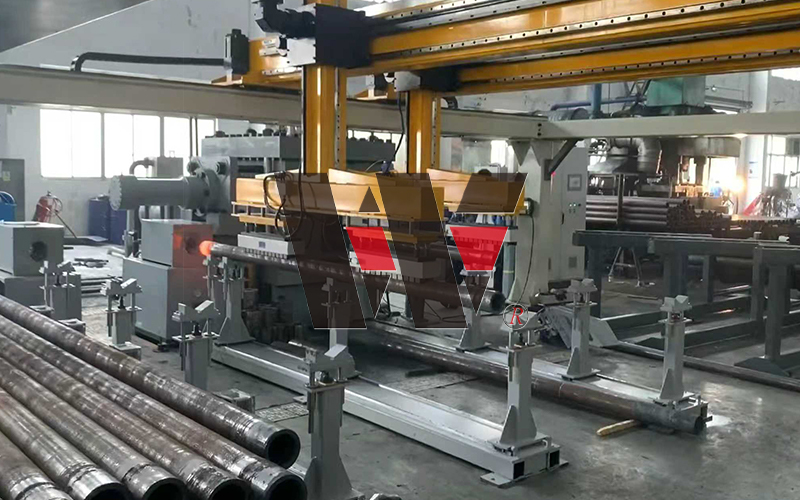
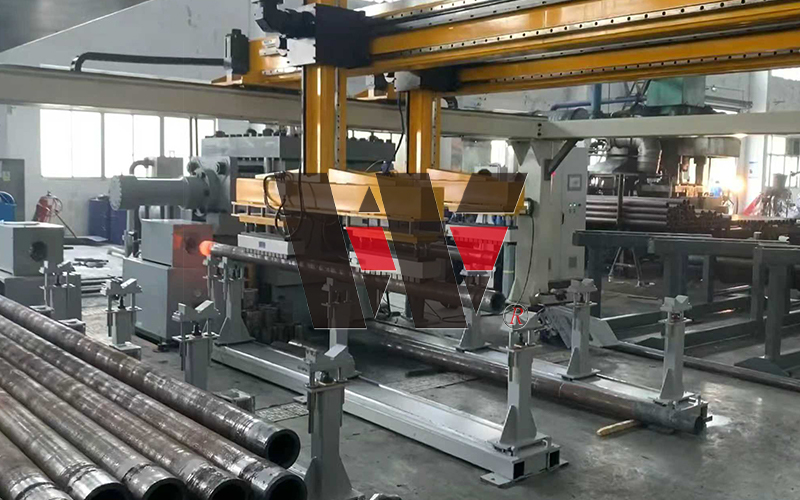
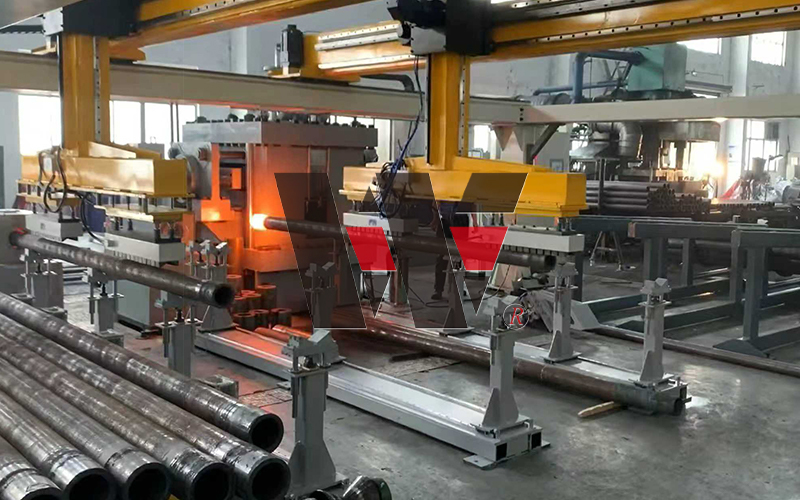
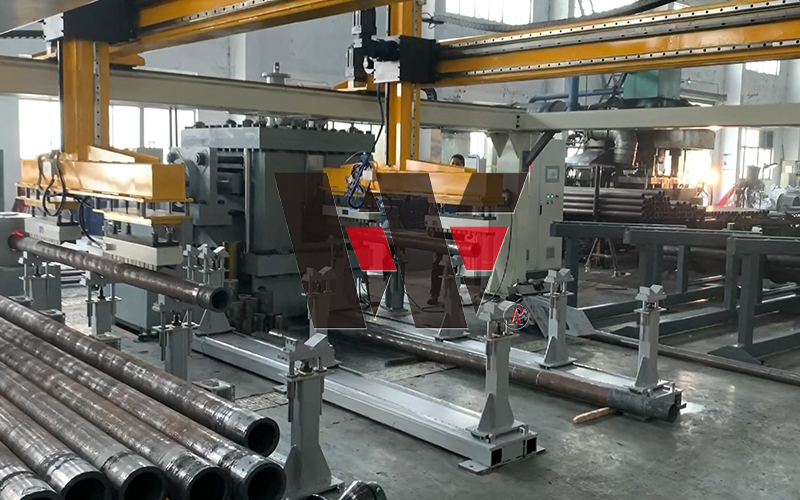
Drill Rod Upsetting Induction Heating Equipment
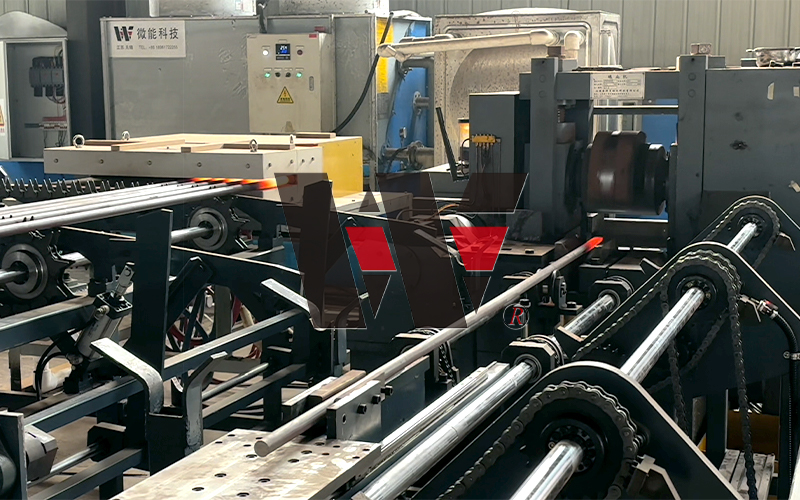
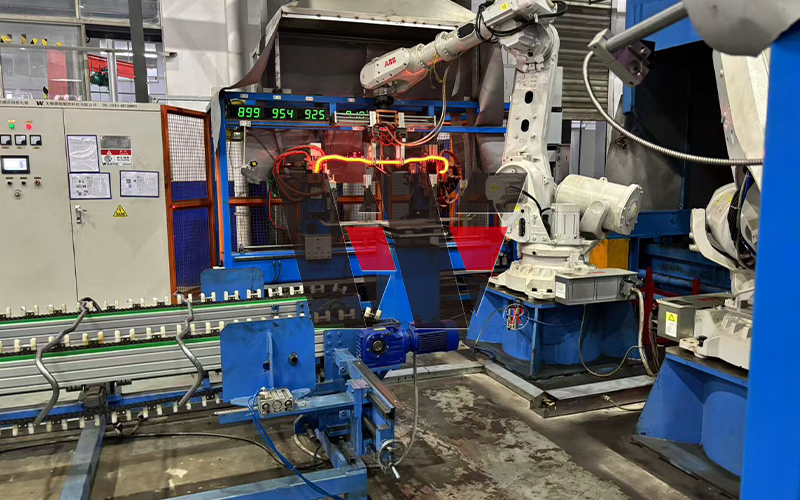
This drill rod upsetting induction heating equipment is the dedicated thermal unit for the drill pipe upsetting process, employing medium-frequency induction heating to deliver fast, precise localized heating to the pipe body ends. It prepares workpieces with uniform temperature and thorough softening ahead of hydraulic upsetting forging, serving as the critical upstream station that directly determines forming quality.
The induction heating system heats pipe ends to the optimal upsetting temperature within seconds, with the heat-affected zone precisely confined to the upset region at the end. Thermal conduction to the pipe body beyond the forming zone is effectively prevented, fully preserving the strength and toughness of the remaining pipe — ensuring the overall mechanical performance of the drill rod is unaffected.
Induction coils are custom-designed to match the outer diameter, wall thickness, and upset zone length of each pipe specification. Concentrated and uniform heating across the target area ensures consistent temperature distribution from the outer wall through to the inner wall of the end section, preventing uneven deformation or end cracking caused by excessive inner-outer temperature differentials, and safeguarding dimensional accuracy and surface quality at the source.
A closed-loop infrared temperature monitoring system continuously tracks the heating temperature of the pipe end in real time. Any deviation from the set process temperature triggers automatic power output adjustment, effectively preventing overheating and overburning, ensuring highly consistent discharge temperatures across every pipe, and guaranteeing stable and repeatable upsetting process parameters throughout batch production.
Digital phase-lock technology enables automatic frequency tracking without manual adjustment, seamlessly adapting to different induction coil specifications. Operating without high-voltage hazards, the equipment runs continuously and safely for 24 hours. Significant energy savings over conventional gas heating, combined with no open flames or fume emissions, deliver a clean working environment that meets modern green factory standards.
Related Products
About Us
Wuxi Weineng Automation Technology Co., Ltd.
Wuxi Weineng Automation Technology Co., Ltd. located in Wuxi, the Pearl of Taihu Lake, covers an area of 6,000 square meters and currently employs over 60 people. In 2016, the company's founding team began researching and developing complete sets of equipment for automotive leaf springs, hot-coiled springs, and stabilizer bars. Drill Rod Upsetting Induction Heating Equipment Supplier in China. To date, they have been deeply involved in this industry for 10 years and are recognized as a specialized, innovative, and distinctive enterprise in this field by the Ministry of Industry and Information Technology.
The company integrates R&D, production, sales, and service. Its main products include complete sets of automotive leaf spring equipment and stabilizer bar equipment, including stabilizer bar end induction heating equipment, stabilizer bar thermoforming induction heating equipment, hollow stabilizer bar double-end induction heating equipment, hollow bar resistance conduction heating production lines, stabilizer bar secondary vulcanization production lines, and hot-coiled spring equipment. The company also provides users with complete induction heating automated production lines. Drill Rod Upsetting Induction Heating Equipment Factory in China.
Over the years, the company has served leading domestic enterprises such as Shanghai China Spring Manufacturing Co., Ltd., Huawei Technology Co., Ltd., Zhejiang Meili Technology Co., Ltd., Zhejiang Jinsheng Auto Parts Co., Ltd., Chengdu ThyssenKrupp Fawer Spring Co., Ltd., Pinghu ThyssenKrupp (Pinghu) Automotive Stabilizer Bar Co., Ltd., and Liaoyang ThyssenKrupp Fawer Spring Co., Ltd., earning high praise for its products and services. Furthermore, the company has exported its equipment to countries such as Turkey, South Korea, India, Brazil, Egypt, Dubai, Iran, Africa, Tunisia and Morocco. "Professionalism, precision, innovation, and integrity" are the development concepts that the company has always adhered to. While continuously strengthening its own scientific research capabilities, it has formed stable industry-university-research cooperation with many universities. It has been repeatedly rated as a high-tech enterprise and a specialized and innovative enterprise. In the future, the company will continue to deepen its research and development in the automotive leaf spring, automotive guide arm, automotive stabilizer bar and spring industry equipment, provide the spring industry with more professional, intelligent and sophisticated equipment products, and contribute to the high-quality development of the global automotive leaf spring, automotive stabilizer bar and hot-coil spring industries.
The company integrates R&D, production, sales, and service. Its main products include complete sets of automotive leaf spring equipment and stabilizer bar equipment, including stabilizer bar end induction heating equipment, stabilizer bar thermoforming induction heating equipment, hollow stabilizer bar double-end induction heating equipment, hollow bar resistance conduction heating production lines, stabilizer bar secondary vulcanization production lines, and hot-coiled spring equipment. The company also provides users with complete induction heating automated production lines. Drill Rod Upsetting Induction Heating Equipment Factory in China.
Over the years, the company has served leading domestic enterprises such as Shanghai China Spring Manufacturing Co., Ltd., Huawei Technology Co., Ltd., Zhejiang Meili Technology Co., Ltd., Zhejiang Jinsheng Auto Parts Co., Ltd., Chengdu ThyssenKrupp Fawer Spring Co., Ltd., Pinghu ThyssenKrupp (Pinghu) Automotive Stabilizer Bar Co., Ltd., and Liaoyang ThyssenKrupp Fawer Spring Co., Ltd., earning high praise for its products and services. Furthermore, the company has exported its equipment to countries such as Turkey, South Korea, India, Brazil, Egypt, Dubai, Iran, Africa, Tunisia and Morocco. "Professionalism, precision, innovation, and integrity" are the development concepts that the company has always adhered to. While continuously strengthening its own scientific research capabilities, it has formed stable industry-university-research cooperation with many universities. It has been repeatedly rated as a high-tech enterprise and a specialized and innovative enterprise. In the future, the company will continue to deepen its research and development in the automotive leaf spring, automotive guide arm, automotive stabilizer bar and spring industry equipment, provide the spring industry with more professional, intelligent and sophisticated equipment products, and contribute to the high-quality development of the global automotive leaf spring, automotive stabilizer bar and hot-coil spring industries.
News
-
Industry News Oct. 16. 2026
-
Industry News Oct. 10. 2026
-
Industry News Sep. 28. 2026
-
Do You Have Any Questions?
Let's
Discuss! -
Quick
Home Products / Equipment About Us Services Application News Contact Us -
Product Categories
Automobile Leaf Spring Complete Equipment Automobile Stabilizer Bar Complete Equipment Automobile Spring Complete Equipment Automotive guide arm complete equipment Oil Drilling Pipe Complete Equipment
-
Email Us
[email protected] [email protected] -
Address
Yangxiyuan Village, Luoshe Town, Huishan District, Wuxi City, Jiangsu Province, China -
Call Us Now
+86-18151713891 +86-18961722255 +86-18961507976 -
WhatsApp
+86-18151713891 +86-18961507976
Copyright © 2026 by Wuxi Weineng Automation Technology Co., Ltd. All Rights Reserved.
 Custom Drill Rod Upsetting Induction Heating Equipment Factory
Custom Drill Rod Upsetting Induction Heating Equipment Factory