Wuxi Weineng Automation Technology Co., Ltd. / Shandong Weineng Automation Technology Co., Ltd.
-
 [email protected]
-
 +86-18961722255


 English
 русский
 Español
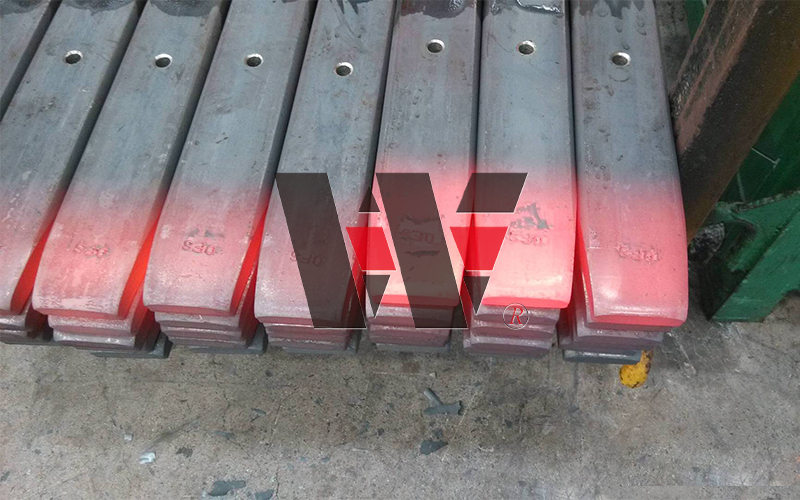
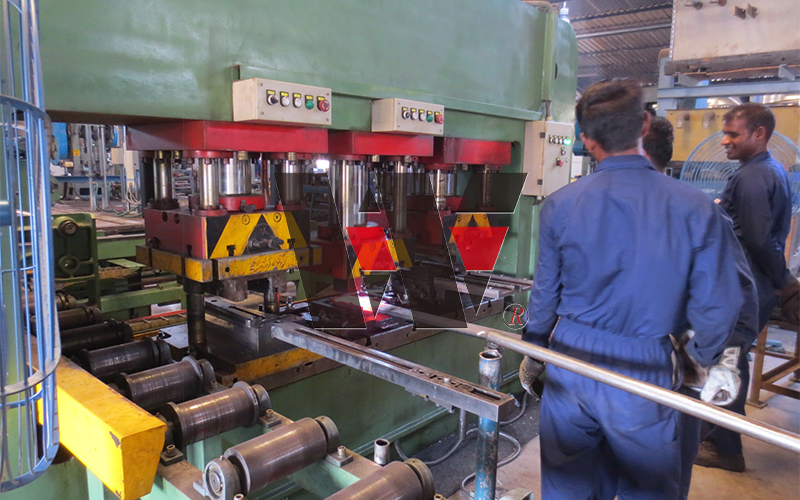
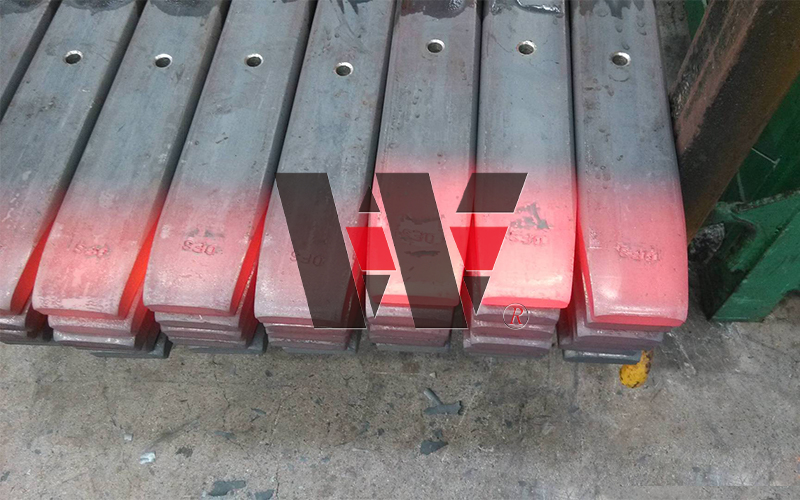
Three-Station Punching Press
Serving as a key standalone equipment within the automobile leaf spring production line, this three-station press is engineered specifically for high-efficiency multi-step stamping processes.
The machine is capable of completing several distinct processing stages within a single operational cycle, which significantly boosts production efficiency and minimizes material waste and handling time.
Built with a high-rigidity structure, the equipment ensures exceptional stability and machining precision during long-term continuous production, making it ideal for high-precision component manufacturing.
It features a high degree of automation and is equipped with comprehensive safety devices, including emergency stops and photoelectric protection, which reduce labor costs while ensuring operator safety.
With a broad range of available tonnages and adjustable technical parameters, this press offers the versatility needed to process various materials and workpiece sizes common in the automotive industry.
| parameter scope | |
| Heating thickness range | 1 mm to 300 mm |
| Heating length range | 200 mm to 5000 mm |
| Heating width range | 50 mm to 2000 mm |
| Heating temperature range | 850 °C to 950 °C |
| Equipment design power | 50 kW to 500 kW |
| Equipment production cycle time | 10 seconds to 120 seconds |
| Induction heater opening method | Single-sided opening, double-sided opening, annular opening, adjustable opening |
| Heating range | Unlimited |
| Heating temperature range | 950±30℃ |
| Equipment design power | 15 kW - 45 kW |
| Equipment production cycle time | 10 seconds to 30 seconds |
| Induction heater opening type | open, closed |
| Maximum pressure | 10t-100t |
Features :
Three-station presses can efficiently complete multi-step stamping processes, improving production efficiency.
A three-station press can complete multiple different processing steps in a single operation cycle.
This improves production efficiency and reduces material waste. Since the same machine can complete multiple process steps, the three-station press can significantly improve production efficiency, shorten the production cycle, and reduce workpiece handling time.
High degree of automation
High stability and precision: Because three-station presses typically employ a high-rigidity structure, they offer high machining accuracy, making them particularly suitable for machining parts requiring high precision. Furthermore, they exhibit good stability, making them suitable for long-term continuous production.
Suitable for mass production
Reduced labor costs: The highly automated design of the three-station press reduces the need for manual operation, lowers labor intensity, improves operational safety, and also reduces production costs
Technical parameters :
Maximum tonnage :
The capacity ranges from 20 tons to 1000 tons, depending on the material being processed, the size of the workpiece, and the processing technology. Common models include 50-ton, 100-ton, and 200-ton models.
The working stroke refers to the maximum downward pressing distance of the lower die of the press, which is generally 50mm to 500mm, depending on the size of the workpiece and the processing technology.
The mold size of a three-station press is generally between 200mm × 300mm and 500mm × 800mm.
Stamping frequency: The stamping frequency of a three-station press is usually 20 times/minute to 80 times/minute.
Power: Motor power typically ranges from 5kW to 50kW, with the specific power depending on the press tonnage and stamping frequency.
Safety protection devices: Three-station presses are typically equipped with emergency stop buttons, safety guards, photoelectric protection devices, and electronic protection devices to ensure that operators are protected from injury during production.
Related Products
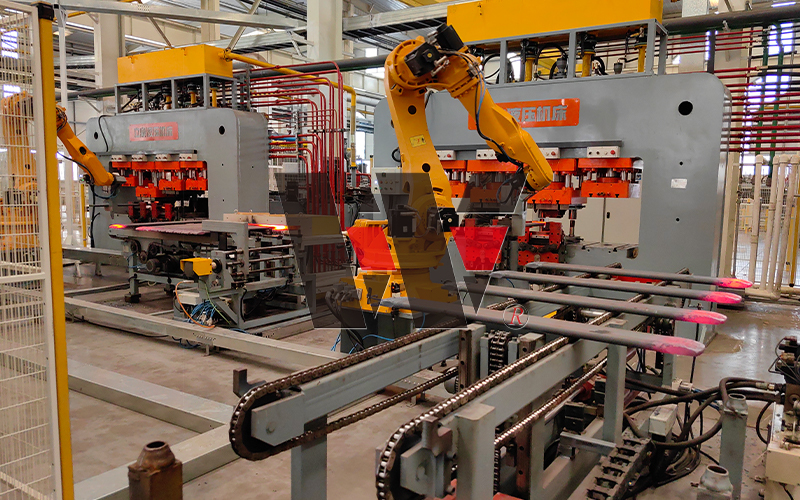
About Us
Wuxi Weineng Automation Technology Co., Ltd.
Wuxi Weineng Automation Technology Co., Ltd. located in Wuxi, the Pearl of Taihu Lake, covers an area of 6,000 square meters and currently employs over 60 people. In 2016, the company's founding team began researching and developing complete sets of equipment for automotive leaf springs, hot-coiled springs, and stabilizer bars. Three-Station Punching Press Supplier in China. To date, they have been deeply involved in this industry for 10 years and are recognized as a specialized, innovative, and distinctive enterprise in this field by the Ministry of Industry and Information Technology.
The company integrates R&D, production, sales, and service. Its main products include complete sets of automotive leaf spring equipment and stabilizer bar equipment, including stabilizer bar end induction heating equipment, stabilizer bar thermoforming induction heating equipment, hollow stabilizer bar double-end induction heating equipment, hollow bar resistance conduction heating production lines, stabilizer bar secondary vulcanization production lines, and hot-coiled spring equipment. The company also provides users with complete induction heating automated production lines. Three-Station Punching Press Factory in China.
Over the years, the company has served leading domestic enterprises such as Shanghai China Spring Manufacturing Co., Ltd., Huawei Technology Co., Ltd., Zhejiang Meili Technology Co., Ltd., Zhejiang Jinsheng Auto Parts Co., Ltd., Chengdu ThyssenKrupp Fawer Spring Co., Ltd., Pinghu ThyssenKrupp (Pinghu) Automotive Stabilizer Bar Co., Ltd., and Liaoyang ThyssenKrupp Fawer Spring Co., Ltd., earning high praise for its products and services. Furthermore, the company has exported its equipment to countries such as Turkey, South Korea, India, Brazil, Egypt, Dubai, Iran, Africa, Tunisia and Morocco. "Professionalism, precision, innovation, and integrity" are the development concepts that the company has always adhered to. While continuously strengthening its own scientific research capabilities, it has formed stable industry-university-research cooperation with many universities. It has been repeatedly rated as a high-tech enterprise and a specialized and innovative enterprise. In the future, the company will continue to deepen its research and development in the automotive leaf spring, automotive guide arm, automotive stabilizer bar and spring industry equipment, provide the spring industry with more professional, intelligent and sophisticated equipment products, and contribute to the high-quality development of the global automotive leaf spring, automotive stabilizer bar and hot-coil spring industries.
The company integrates R&D, production, sales, and service. Its main products include complete sets of automotive leaf spring equipment and stabilizer bar equipment, including stabilizer bar end induction heating equipment, stabilizer bar thermoforming induction heating equipment, hollow stabilizer bar double-end induction heating equipment, hollow bar resistance conduction heating production lines, stabilizer bar secondary vulcanization production lines, and hot-coiled spring equipment. The company also provides users with complete induction heating automated production lines. Three-Station Punching Press Factory in China.
Over the years, the company has served leading domestic enterprises such as Shanghai China Spring Manufacturing Co., Ltd., Huawei Technology Co., Ltd., Zhejiang Meili Technology Co., Ltd., Zhejiang Jinsheng Auto Parts Co., Ltd., Chengdu ThyssenKrupp Fawer Spring Co., Ltd., Pinghu ThyssenKrupp (Pinghu) Automotive Stabilizer Bar Co., Ltd., and Liaoyang ThyssenKrupp Fawer Spring Co., Ltd., earning high praise for its products and services. Furthermore, the company has exported its equipment to countries such as Turkey, South Korea, India, Brazil, Egypt, Dubai, Iran, Africa, Tunisia and Morocco. "Professionalism, precision, innovation, and integrity" are the development concepts that the company has always adhered to. While continuously strengthening its own scientific research capabilities, it has formed stable industry-university-research cooperation with many universities. It has been repeatedly rated as a high-tech enterprise and a specialized and innovative enterprise. In the future, the company will continue to deepen its research and development in the automotive leaf spring, automotive guide arm, automotive stabilizer bar and spring industry equipment, provide the spring industry with more professional, intelligent and sophisticated equipment products, and contribute to the high-quality development of the global automotive leaf spring, automotive stabilizer bar and hot-coil spring industries.
News
-
Industry News Oct. 16. 2026
-
Industry News Oct. 10. 2026
-
Industry News Sep. 28. 2026
-
Do You Have Any Questions?
Let's
Discuss! -
Quick
Home Products / Equipment About Us Services Application News Contact Us -
Product Categories
Automobile Leaf Spring Complete Equipment Automobile Stabilizer Bar Complete Equipment Automobile Spring Complete Equipment Automotive guide arm complete equipment Oil Drilling Pipe Complete Equipment
-
Email Us
[email protected] [email protected] -
Address
Yangxiyuan Village, Luoshe Town, Huishan District, Wuxi City, Jiangsu Province, China -
Call Us Now
+86-18151713891 +86-18961722255 +86-18961507976 -
WhatsApp
+86-18151713891 +86-18961507976
Copyright © 2026 by Wuxi Weineng Automation Technology Co., Ltd. All Rights Reserved.
 Custom Three-Station Punching Press Factory
Custom Three-Station Punching Press Factory