Wuxi Weineng Automation Technology Co., Ltd. / Shandong Weineng Automation Technology Co., Ltd.
-
 [email protected]
-
 +86-18961722255


 English
 русский
 Español

Inside a Modern Automotive Stamping Plant: Processes, Press Lines, and Equipment
Content
- 1 What Happens Inside an Automotive Stamping Plant
- 2 Press Types and Line Layouts Compared
- 3 Blanking and Punching: The First Link in the Chain
- 4 The Hot Side of Stamping: Induction Heating and Heat Treatment
- 5 Stamping and Forming in Suspension and Chassis Manufacturing
- 6 Common Challenges on the Shop Floor
- 7 Choosing Equipment That Grows With Your Program
An automotive stamping plant is where long coils of steel stop being flat. Presses cut, stretch, bend and trim sheet metal until it becomes a door inner panel, a sill reinforcement, a cross member or a bracket that will soon be welded into a vehicle body. Anyone who has stood on a press shop floor during a die change knows the rhythm of the place: coils in, blanks out, thousands of strokes per shift.
It is tempting to think a stamping plant only makes body panels. In practice, a great deal of suspension and chassis hardware also starts life on a press or a forming line. Leaf spring leaves are blanked and punched before they are rolled, tapered and heat treated. Stabilizer bars are heated and bent to shape. Guide arms are rolled, curled and quenched.
Wuxi Weineng Automation Technology Co., Ltd. has been building equipment for exactly those processes since 2016, covering blanking and punching, ear curling and wrapping, hot forming, induction heating and complete heat treatment lines for automotive springs, stabilizer bars, guide arms and oil drill pipes. Here is how a modern stamping operation is organized, and where the equipment decisions really matter.
What Happens Inside an Automotive Stamping Plant
Layouts differ from plant to plant, but the core sequence is remarkably consistent. Most facilities move a coil through four stages:
- Blanking. The coil is unrolled, straightened and fed into a press or a dedicated blanking line, where the outer profile of the part is cut. On high-volume programs, blanking is separated from forming so blanks can be nested tightly and scrap kept low.
- Forming and drawing. The blank is pushed into a die cavity, stretching the metal into its three-dimensional shape. Large body panels may be drawn in a single stroke.
- Trimming and piercing. Excess material around the edges is trimmed away and holes for bolts, clips and welds are punched.
- Flanging, restriking and coining. The final passes bend edges, sharpen radii and set the critical dimensions that welding fixtures will rely on.
Mild steel, high-strength steel and aluminium behave differently at every step, so press tonnage, cushion pressure, lubricant and die clearance must all be matched to the material. Around the press itself, coil cars, straighteners, feeders, destackers, transfer robots and quick die change systems decide how many good parts the line actually produces in a shift.
Press Types and Line Layouts Compared
Before specifying equipment, it helps to understand what each layout does best. The table below summarizes the configurations we hear about most often when customers describe their programs.
| Line type | Typical parts | Main strength | Watch out for |
|---|---|---|---|
| Tandem press line | Body panels, large outer parts | Flexible, simple die change | Floor space, slower cycle |
| Transfer press line | Structural brackets, reinforcements | High output with automation | Higher tooling cost |
| Progressive die line | Small and medium stamped parts | Very high speed in one die | Complex, expensive dies |
| Blanking and punching line | Leaf spring leaves, flat blanks | Consistent blank quality, low scrap | Nesting and coil change time |
| Hot stamping line | Ultra-high-strength safety parts | Strength and formability together | Furnace and cooling control |
The right answer depends on annual volume, part size, material grade and how often the tooling will change. A line that suits 300,000 identical blanks per year is the wrong investment for a plant that changes dies three times a day.
Blanking and Punching: The First Link in the Chain
In a leaf spring or chassis stamping plant, blanking sets the tolerances for everything downstream. If the blank is short, the rolled eye will not close to size. If the holes are off-center, the assembly fixture will fight the part. That is why we design blanking and punching lines around the material rather than around a catalogue press: coil width and thickness, the number of holes per blank and the trim scrap all shape the machine specification.
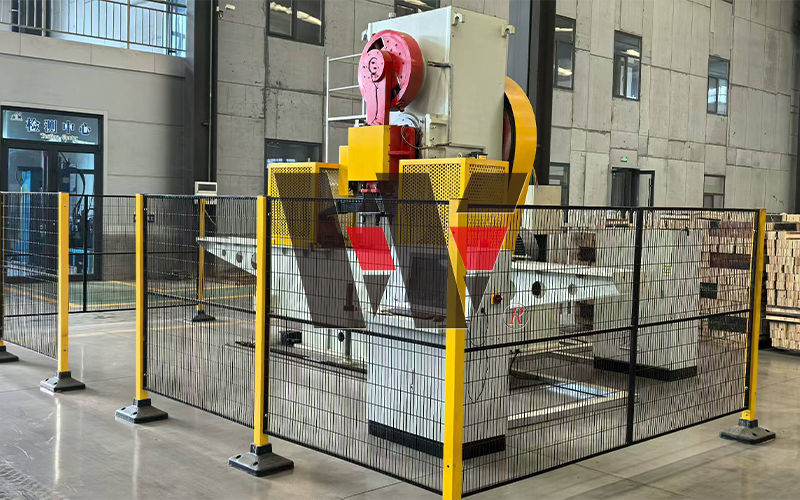
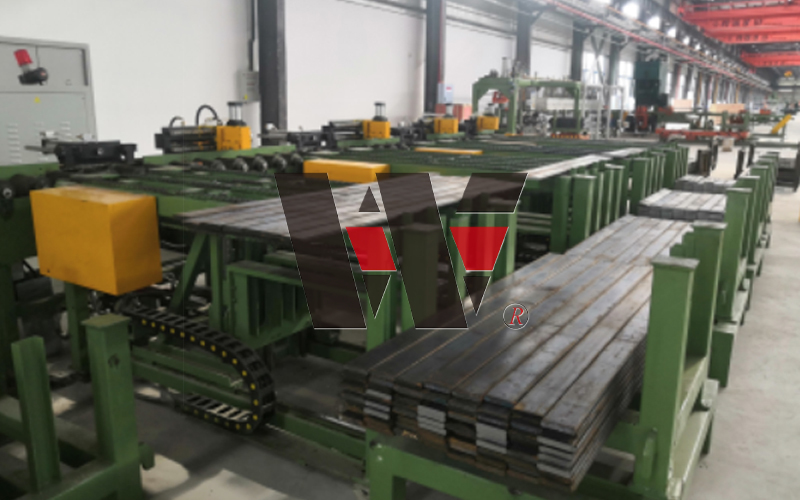 Fully Automatic Leaf Spring Blanking And Punching LineIntegrated High-Efficiency Operation: This production line integrates fully automatic blanking and hot punching processes, enabling continuous production from raw mate...View Product →
Automation matters here as much as it does in a body shop. Automatic coil loading, servo feeding, hydraulic punching stations and controlled unloading keep operators away from the shear line and keep output steady from the first hour of a shift to the last.
The Hot Side of Stamping: Induction Heating and Heat Treatment
Cold stamping is only half of the picture. Ultra-high-strength parts are increasingly hot stamped, and spring-type components rely on heat at almost every stage. Leaf spring ends are heated before rolling, stabilizer bars are heated before bending, and finished parts are quenched and tempered to reach the fatigue life a vehicle program demands. Getting the temperature curve right is what separates a reliable line from one that produces rejects.
Induction heating has become the preferred method in this field because it is fast, repeatable and easy to integrate into a continuous flow. If you would like a closer look at how the process is applied, our engineers have written a practical overview of induction heating in automotive spring manufacturing.
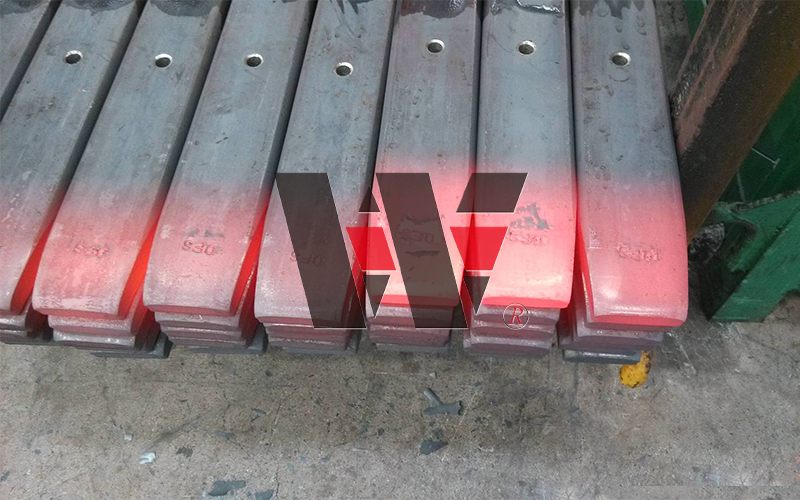
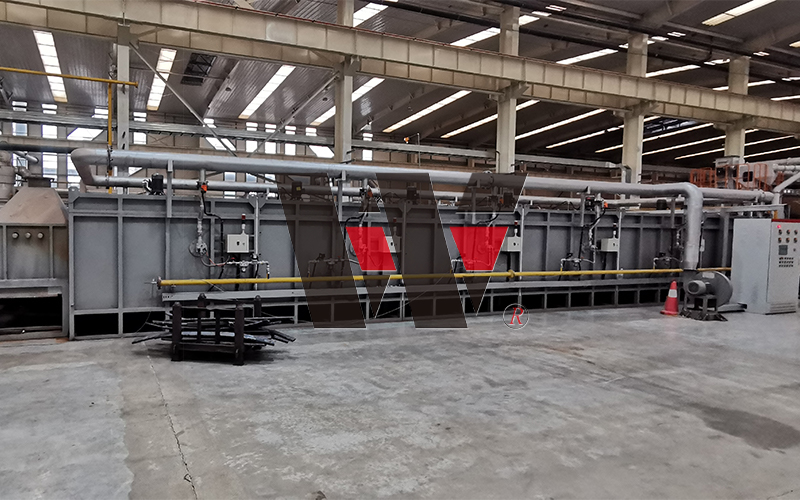 Fully Automatic Leaf Spring Heat Treatment Production LineFull Process Automation Integration: This production line integrates automatic loading mechanisms, multiple KUKA industrial robots, a quenching furnace, a straightenin...View Product →
A complete heat treatment line links heating, holding, quenching and tempering into one controlled sequence, with records that can be traced back to each batch. Traceability is often the first thing customers ask about when they audit a supplier.
Stamping and Forming in Suspension and Chassis Manufacturing
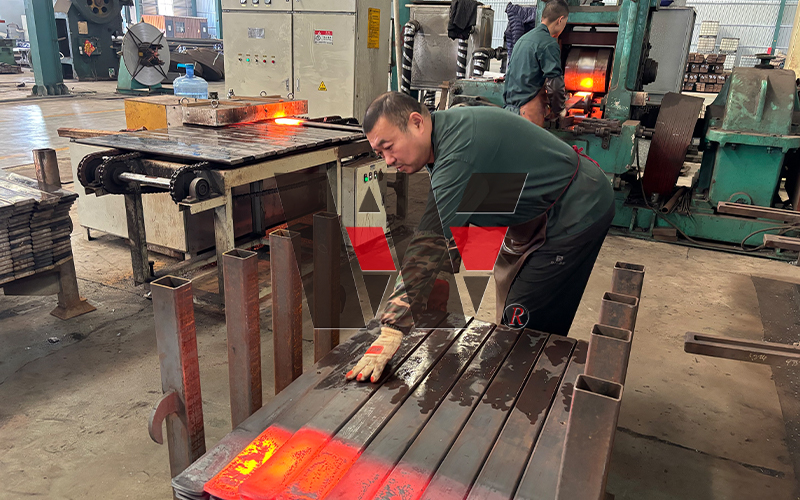
Suspension components show how stamping, hot forming and heat treatment live inside one plant. A stabilizer bar begins as bar stock that is cut to length, heated and bent to a controlled shape, then quenched and tempered. The ends are upset or flattened, bushings are bonded or vulcanized, and the finished bar is checked for stiffness and fatigue life. Each step has its own equipment, and the hand-offs between them are where cycle time is usually lost.
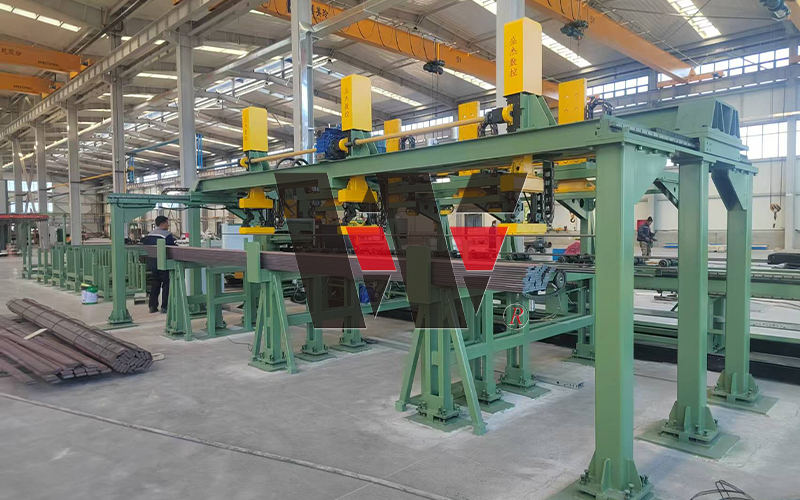
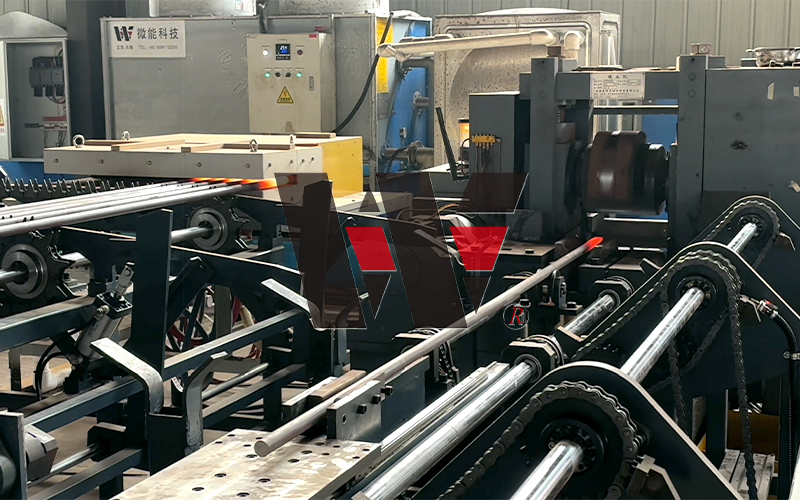
 Auto Sway Bar Solid Rod Thermoforming Production LineThe solid rod thermoforming production line is purpose-built for the hot forming of automotive stabilizer bars (anti-roll bars / torsion bar springs), integrating end-...View Product →
Leaf springs follow a similar logic, with blanking, punching, end heating, rolling, curling, wrapping, cambering, quenching and tempering arranged one after another. Guide arms add rolling and rolling heating to the sequence. When these operations are automated end to end, a plant gains more than labor savings: it gains a stable process window and repeatable hardness, camber and geometry part after part.
Common Challenges on the Shop Floor
Whatever the product, the same issues come up in conversations with plant managers:
- Die wear and punch breakage that stop the line without warning.
- Coil and blank changeover time that eats into available capacity.
- Dimensional drift after quenching, as parts distort while they cool.
- Hardness variation between the start and the end of a production run.
- Finding operators who can read a temperature curve as confidently as a drawing.
Most of these problems are solved at the specification stage rather than on the shop floor. Robust guides, generous tooling access, quick change systems, closed-loop temperature control and simple diagnostics cost a little more up front and pay for themselves long before the first major overhaul.
Choosing Equipment That Grows With Your Program
An automotive stamping plant is a long-term investment, and equipment should be chosen the same way. It is worth asking a supplier three questions: can the line handle the next material grade the program will use, how long does a changeover really take, and what support is available after commissioning? A machine that only works at today's volume quietly becomes tomorrow's bottleneck.
We build our lines to be expanded, because adding a heating station, a punching unit or an unloading system later should never mean replacing the entire line. If you are planning new stamping, hot forming or heat treatment capacity, you are welcome to review our complete equipment range and talk the process through with our engineers. We have spent ten years on these production steps, and we are glad to share what we have learned.
Related Products
-
Do You Have Any Questions?
Let's
Discuss! -
Quick
Home Products / Equipment About Us Services Application News Contact Us -
Product Categories
Automobile Leaf Spring Complete Equipment Automobile Stabilizer Bar Complete Equipment Automobile Spring Complete Equipment Automotive guide arm complete equipment Oil Drilling Pipe Complete Equipment
-
Email Us
[email protected] [email protected] -
Address
Yangxiyuan Village, Luoshe Town, Huishan District, Wuxi City, Jiangsu Province, China -
Call Us Now
+86-18151713891 +86-18961722255 +86-18961507976 -
WhatsApp
+86-18151713891 +86-18961507976
Copyright © 2026 by Wuxi Weineng Automation Technology Co., Ltd. All Rights Reserved.
 Automotive Suspension Spring Production Line Turnkey Solutions