Wuxi Weineng Automation Technology Co., Ltd. / Shandong Weineng Automation Technology Co., Ltd.
-
 [email protected]
-
 +86-18961722255


 English
 русский
 Español
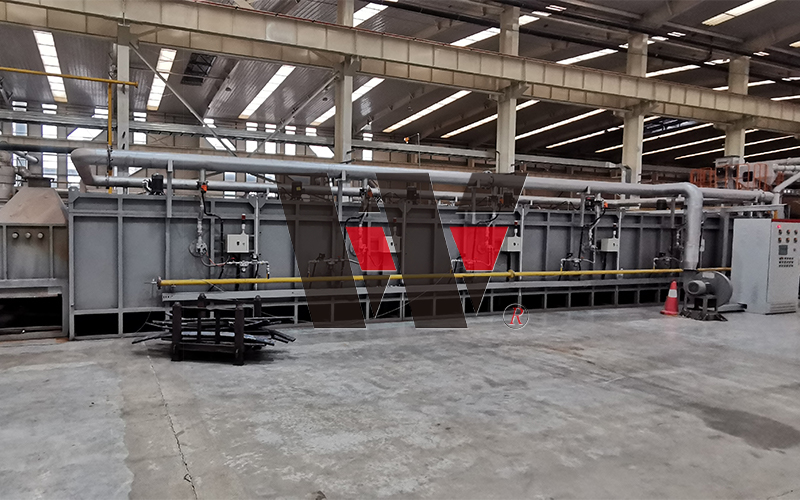
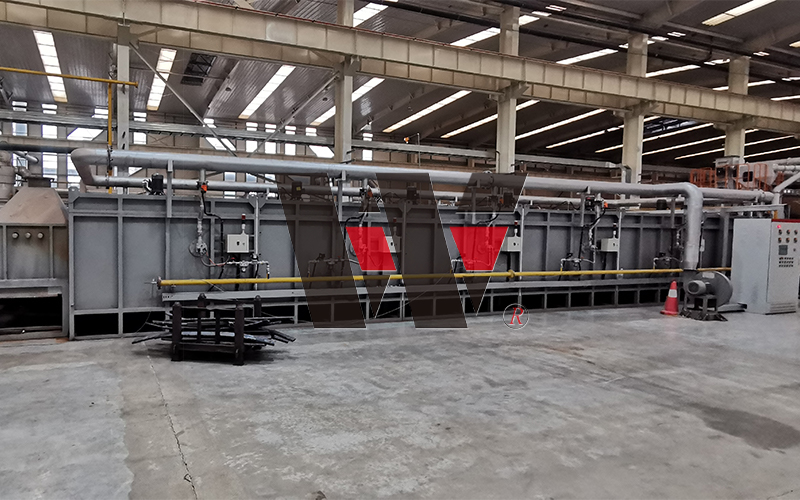
Fully Automatic Leaf Spring Heat Treatment Production Line
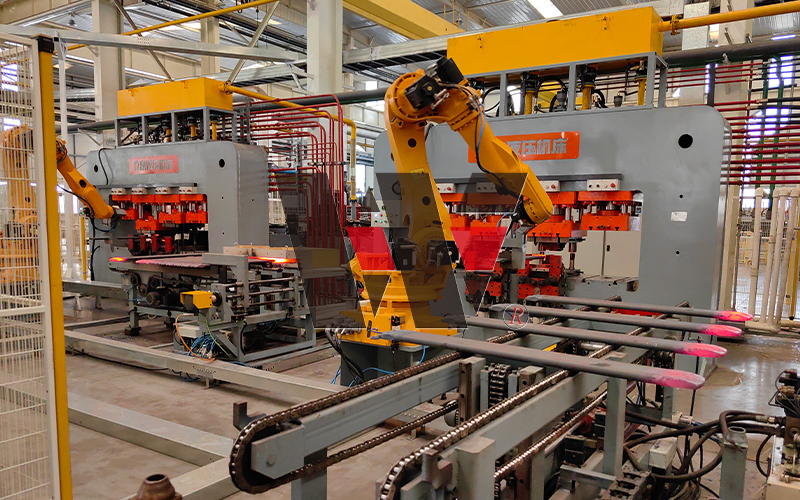
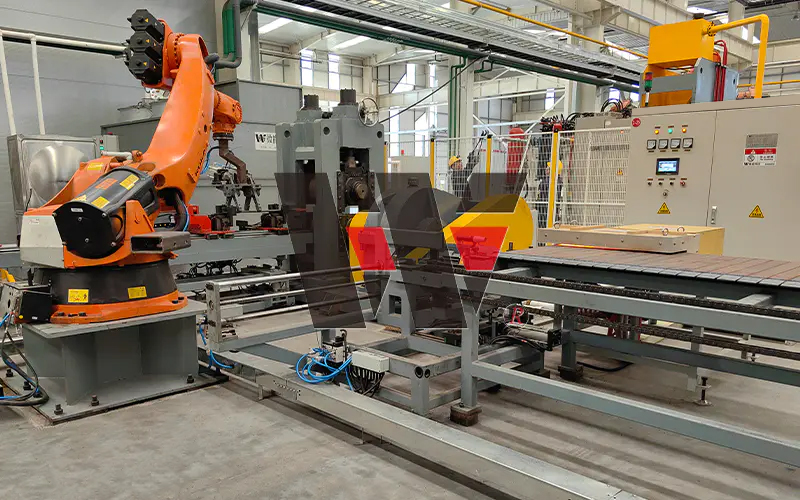
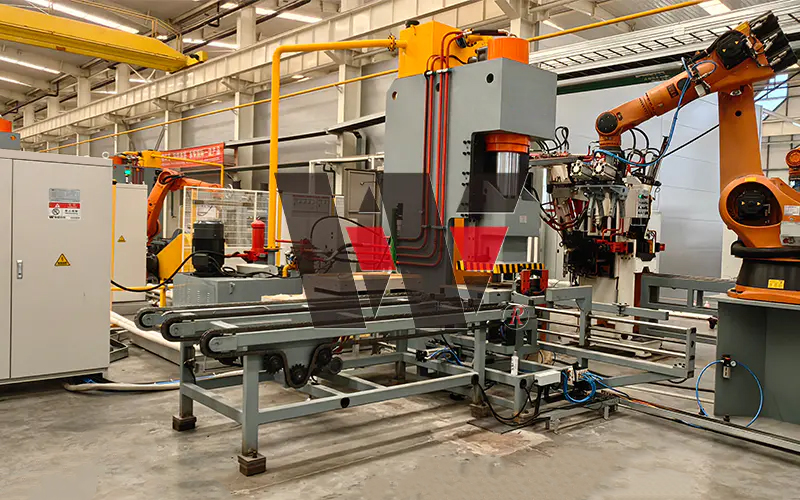
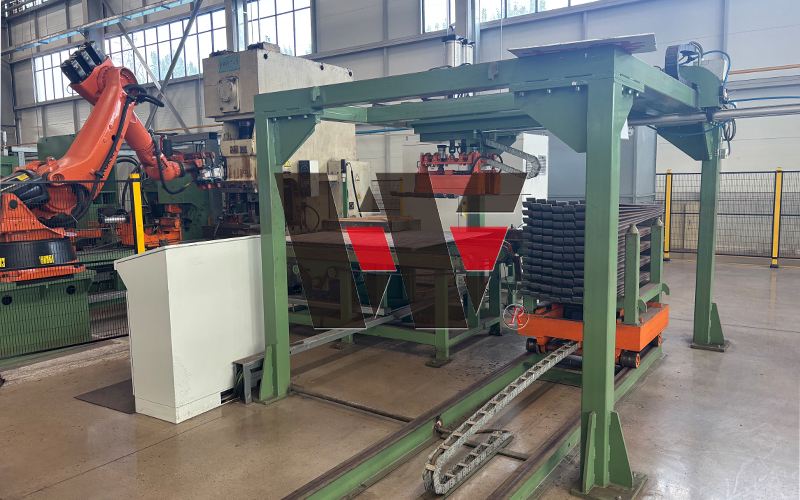
Full Process Automation Integration: This production line integrates automatic loading mechanisms, multiple KUKA industrial robots, a quenching furnace, a straightening machine, framework quenching machines, and a tempering furnace. It achieves end-to-end automation from raw material loading to finished product tempering without manual intervention in operating parameters.
High-Precision Robot Handling System: Equipped with three KUKA 210 robots and a dedicated walking track, the system features a repeatability of ±0.2mm. The robot grippers support 180° flipping and anomaly monitoring, ensuring efficient and precise transfer of workpieces between the furnace and quenching units.
Precise Thermal Process Control: The quenching furnace utilizes a dual-beam stepping structure with proportional-control cylinders for extreme precision.
The tempering furnace is divided into 7 temperature zones with PID continuous regulation, achieving an instrument accuracy of ±5°C, ensuring optimal mechanical properties and stress relief for the leaf springs.
Flexible Forming and Quenching Capability: The line is configured with 6 framework quenching machines utilizing 3-cylinder anti-arc forming and vertical oil immersion. It supports adjustable swaying cooling times (0-400s) and can process a wide variety of leaf spring workpieces up to 2100mm in length and 40mm in thickness.
Intelligent Management and Eco-friendly Design: Powered by Siemens PLC and servo systems, it supports remote monitoring and data acquisition. Digital meters with communication ports provide real-time feedback on operations and maintenance. Additionally, the integrated energy-saving closed cooling tower and exhaust systems meet modern industrial environmental standards.
Production line composition
| 1. Automatic feeding mechanism | 1 set |
| 2. One set of quenching furnace feeding robot and auxiliary mechanism | |
| 3. Quenching furnace | 1 unit |
| 4. Quenching and unloading robot and auxiliary mechanism | 1 set |
| 5. One dual-chip straightening machine | |
| 6. Quenching machine feeding robot and auxiliary mechanism | 1 set |
| 7. 1 set of robot walking track | |
| 8. Frame quenching machine | 6 units |
| 9. One set of short-film medium-frequency heating furnace (including feeding mechanism). | |
| 10. 1 short film forming machine | |
| 11. One set of oil tank and slag removal mechanism | |
| 12. 1 set of quenching oil cooling system | |
| 13. tempering furnace | 1 unit |
| 14.One set of automated control system for the entire production line |
1. Leaf spring workpiece parameters
1. Leaf spring length (mm) 60 0~ 2100 mm
Note: For single-row production, the material placement diameter is 1000-2100mm .
Double-row production material placement 700 ~ 900mm
2. Leaf spring width (mm): 50 ~ 120 mm
3. Leaf spring thickness (mm): 10 - 40 mm
4. Workpiece weight (kg): 2-30 kg
5. Leaf spring arc height: 0~250mm
2. Automatic feeding mechanism
1. Raw material length: 600 ~ 2100 mm
2. Maximum single-row raw material weight: 300 kg
3. Maximum width of single row of raw materials: 630 mm
4. Number of loading stations: 4, allowing for the simultaneous production of up to 4 different types of leaf springs.
5. To enable rapid, non-stop replacement of the quenching material basket, the basket is placed on an electric trolley, which is driven by a motor at the bottom to achieve automatic movement.
6. The replacement time for material baskets should be controlled within 4 minutes.
7. The feeding device uses an electromagnetic chuck to suck up materials from the basket to the conveyor chain, and the robot picks up the materials from the conveyor chain and puts them into the quenching furnace according to the specified program.
8. Original centering deviation of the material frame: ± 30
3. Quenching furnace
1.Furnace chamber dimensions (length * width * height): 12500mm * 2200mm * 600mm
2. Furnace operating temperature: 900-1100 ℃
3. The walking beam adopts a double beam structure with a center distance of 930mm;
4. Maximum feed distance per step: 240mm;
5. The maximum lifting height is 80mm.
6. Furnace inlet and outlet opening height: 300mm;
7. The stepper mechanism's operating cycle (configurable) is ≥12s;
8. Transmission system
A stepper conveyor mechanism is used, and the lifting is vertical.
The forward hydraulic cylinder uses proportional control.
A synchronous belt encoder provides position feedback, achieving a control accuracy of 0.1mm.
The cylinder base is sturdy and reliable.
Each transmission bracket hinge joint uses bearings, which are easy to lubricate;
9. Combustion system
It employs multiple burners and is divided into 4 control zones;
The combustion system is controlled using an air-fuel ratio method.
Combustion can be controlled in zones and adjusted according to the thickness of different materials;
10. Burner power
230kW (10 units), 150KW (2 units);
Heating energy source: natural gas, calorific value 8,000 kcal /Nm³, gas pressure: 5-8 kPa;
11. Furnace body insulation
The furnace body insulation material is heat-resistant to 1200℃, and the furnace top is made of high-purity ceramic fiber modules;
The furnace bottom and side walls are made of clay refractory bricks and insulating bricks, with the furnace bottom bricks being more than 400mm thick.
Sealing plates are installed on the support beams and columns to reduce air entry.
12. Gas system
The buyer shall configure the main gas supply pipeline and the on/off valve;
The supplier provides filters, pressure gauges and switches, pressure reducing valves, meters (with data output and communication ports), solenoid valves and other accessories and gas supply lines.
13. Stepping beam
The stepping beam is made of heat-resistant steel, and the stepping beam bricks at the outlet end are also made of heat-resistant steel.
The bricks used in the imported end-stage walking beams are made of wear-resistant materials.
14. Thermal insulation index
When the operating temperature is 850-950℃, the temperature of the outer wall of the furnace body should not exceed the ambient temperature by more than 30℃ (no testing is required within 400mm around the burner).
15. The burner ignites automatically and does not emit black smoke during the ignition and heating process;
16. Each heating zone corresponds to one thermocouple, type K, with an accuracy of 0.5%FS;
17. discharge port
The furnace wall has a detachable structure for easy maintenance;
The discharge furnace door is automatically opened, reducing the furnace door opening time;
A robot is used to pick up materials and deliver them to the straightening machine;
4. Hot straightening machine
1. Maximum straightening force 120KN
2. Straightening length 700-2100mm
3. Maximum opening size 280mm
4. Jaw clamp height 100mm
5. It can achieve single and dual-chip straightening.
(For sheet width ≤ 100 mm , double sheets can be used for straightening; for sheet width > 100 mm , single sheet can be used for straightening. )
6. Servo positioning is used for the length direction positioning of the leaf spring. This system can realize centering positioning of four types of leaf springs, and the robot picks up the material from the center of the leaf spring at the split position.
5. robot
1. Quantity: 3 units
2. include:
A. 1 quenching furnace feeding robot
B. One quenching furnace material handling robot
C. 1 quenching machine feeding robot
3. Robot model: KU KA 210 ( 6 degrees of freedom , 165 kg load, repeatability ± 2 mm);
4. The robot gripper enables the spring to rotate 180°.
5. The gripper has monitoring measures for abnormal grasping and abnormal opening.
6. Robot walking track
1. The walking mechanism is used for the horizontal movement of the quenching robot, enabling it to perform actions at different positions.
2. It adopts a linear guide slider structure and a gear rack servo drive;
3. The track is 12.5m long;
4. The moving speed is approximately 1-1.2 m/s;
5. Repeat positioning accuracy ±5mm.
7. Frame quenching machine
1. Spring length ≤2200 mm
2. Maximum clamping force in the straight middle section > 40 kN
3. Maximum clamping force for both sides > 3 0KN×2
4. The hydraulic cylinder stroke is
5. Maximum opening height of the upper and lower clamps : 450mm
6. Workpiece arc height ≤ 300 mm
7. Top tooth height 185mm
8. Quenching swing cooling time 0-400s digital adjustment
9. Maximum swing speed 2 2 times/min
10. Oil filling method: vertical oil filling
11.Curved shape, 3-cylinder reverse arc forming
12. Gantry rack
It is made of welded steel plates and profiles, and supports the lifting mechanism and the forming mechanism;
Strictly control the manufacturing precision, body rigidity, operating precision, and interchangeability of easily damaged parts of the bending machine;
The overall height of the machine should not be too high, taking into account the installation and ease of maintenance of environmental protection equipment;
13. Molding mechanism
Composed of an upper rake body, a lower clamping body, etc., it is used for bending leaf springs and for clamping and constraining leaf springs in quenching oil during quenching.
14. Swing mechanism
A variable frequency motor (with a motor reducer connected and fixed) is used to drive the eccentric wheel to reciprocate the forming mechanism.
15. Clamping tooth design
Embedded rake surface guide groove (groove depth 6mm) to prevent tire slippage;
The upper and lower rake teeth are coaxial;
The upper teeth are T-shaped, and the lower teeth are L-shaped;
The clamping fastening bolts are embedded in the horizontal flat groove of the rake surface to prevent rotation;
16. The minimum immersion depth of the workpiece in oil during quenching must be 350 mm ;
17. In automatic operation mode, the system automatically fills with oil when in a vertical position after power failure .
It remains in place during material loading and mold adjustment , and does not enter the oil.
Automatic oil filling is not allowed during the clamping process after power failure ;
18. Quenching machine fan-shaped lifting position: production station and adjustment station. The tilted lifting position should facilitate robot loading and manual adjustment of quenching top teeth.
8. Short film medium frequency heating furnace
1. The medium-frequency heating furnace has a temperature measuring mechanism for the workpiece temperature. Once the temperature is reached, the workpiece can be removed from the furnace, and the power is reduced if the temperature exceeds the limit.
2. Work style:
The hot spring sheet is manually placed one by one from the feeding end, the pushing mechanism pushes the sheet into the furnace in a stepping motion, and it is automatically discharged from the other end. The hot spring sheet is then removed manually from the discharge end.
3. Rated input voltage 380V±10% (three-phase)
4. Rated input current: 560A
5. Rated maximum intermediate frequency voltage: 1000 V
6. Rated maximum output intermediate frequency current: 1800 A
7. Rated maximum intermediate frequency power: 450 KW
8. Rated maximum output intermediate frequency: 8000Hz
9. Heating spring length ≤ 600mm
10. Heating temperature 950 ±20℃
11. Production cycle time: 1 piece/30 seconds
12. The furnace head has an O-shaped structure, with springs allowing for horizontal step-feed heating;
13. Two burner heads are included: one 6-12mm and one 13-25mm.
14. Closed-loop cooling system cooling capacity: 100,000 KCAL /H
9. Short film forming machine
15. Specifications and quantity: 600 mm , 1 unit
16. Quenching method
Manual feeding; after forming, the spring sheets automatically fall into the oil tank for free quenching.
17. Forming force 40 kN
18. Maximum opening height of the upper and lower clamps: 250mm
19. workpiece arc height ≤ 20 0 mm
20. Top tooth height 185mm
10. oil tank
1. It mainly consists of an oil tank shell, a conveyor chain, and a slag removal mechanism.
The conveyor chain is designed with toothed scrapers to prevent the workpiece from sliding down the incline section. The material used is 7#*7mm equal angle steel.
The steel plate of the oil tank has a wall thickness of 10mm;
2. The upper edge of the oil tank is 350mm above the ground.
3. The conveyor chain has an incline angle of 5 °, and the manual material handling height is 960 mm.
4. Configure a quenching oil tank that matches the frame quenching machine;
5. Install an oil temperature display and alarm device;
6. Quenching medium cooling circulation inlet and outlet (DN100 ) .
11. Quenching oil cooling system
1. Cooling is achieved using a closed-loop cooling tower;
The cooler uses 304 stainless steel tubing, and the outer shell is made of magnesium-aluminum-zinc plate.
Equipped with built-in descaling equipment;
Energy-saving and environmentally friendly, automatically controlling the start and stop of the fan and spray pump according to the water temperature
Cooling tower capacity: 200 tons;
2. Dual filters, one for backup and one for use;
3. Dual-pump circulation system, one pump for backup.
12. tempering furnace
1. Furnace chamber dimensions (length * width): 16100 * 2100 (mm); single furnace section length 2300mm, total 7 sections.
2. Gas type: Natural gas (calorific value > 8000 kcal/Nm³)
3. Maximum operating temperature of the furnace: 650℃
4. Instrument temperature control accuracy: ±5℃
5. Production capacity: 4t/h
6. Number of burners: 2 burners for 230KW in Zone 1; 2 burners each for 150KW in Zones 2 and 7.One unit each in zones 3, 4, 5, and 6, 150KW.
7. There are 7 temperature zones, with 1 thermocouple for each heating zone, for a total of 7 thermocouples .
8. Conveyor chain
Two mesh belts are used , and the mesh belt material is heat-resistant steel ( 1Cr13 ).
The conveyor chain uses a standard pitch and has rollers at the bottom to prevent the chain from jamming.
The conveyor chain is strong enough to ensure smooth operation;
is continuously adjustable between 100 and 400 mm/ min .
9. The charging rack of the tempering furnace is 2.5 meters long, equipped with a water washing device, a fume hood, and a chimney with a height of 15 meters.
10. The unloading rack is 2.5 meters long, and the water spray cooling meets the requirements for sufficient cooling of the workpiece. The spray tank is made of stainless steel. When the workpiece temperature is below 100℃, the workpiece will evaporate the water on its own after spraying.
11. The circulating fan impeller is made of 304 stainless steel, and the circulating fan is equipped with an audible and visual alarm device when an abnormality occurs.
12. The combustion system employs zoned control; burner power is rationally matched; and air-fuel ratio control is used to ensure heating speed and temperature uniformity.
13. Temperature control
Each section of the furnace is equipped with a temperature control device, forming a closed-loop automatic temperature regulation system. A "PID continuous regulation" method is used to control the natural gas and combustion air entering the burner using "dual parameters".
14. The temperature control system is equipped with "over-limit alarm" and " automatic shutdown when over- temperature ".
In addition, if the pressure of natural gas or combustion air is insufficient, the combustion system will automatically extinguish the fire.
the hot air circulation fan malfunctions , the combustion system in the corresponding zone will automatically shut down and trigger an alarm.
15. It can generally remember temperature information for 1 to 2 years.
Historical data can be queried and displayed in curve or table format. Data can be exported using a USB flash drive .
13. Overall production line efficiency: ≥4t/h (based on standard spring sheet 16 × 90 × 16 00 , 2 sheets quenched at a time)
Other equipment requirements:
1. The control cabinet is equipped with an electricity meter with a data output communication port to facilitate data acquisition and management, and is designed with information modules for production operation, fault alarm feedback, maintenance and other functions.
2. The equipment allows users to input product parameters via a touchscreen, and the control system automatically sets the operating parameters for the robot and servo positioning device without manual intervention.
3. The billet turnover racks should use a standardized form for universal use throughout the production plant. The specific form of the billet turnover racks will be determined through negotiation between both parties.
4. Transfer method for turnover material frames: on-site crane or shovel transport by the buyer;
5. The equipment is capable of continuous operation, allowing for three shifts of production per day;
6. The PLC uses German SIEMENS products;
7. The servo motors are from German SIEMENS .
8. The main electrical control components are Schneider Electric products;
9. The hydraulic valves are selected from Beijing Huade products;
10. The hydraulic system is equipped with a cooling device and has functions for monitoring and alarming for faults such as oil temperature and filter blockage.
11. The hydraulic system is equipped with a water cooler, and the continuous working oil temperature does not exceed 55°C when the water temperature does not exceed 30°C.
12. Install pressure gauge switch on hydraulic station pressure gauge;
13. The hydraulic pipeline is securely fixed and shockproof.
14. The pneumatic components are from AirTAC.
15. The pneumatic control system has undervoltage protection.
16. Equipment color: Painted according to the color swatches provided by the customer;
17. Supports remote monitoring and remote program modification functions;
18. If rework is required, manual operation is necessary; it cannot be done automatically.
Equipment environmental requirements
1. Compressed air source: pressure ≥ 0.5 MPa;
2. Power supply: Three-phase four-wire: AC380V, 50Hz;
3. Factory ambient temperature: 10~50℃. It also has good ventilation and a relative humidity of 40-75%.
4. The cooling water temperature of the hydraulic system shall not exceed 35℃.
Equipment technical data
| 1. Plan view, foundation map | 1 copy |
| 2. Electrical schematic diagram, wiring diagram, hydraulic schematic diagram | 1 copy |
| 3. Operating instructions (must include lubrication diagram, maintenance guidelines, and layout diagram) | 1 copy |
| 4. Consumable parts diagram (consumable parts list) | 1 copy |
| 5. List of purchased parts and instruction manuals for major purchased components | 1 copy |
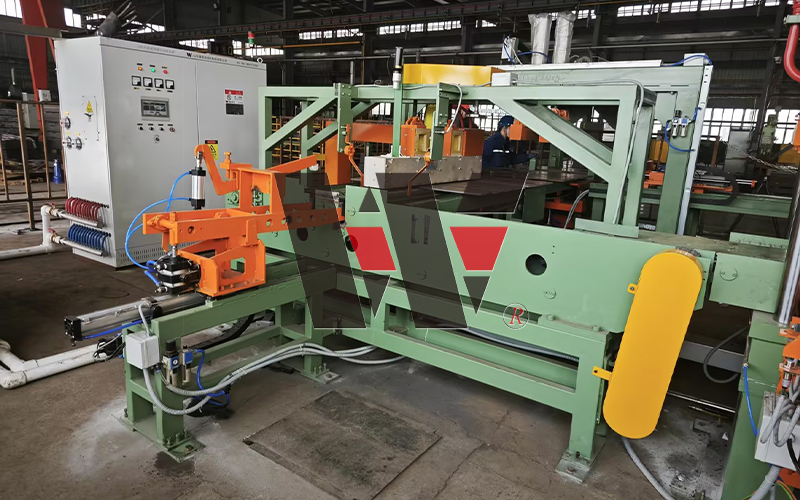
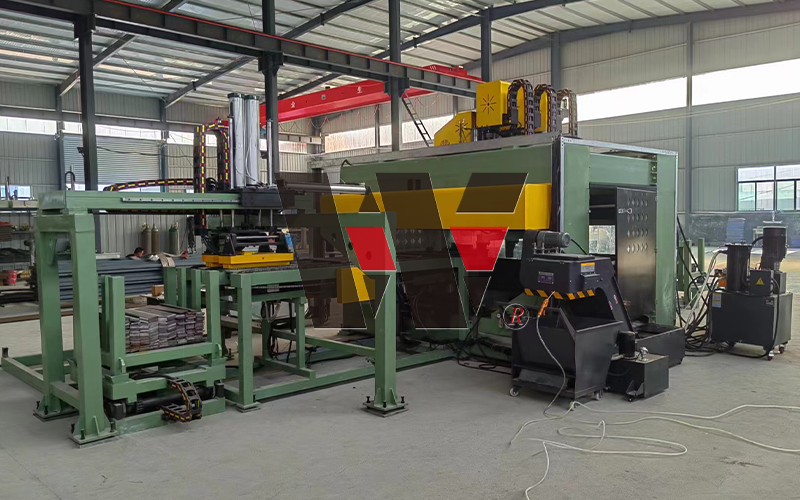
Related Products
About Us
Wuxi Weineng Automation Technology Co., Ltd.
Wuxi Weineng Automation Technology Co., Ltd. located in Wuxi, the Pearl of Taihu Lake, covers an area of 6,000 square meters and currently employs over 60 people. In 2016, the company's founding team began researching and developing complete sets of equipment for automotive leaf springs, hot-coiled springs, and stabilizer bars. Leaf Spring Heat Treatment Equipment Manufacturers in China. To date, they have been deeply involved in this industry for 10 years and are recognized as a specialized, innovative, and distinctive enterprise in this field by the Ministry of Industry and Information Technology.
The company integrates R&D, production, sales, and service. Its main products include complete sets of automotive leaf spring equipment and stabilizer bar equipment, including stabilizer bar end induction heating equipment, stabilizer bar thermoforming induction heating equipment, hollow stabilizer bar double-end induction heating equipment, hollow bar resistance conduction heating production lines, stabilizer bar secondary vulcanization production lines, and hot-coiled spring equipment. The company also provides users with complete induction heating automated production lines. Fully Automatic Leaf Spring Heat Treatment Production Line Suppliers in China.
Over the years, the company has served leading domestic enterprises such as Shanghai China Spring Manufacturing Co., Ltd., Huawei Technology Co., Ltd., Zhejiang Meili Technology Co., Ltd., Zhejiang Jinsheng Auto Parts Co., Ltd., Chengdu ThyssenKrupp Fawer Spring Co., Ltd., Pinghu ThyssenKrupp (Pinghu) Automotive Stabilizer Bar Co., Ltd., and Liaoyang ThyssenKrupp Fawer Spring Co., Ltd., earning high praise for its products and services. Furthermore, the company has exported its equipment to countries such as Turkey, South Korea, India, Brazil, Egypt, Dubai, Iran, Africa, Tunisia and Morocco. "Professionalism, precision, innovation, and integrity" are the development concepts that the company has always adhered to. While continuously strengthening its own scientific research capabilities, it has formed stable industry-university-research cooperation with many universities. It has been repeatedly rated as a high-tech enterprise and a specialized and innovative enterprise. In the future, the company will continue to deepen its research and development in the automotive leaf spring, automotive guide arm, automotive stabilizer bar and spring industry equipment, provide the spring industry with more professional, intelligent and sophisticated equipment products, and contribute to the high-quality development of the global automotive leaf spring, automotive stabilizer bar and hot-coil spring industries.
The company integrates R&D, production, sales, and service. Its main products include complete sets of automotive leaf spring equipment and stabilizer bar equipment, including stabilizer bar end induction heating equipment, stabilizer bar thermoforming induction heating equipment, hollow stabilizer bar double-end induction heating equipment, hollow bar resistance conduction heating production lines, stabilizer bar secondary vulcanization production lines, and hot-coiled spring equipment. The company also provides users with complete induction heating automated production lines. Fully Automatic Leaf Spring Heat Treatment Production Line Suppliers in China.
Over the years, the company has served leading domestic enterprises such as Shanghai China Spring Manufacturing Co., Ltd., Huawei Technology Co., Ltd., Zhejiang Meili Technology Co., Ltd., Zhejiang Jinsheng Auto Parts Co., Ltd., Chengdu ThyssenKrupp Fawer Spring Co., Ltd., Pinghu ThyssenKrupp (Pinghu) Automotive Stabilizer Bar Co., Ltd., and Liaoyang ThyssenKrupp Fawer Spring Co., Ltd., earning high praise for its products and services. Furthermore, the company has exported its equipment to countries such as Turkey, South Korea, India, Brazil, Egypt, Dubai, Iran, Africa, Tunisia and Morocco. "Professionalism, precision, innovation, and integrity" are the development concepts that the company has always adhered to. While continuously strengthening its own scientific research capabilities, it has formed stable industry-university-research cooperation with many universities. It has been repeatedly rated as a high-tech enterprise and a specialized and innovative enterprise. In the future, the company will continue to deepen its research and development in the automotive leaf spring, automotive guide arm, automotive stabilizer bar and spring industry equipment, provide the spring industry with more professional, intelligent and sophisticated equipment products, and contribute to the high-quality development of the global automotive leaf spring, automotive stabilizer bar and hot-coil spring industries.
News
-
Industry News Oct. 16. 2026
-
Industry News Oct. 10. 2026
-
Industry News Sep. 28. 2026
-
Do You Have Any Questions?
Let's
Discuss! -
Quick
Home Products / Equipment About Us Services Application News Contact Us -
Product Categories
Automobile Leaf Spring Complete Equipment Automobile Stabilizer Bar Complete Equipment Automobile Spring Complete Equipment Automotive guide arm complete equipment Oil Drilling Pipe Complete Equipment
-
Email Us
[email protected] [email protected] -
Address
Yangxiyuan Village, Luoshe Town, Huishan District, Wuxi City, Jiangsu Province, China -
Call Us Now
+86-18151713891 +86-18961722255 +86-18961507976 -
WhatsApp
+86-18151713891 +86-18961507976
Copyright © 2026 by Wuxi Weineng Automation Technology Co., Ltd. All Rights Reserved.
 Custom Fully Automatic Leaf Spring Heat Treatment Production Line
Custom Fully Automatic Leaf Spring Heat Treatment Production Line