Wuxi Weineng Automation Technology Co., Ltd. / Shandong Weineng Automation Technology Co., Ltd.
-
 [email protected]
-
 +86-18961722255


 English
 русский
 Español
Spring Machine Selection for Automotive Spring Manufacturing: Key Buying Factors
Content
- 1 Start with the Process, Not Just the Machine
- 2 What "Spring Machine" Means in Automotive Production
- 3 Hot Coiling and Thermoforming: Where the Spring Takes Shape
- 4 End Flattening and Induction Heating: Where Fit Is Decided
- 5 Heat Treatment and Full-Line Automation
- 6 Buying Considerations for Spring Equipment
- 7 What to Do Before You Commit
Start with the Process, Not Just the Machine
A typical automated spring coiler handles wire diameters up to 0.625 in (15.875 mm). That is a capable machine for precision springs in small mechanisms. But it is not the machine that produces automotive suspension springs, which are hot coiled from bar stock and then flattened, heat treated and tested along a multi-station line. So before you search for a spring machine, start with the process.
The short conclusion: in automotive spring manufacturing, a spring machine is rarely a single unit. It is a combination of heating equipment, forming machines, end processing stations, heat treatment furnaces and handling systems, organized around a specific spring family. This guide explains what to evaluate when the keyword "spring machine" appears in the context of automotive production.
What "Spring Machine" Means in Automotive Production
In precision spring shops, the spring machine is often a coiler that bends wire into small helical parts. In automotive plants, the scale changes. A hot-coiled spring starts as a bar that must be heated past its forming temperature, coiled into shape, then processed further. Different spring families bring different equipment chains:
- Hot-coiled springs and suspension springs require end heating, end flattening and heat treatment after coiling.
- Leaf springs require blanking, ear curling, ear wrapping and heat treatment.
- Stabilizer bars require hot bending, end processing and sometimes rubber bushing vulcanization.
- Guide arms and drill pipes add rolling, upsetting and annealing steps.
Because the process definitions differ so much, the starting point is to define which family your parts belong to. That decision drives every downstream equipment choice. For a complete picture of what an automotive spring equipment package can include, review the automotive spring production equipment range before shortlisting suppliers.
Hot Coiling and Thermoforming: Where the Spring Takes Shape
For large-diameter automotive springs, hot coiling is the forming method that actually works. The wire or bar is heated into a plastic state, then coiled around a mandrel. The result is a spring with the geometry and grain structure needed for heavy loads.
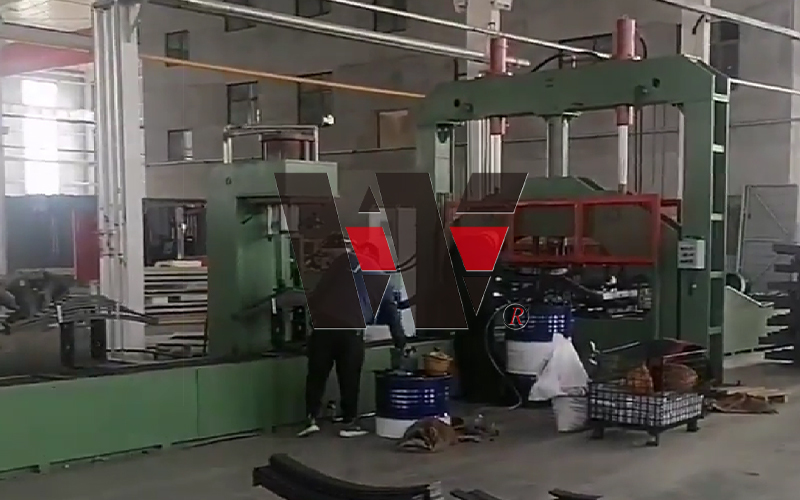
The key is to evaluate how well the equipment controls temperature and geometry. Poor temperature uniformity creates inconsistent spring diameter and pitch. Low rigidity in the coiling station leads to spring geometry drift between batches. A properly engineered hot-coiled spring production line addresses these issues through integrated heating and forming stations, and it is the kind of investment that pays off in lower scrap rates and steadier output.
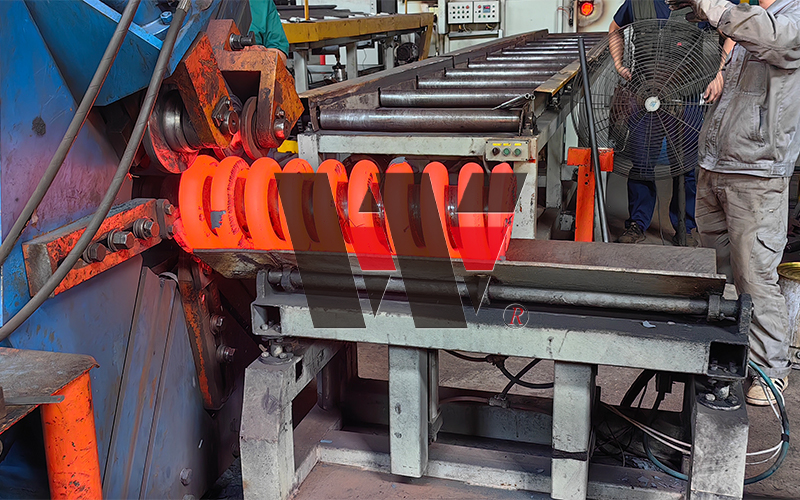 Spring Hot Coiling Equipment Manufacturers, Hot Coiled Spring Production Line SuWuxi Weineng is Custom Spring Hot Coiling Equipment Manufacturers, Hot Coiled Spring Production Line Suppliers in China.View Product →
End Flattening and Induction Heating: Where Fit Is Decided
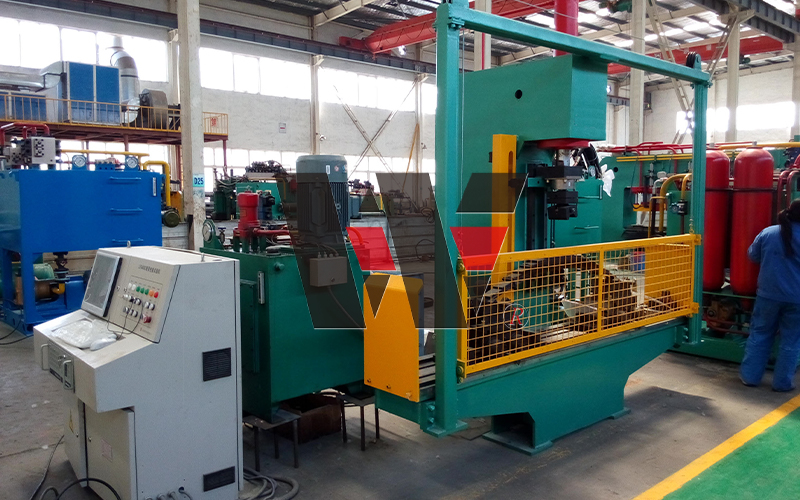
After coiling, the spring ends need precise flattening so the spring sits squarely in its seat. Two equipment approaches dominate the market: hydraulic end flattening and mechanical end flattening.
Hydraulic vs. Mechanical End Flattening
Hydraulic systems offer adjustable pressure and suit plants that process a wide variety of spring sizes. Mechanical systems are faster and more consistent when the product mix is narrower. The practical answer depends on your batch size and how often the spring dimensions change. Many suppliers offer both, and your process plan should state which one fits before you ask for quotes.
End Induction Heating: Precision Where It Matters
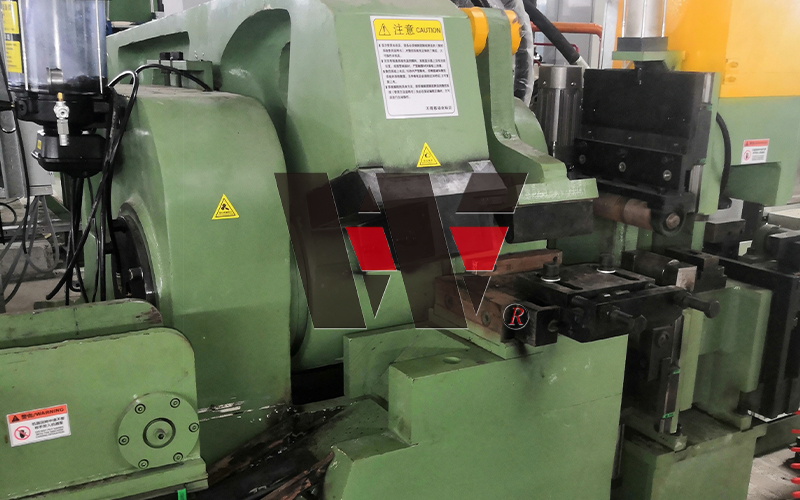
End treatment often starts with induction heating, which heats only the zone that needs to be softened or formed. Compared with through-furnace heating, induction heating cuts energy use, shortens cycle time and limits oxidation on the spring surface. The trade-off is that the coil design must match your spring end geometry. An equipment supplier with experience in this area will help you define the correct power, frequency and coil layout. The principles behind this step are covered in more detail in this review of induction heating in automotive spring manufacturing. For the equipment itself, an automobile spring end induction heating equipment unit is a compact, high-productivity addition to a production line.
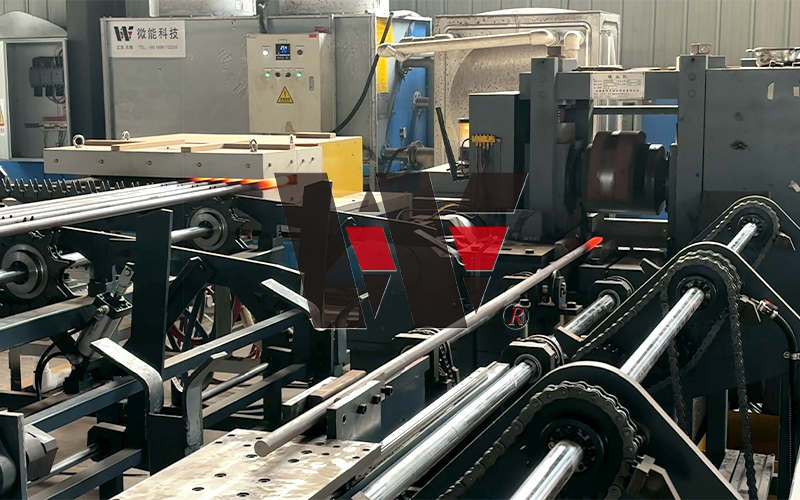 Automobile Spring End Induction Heating Equipment Suppliers, Custom Factory - WuWuxi Weineng is Customized Automobile Spring End Induction Heating Equipment Suppliers and Factroy in China, The Automobile Spring End In...View Product →
Heat Treatment and Full-Line Automation
Heat treatment is where the spring earns its fatigue life. Quenching and tempering set the hardness, toughness and residual stress distribution, and those properties decide whether a spring survives millions of load cycles in real vehicles.
In discrete production, operators move parts from furnace to furnace, and the risk is inconsistency: different temperatures, different soaking times, different handling damage. That is why automated spring production lines are now the default choice in new plant layouts. They connect heating, forming, heat treatment and unloading steps into a continuous sequence, with defined timing at every station.
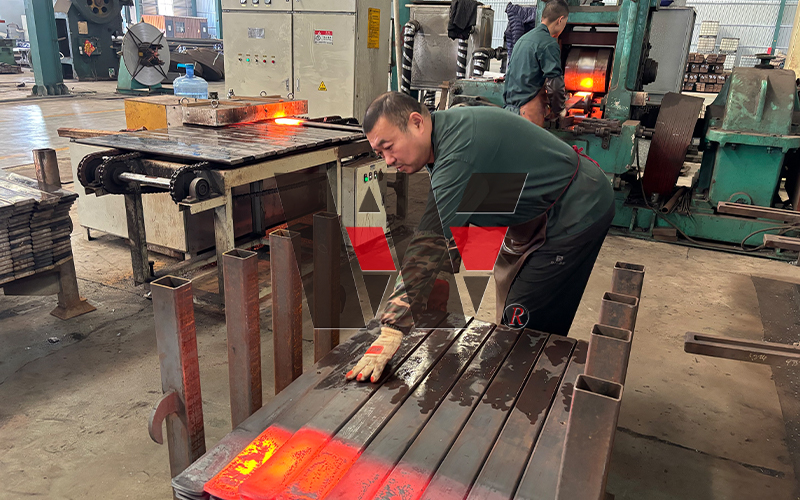
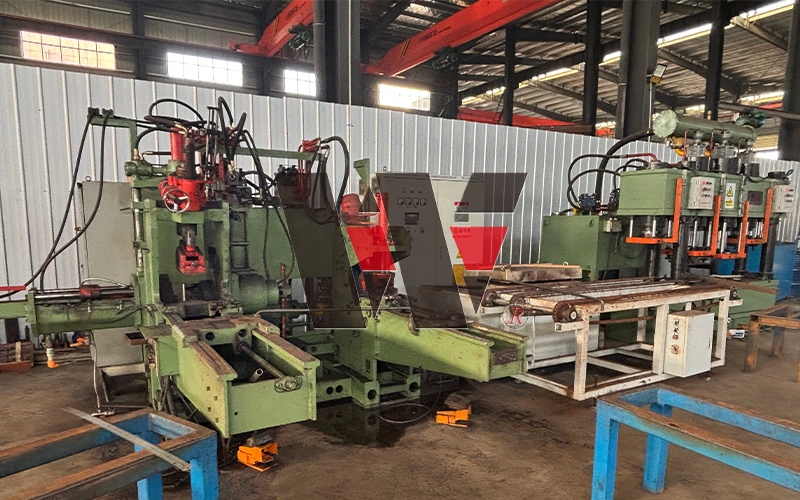
Take the suspension spring production line as an example. It integrates forming, heat treatment and material handling into one flow, which reduces work-in-process inventory and makes batch-to-batch quality far more predictable. Adding automation also frees skilled operators for tasks that actually require judgment: tooling changes, process monitoring and quality audits.
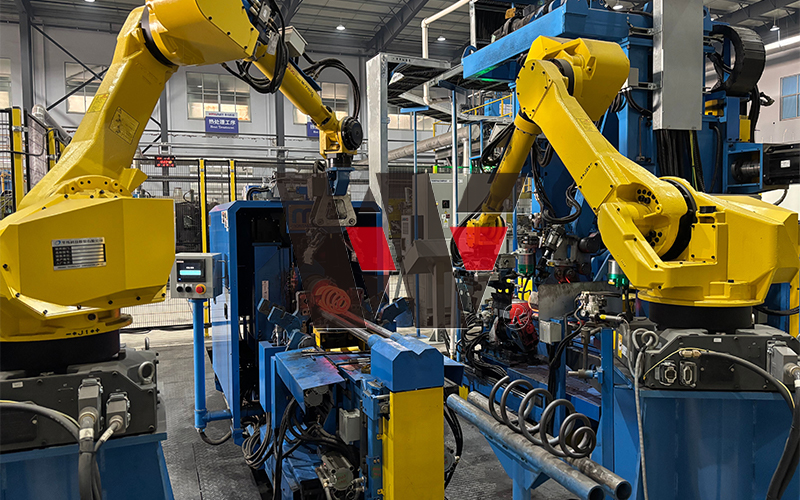 Suspension Spring Production Line Suppliers, Custom Factory - Wuxi Weineng AutomWuxi Weineng is Customized Suspension Spring Production Line Suppliers and Factroy in China, The suspension spring production line is pur...View Product →
Buying Considerations for Spring Equipment
The supplier list for spring machinery is long, but the decision framework is short. You are not buying a single machine; you are buying a process outcome. Here is how the equipment chains line up across different spring families.
| Spring Family | Core Equipment Chain | Typical Selection Question |
|---|---|---|
| Leaf springs | Blanking, ear curling, ear wrapping, heat treatment | Standalone machines or a linked line? |
| Hot-coiled and suspension springs | End induction heating, end flattening, heat treatment | Hydraulic or mechanical flattening? |
| Stabilizer bars | Hot bending, end processing, secondary vulcanization | Solid bar or hollow bar process? |
| Guide arms and drill pipes | Rolling, ear curling, upsetting, annealing | Which heating method matches the material? |
Standalone Machines vs. Complete Lines
A standalone machine makes sense when you are upgrading one process step, adding capacity or rebalancing an existing line. In that case, check the interface with surrounding equipment: heating capacity, cycle time, power requirements and control compatibility. A complete line makes sense when you are building a new plant or replacing an entire process chain. The trade-off is straightforward: standalone machines give more flexibility in the short term, while complete lines give more consistency in the long term.
What to Check in a Spring Equipment Supplier
Once the process and machine configuration are clear, evaluate the supplier on delivery capability and service depth. A useful signal is whether the supplier builds complete lines rather than isolated machines, and whether it offers turnkey installation, remote diagnostics and on-site support. Another is track record: suppliers that have shipped equipment to multiple countries are more likely to handle installation logistics, operator training and spare parts coordination in a structured way.
Export references matter in this industry. Equipment shipped from China to markets such as Turkey, South Korea, India, Brazil and Egypt has to clear different regulatory and operational hurdles. Each project refines the supplier's ability to manage commissioning remotely, which directly reduces your risk. Ask concrete questions: Which lines are running in continuous production? What is the longest single-line installation? How fast does the service team respond to a line stoppage?
What to Do Before You Commit
Start with the product. Define your spring family, the material grades, the dimensional tolerances and the annual volume. Then map the process chain: what must be heated, formed, trimmed, flattened, heat treated and inspected. Compare equipment configurations against that map, and assign a weight to uptime, precision and energy consumption.
Finally, choose a supplier whose equipment range matches your whole chain, not just one station. The spring machine decision is really a production-line decision, and the supplier that understands the full sequence will save you more time and money than any single machine specification ever will.
Related Products
-
Do You Have Any Questions?
Let's
Discuss! -
Quick
Home Products / Equipment About Us Services Application News Contact Us -
Product Categories
Automobile Leaf Spring Complete Equipment Automobile Stabilizer Bar Complete Equipment Automobile Spring Complete Equipment Automotive guide arm complete equipment Oil Drilling Pipe Complete Equipment
-
Email Us
[email protected] [email protected] -
Address
Yangxiyuan Village, Luoshe Town, Huishan District, Wuxi City, Jiangsu Province, China -
Call Us Now
+86-18151713891 +86-18961722255 +86-18961507976 -
WhatsApp
+86-18151713891 +86-18961507976
Copyright © 2026 by Wuxi Weineng Automation Technology Co., Ltd. All Rights Reserved.
 Automotive Suspension Spring Production Line Turnkey Solutions
Automotive Suspension Spring Production Line Turnkey Solutions