Wuxi Weineng Automation Technology Co., Ltd. / Shandong Weineng Automation Technology Co., Ltd.
-
 [email protected]
-
 +86-18961722255


 English
 русский
 Español
Quarter Elliptic Leaf Spring: Design Benefits, Mounting Risks, and Production
Content
There is a specific moment when the quarter elliptic leaf spring either wins or loses a suspension project: when the designer realizes how short this spring can be. On a lightweight trailer, a classic sports car restoration, or a drag car rear end, the quarter elliptic spring takes roughly half the length of a conventional semi-elliptic unit while still carrying the axle on a single cantilever arm. The conclusion after decades of field experience is consistent: this spring is an excellent choice when vertical space is tight, but its ride, handling, and service life are decided mostly by the mounting bracket, the axle location, and the quality of the leaf steel. Get those three right, and it can outperform a heavier multi-leaf setup. Get them wrong, and the leaf will crack at the clamped end long before the rest of the vehicle wears out.
What Is a Quarter Elliptic Leaf Spring?
A quarter elliptic leaf spring is a cantilever spring made from one or more leaf tiers, shaped like half of a conventional semi-elliptic spring. One end is rigidly clamped to the frame or a subframe bracket. The other end carries the axle, usually through a bushed eye or a short shackle. When the wheel hits a bump, the axle pushes the free end upward and the leaf bends around the fixed end like a diving board.
In a single-leaf version, the leaf is generally tapered in both width and thickness to keep bending stress uniform. In a multi-leaf version, shorter leaves are stacked under the main leaf to add rate progressively. Both versions share one critical feature: every braking force, driving torque, and lateral load travels through that single clamped end, which makes the clamping area the most highly stressed region in the entire spring.
Because the effective length is roughly half that of a semi-elliptic spring for a similar wheel rate, material usage is lower and unsprung mass drops. These properties made the quarter elliptic spring a common choice on early European sports cars and sprint cars, where minimum weight and a compact rear package were the dominant constraints.
Quarter Elliptic vs. Semi-Elliptic vs. Three-Quarter Elliptic
The leaf spring family contains three main geometric variants, and each has a different mounting philosophy. The semi-elliptic spring supports the axle between two pivoted eyes, giving the axle two locations in space and therefore good lateral stability. The three-quarter elliptic spring, patented in 1804, adds a short second leaf above the main spring to soften the ride while keeping a longer loading path. The quarter elliptic spring sits at the far end of the spectrum: one fixed clamp and one axle attachment. That is exactly what makes it compact, and also what makes lateral location difficult.
| Configuration | Mounting | Axle support points | Packaging space | Typical applications |
|---|---|---|---|---|
| Semi-elliptic | Both ends pivoted, axle near the centre | 2 | Wide and low | Trucks, vans, off-road vehicles |
| Three-quarter elliptic | Main spring pivoted at both ends plus a short helper leaf | 2 with additional load support | Medium | Vintage cars, carriages |
| Quarter elliptic | One end fixed, one end at the axle | 1 (cantilever) | Very compact | Early sports cars, drag racers, lightweight trailers |
The recommendation that follows from the comparison is simple. Choose a semi-elliptic spring when the axle must resist side loads without additional links. Choose a quarter elliptic spring when vertical space dominates the design and you are willing to add a Panhard rod or a comparable locating device. The separate mounting also gives the designer independent control over rate and wind-up behaviour under torque, a level of freedom that restorers and performance builders value.
Why Choose a Quarter Elliptic Spring?
Four concrete advantages, all of them measurable, explain the continued use of the quarter elliptic spring.
- Compact packaging: the installed length is about half that of a semi-elliptic spring for the same vertical rate, which frees space for the fuel tank, the exhaust, or a lower load floor.
- Low unsprung weight: a single-leaf quarter elliptic spring can weigh less than half of an equivalent multi-leaf semi-elliptic assembly, which keeps tires in contact on rough pavement.
- Predictable weight transfer: the cantilever geometry produces a controlled anti-squat and anti-wrap effect when the axle is placed correctly relative to the fixed end, which is why drag racers favour it.
- Simple service: only two mounting points mean inspection, bushing replacement, and spring changes are straightforward.
The limitations are just as concrete, and they usually show up in the mounting system rather than in the leaf.
- Rolling tendency: a single pivot point gives the axle almost no lateral stiffness, so the body can roll around the clamped end during cornering unless a Panhard rod or a Watts link is fitted.
- High reaction moment at the clamp: the bracket must carry the full bending moment of the spring at jounce; a weak bracket causes cracks in the frame rail or the bracket itself, not in the leaf.
- Limited progressive-rate tuning: with only a main leaf and one or two short helpers, there is less freedom in shaping the load-deflection curve than there is with a full multi-leaf ladder.
Mounting and Geometry: What Decides Success
The spring itself is rarely the weak link. The mounting system determines both ride quality and fatigue life. Four design rules cover most quarter elliptic installations in practice.
- Place the fixed end close to the axle centreline height and point the spring eye back toward the axle. If the fixed end is raised or lowered by more than about 10% of the spring length, the roll centre and the anti-squat geometry shift noticeably.
- Reinforce the bracket to match the full reaction moment of the spring at full jounce. A gusseted bracket welded to the frame rail is the practical minimum for a single-leaf spring; multi-leaf springs need even more rigidity in the mount.
- Use a shackle at the free end when the expected deflection exceeds roughly 15% of the spring length. The shackle absorbs the arc-length change and prevents the bushing from being torn.
- Fit a Panhard rod or a Watts link whenever the vehicle experiences cornering loads above about 0.3 g, because the spring alone has almost no lateral location capability.
Each rule has a direct consequence for the spring manufacturer. When the bracket is not designed to match the spring rate, the stress at the fixed end climbs sharply and the fatigue life of an otherwise correct spring drops. This is why the mounting bracket belongs in the same drawing package as the spring itself.
Manufacturing: Process Steps That Matter Most
Manufacturing a quarter elliptic leaf spring follows the general leaf spring production route, but the compact geometry and the high moment at the fixed end raise the importance of several process steps.
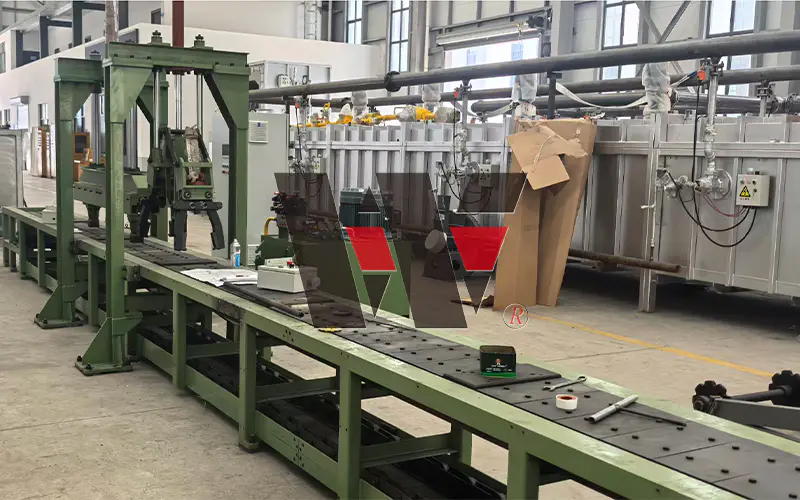
Blanking and punching
The spring starts as spring steel strip, typically 60Si2Mn or SUP9 depending on the market and the load rating. The blank is cut to length and the eye is punched or drilled before any forming. A fully automatic blanking and punching line combines decoding, straightening, feeding, punching, and cut-off in one continuous operation. For a quarter elliptic spring, the position of the eye defines the distance from the clamp to the axle centre, and that dimension directly controls the wheel rate, so the punching tolerance deserves attention.
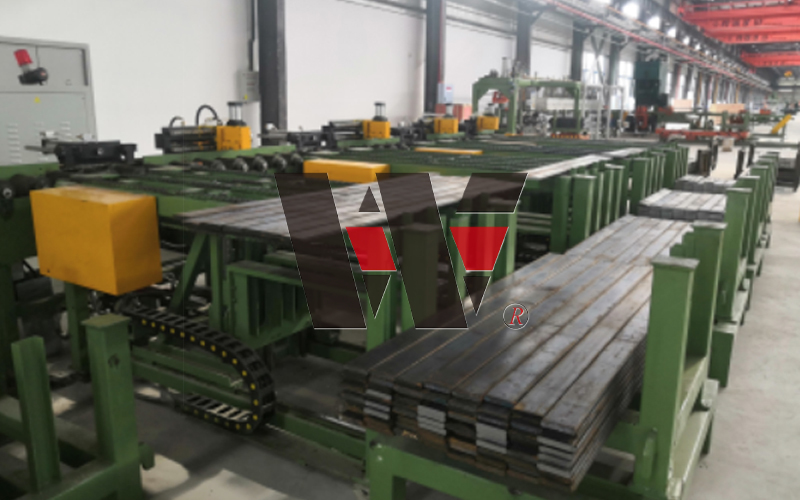 Fully Automatic Leaf Spring Blanking And Punching Line Suppliers, Custom FactoryWuxi Weineng is Customized Fully Automatic Leaf Spring Blanking And Punching Line Suppliers and Factroy in China, Integrated High-Efficie...View Product →
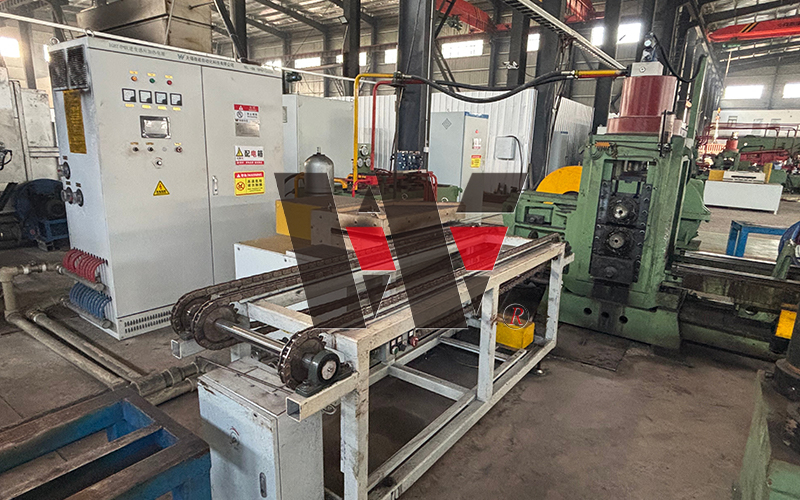
Variable cross-section rolling
Most contemporary quarter elliptic springs use a tapered leaf instead of a uniform-thickness bar. The taper is rolled from the hot blank using CNC-controlled rolls that reduce the thickness gradually from the clamped end to the free end. A fully automatic variable cross-section rolling production line holds the thickness tolerance to about 0.1 mm along the profile. The taper removes mass where it does not contribute to the rate and keeps the bending stress almost constant along the length, which is precisely what a cantilever spring needs.
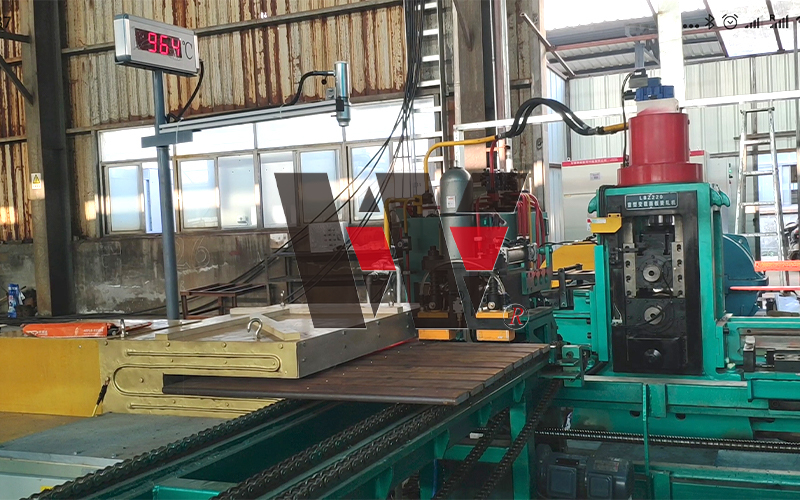 Fully Automatic Leaf Spring Variable Cross-Section Rolling Production Line SupplWuxi Weineng is Customized Fully Automatic Leaf Spring Variable Cross-Section Rolling Production Line Suppliers and Factroy in China, Hig...View Product →
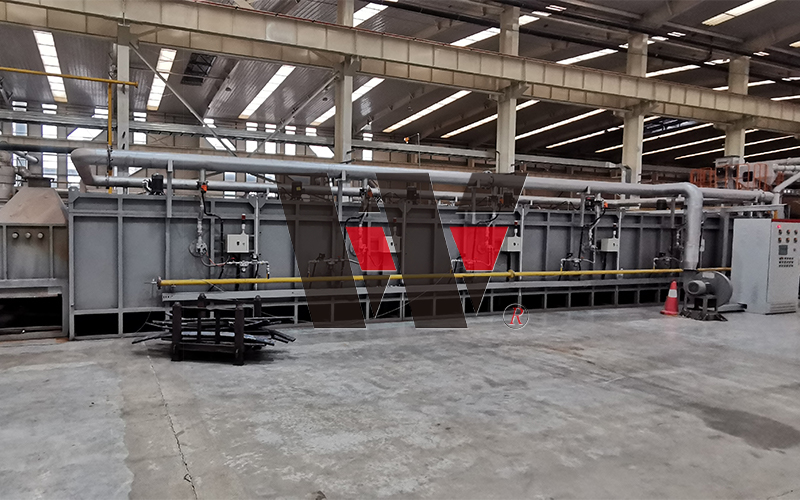
Heat treatment
After rolling and eye forming, the spring is hardened and tempered to the specified hardness range, typically 42 to 48 HRC for common spring steel grades. The heat-treatment cycle has to be repeatable across the batch because the fatigue life of a cantilever spring depends on the surface hardness and the residual stress pattern. A fully automatic heat treatment production line maintains the temperature profile and residence time, preventing soft spots near the clamp and hard spots near the eye. Shot peening is then applied to put the surface into compression and extend fatigue life.
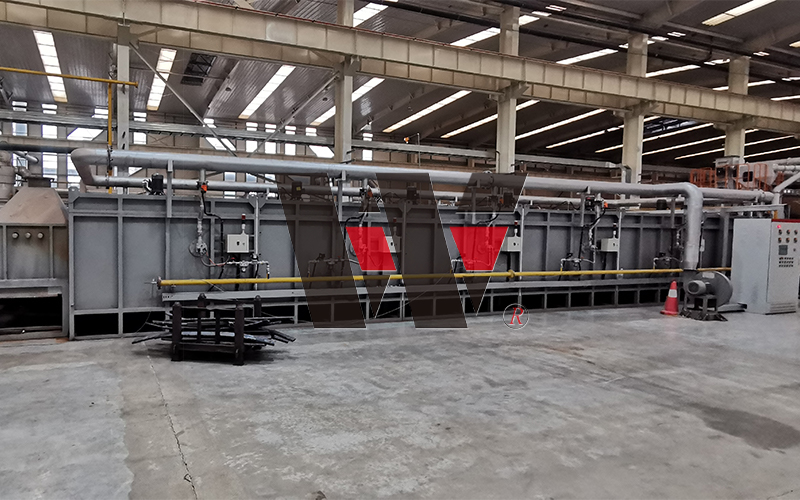 Leaf Spring Heat Treatment Equipment ManufacturersWuxi Weineng is Custom Fully Automatic Leaf Spring Heat Treatment Production Line Suppliers and Leaf Spring Heat Treatment Equipment Manu...View Product →
The complete sequence from raw strip to heat-treated leaf, including the equipment arrangement, is covered in our leaf spring production line guide.
Selecting Production Equipment for Quarter Elliptic Springs
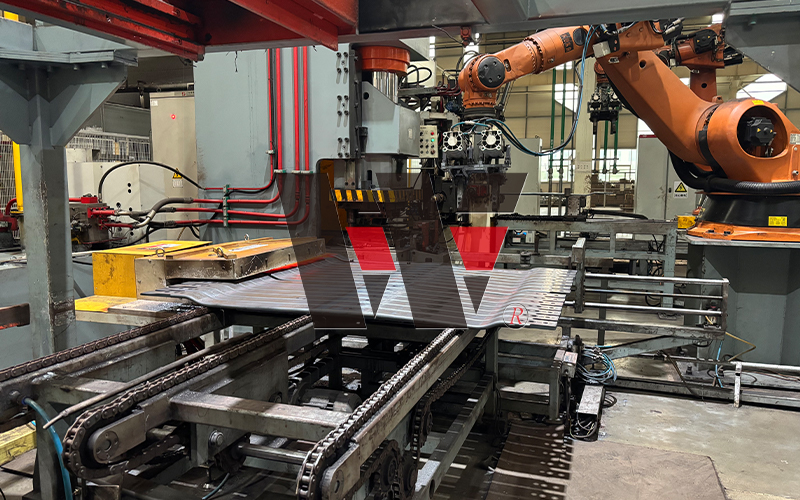
Equipment selection starts with production volume, maximum leaf length, and the eye-forming method. For short runs, a single machine with quick-change tooling is enough. For continuous production, automated lines hold tighter tolerances and remove the variability of manual handling.
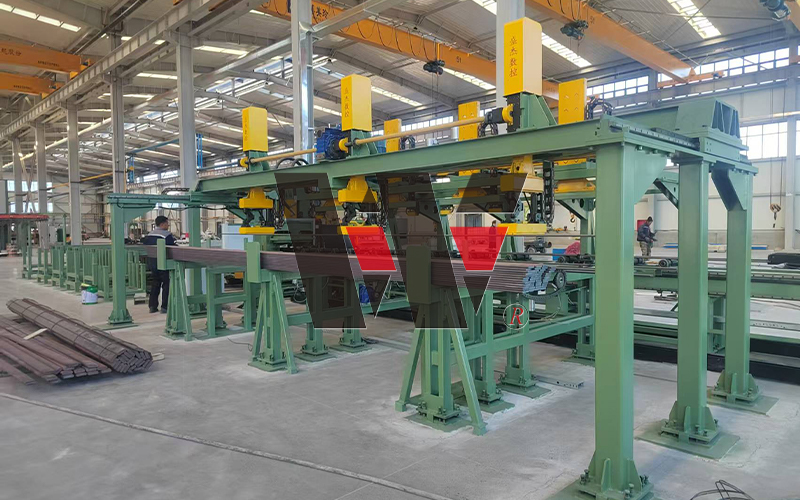
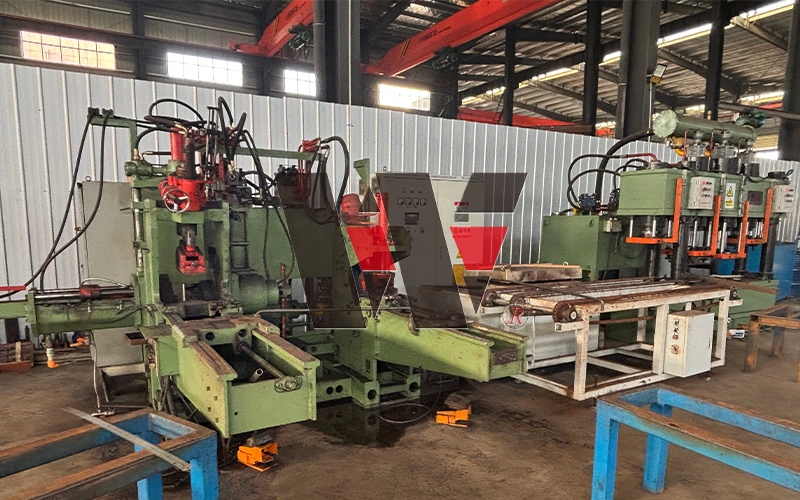
At Wuxi Weineng Automation Technology Co., Ltd., we have built leaf spring equipment for more than a decade, covering blanking, punching, rolling, heat treatment, end forming, and fatigue testing. This equipment is used by spring manufacturers across Asia, the Middle East, South America, and Africa. If you are evaluating a quarter elliptic leaf spring project, start from the process sequence and let the required tolerances determine the machine choice. That approach keeps the investment aligned with the actual part design, instead of forcing the part to fit whatever machine is already on the floor.
-
Do You Have Any Questions?
Let's
Discuss! -
Quick
Home Products / Equipment About Us Services Application News Contact Us -
Product Categories
Automobile Leaf Spring Complete Equipment Automobile Stabilizer Bar Complete Equipment Automobile Spring Complete Equipment Automotive guide arm complete equipment Oil Drilling Pipe Complete Equipment
-
Email Us
[email protected] [email protected] -
Address
Yangxiyuan Village, Luoshe Town, Huishan District, Wuxi City, Jiangsu Province, China -
Call Us Now
+86-18151713891 +86-18961722255 +86-18961507976 -
WhatsApp
+86-18151713891 +86-18961507976
Copyright © 2026 by Wuxi Weineng Automation Technology Co., Ltd. All Rights Reserved.
 Automotive Suspension Spring Production Line Turnkey Solutions
Automotive Suspension Spring Production Line Turnkey Solutions