What Each Station Actually Does in Leaf Spring Blanking
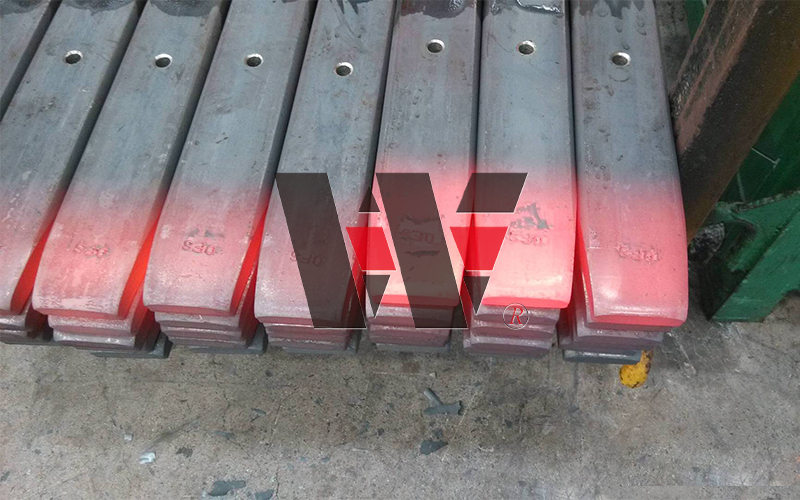
A leaf spring blank needs more than a single cut to be ready for the next stage of the line. At minimum, it needs to be sheared to length, and it needs a center bolt hole punched at a precise location — that hole becomes the reference point every later operation, from rolling to assembly, aligns against. Beyond that baseline, many spring designs call for additional features cut into the blank before it leaves the press: pilot holes for clamp positions, edge trims, or secondary mounting holes.
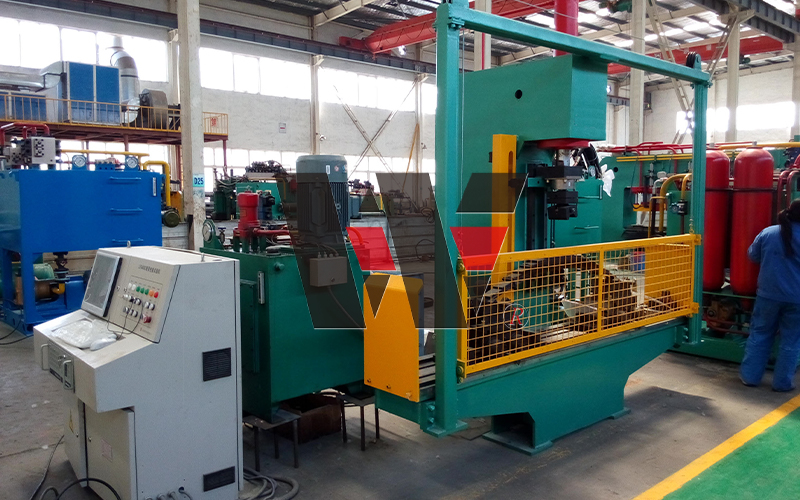
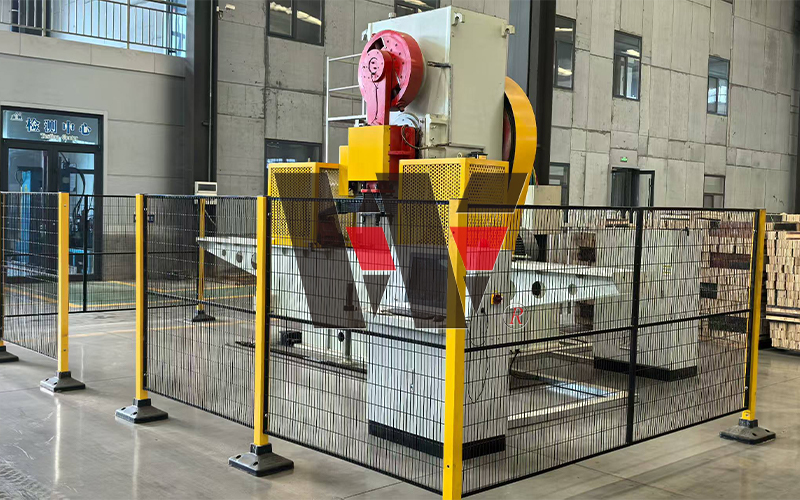
A three-station press typically handles shearing, center-hole punching, and one additional operation — commonly a secondary hole or an edge feature — in a single pass. A four-station press adds one more independent operation to that sequence, which lets a plant fold an extra step, like a second hole pattern or a trim cut that would otherwise require a separate pass through a different machine, into the same die cycle. The difference isn't about raw punching force or speed; it's about how many distinct geometric features can be finished on the blank before it moves to the next stage of the line.
Three-Station Press: Where It Fits
A three-station punching press is the right fit when a blank's feature set is simple — shear, center hole, and one supporting operation covers most of what the part needs before rolling. Fewer stations means fewer dies to maintain, shorter die-change procedures, and a smaller footprint on the shop floor. That combination matters most in plants running several different spring lengths or width profiles through the same line, where changeover happens often enough that simplicity has a direct payoff in uptime.
The tradeoff shows up when a part needs a fourth distinct feature. On a three-station press, that extra hole or trim either gets pushed to a separate downstream operation — adding a handling step and a chance for misalignment — or gets combined into an existing station in a way that compromises die life or cycle time. For plants running high product-mix, low-volume programs, that tradeoff is usually worth accepting in exchange for faster changeovers.
Four-Station Press: Where It Fits
A four-station punching press earns its added complexity when a spring design consistently needs a fourth independent operation — most often an additional hole pattern for clamps or anti-friction pads, or a trim feature that would otherwise require a second machine. Consolidating that operation into the same die cycle removes a handling step entirely, which matters more as production volume climbs: at high throughput, every extra transfer between machines is a place where cycle time and alignment accuracy both erode.
This configuration makes the most sense on lines running one or two spring designs at consistently high volume, where the added tooling investment is spread across a large enough production run to justify it. It makes less sense on a line switching between many part numbers in a given week, since a four-station die set generally takes longer to change than a three-station one, and that time adds up fast in a high-mix environment.
Changeover Time and Tooling Complexity
Every additional station adds a die set that has to be aligned, adjusted, and verified during a product changeover. On a three-station press, that verification step is comparatively quick — fewer die interfaces means fewer things that can be out of position when the line restarts. On a four-station press, changeover takes longer, but it's replacing what would otherwise be two separate setup procedures on two separate machines, so the comparison isn't as one-sided as it looks in isolation.
Tooling cost follows a similar logic. A four-station die set costs more to build and maintain than a three-station one, but it replaces the combined cost of running a standalone secondary punching or trimming operation. The right comparison isn't station count on its own — it's total tooling and changeover cost per part number, measured against how many part numbers actually run through the line in a typical month.
Matching Press Configuration to Your Production Line
The choice between three and four stations comes down to two questions: how many distinct features does your blank actually need before it leaves the press, and how often does the line switch between part numbers. A plant running a handful of high-volume spring designs with consistent feature sets typically gets more value from a four-station configuration, since the added station pays for itself across a long, uninterrupted run. A plant serving a broader mix of vehicle platforms with frequent changeovers usually does better with a three-station setup, prioritizing flexibility over per-cycle feature count.
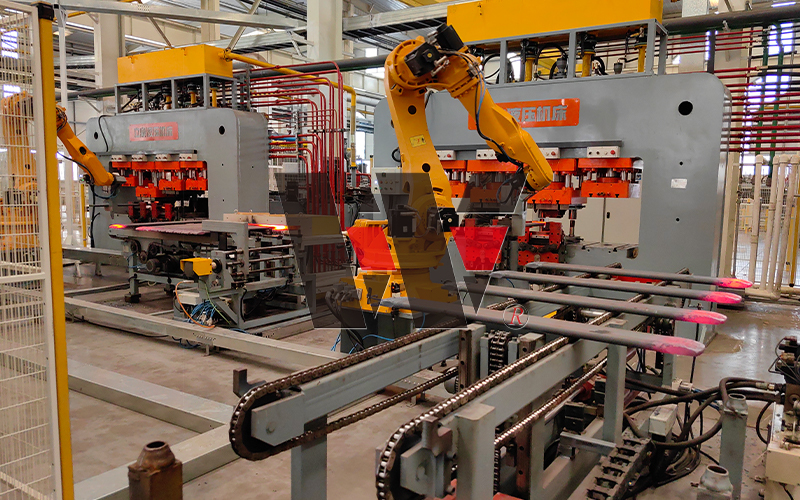
Either press can be integrated into a fully automatic blanking and punching line with synchronized feeding and unloading, which is where the station-count decision actually pays off or doesn't — a press that's well matched to your part mix keeps the whole line running at its rated cycle time, while a mismatched configuration creates a bottleneck that shows up everywhere downstream. Any hole pattern that doesn't fit cleanly into the press's station count can also be shifted to a dedicated fully automatic drilling production line further down the process, which is sometimes the more economical answer than adding press stations for a feature that only appears on one or two part numbers.
 [email protected]
 +86-18961722255


 English
 русский
 Español
 Automotive Suspension Spring Production Line Turnkey Solutions