From Mechanical Automation to Data-Driven Production
Ten years ago, a technician judging whether a leaf spring furnace was running correctly relied on a temperature gauge and years of experience. Today, that same judgment increasingly comes from a data stream — furnace temperature curves, quenching oil readings, and press force logs recorded automatically and compared against a known-good pattern. That shift, from mechanical automation to data-driven production, is what "smart and digital" actually means for spring equipment, and it's a different story from the smart-suspension products that dominate most search results on this topic.
This isn't about sensors embedded in the finished spring. It's about the equipment that makes it: automatic production lines for leaf spring manufacturing that now generate more useful information about the process than the process itself used to generate about the finished part.
Real-Time Sensing on the Production Line
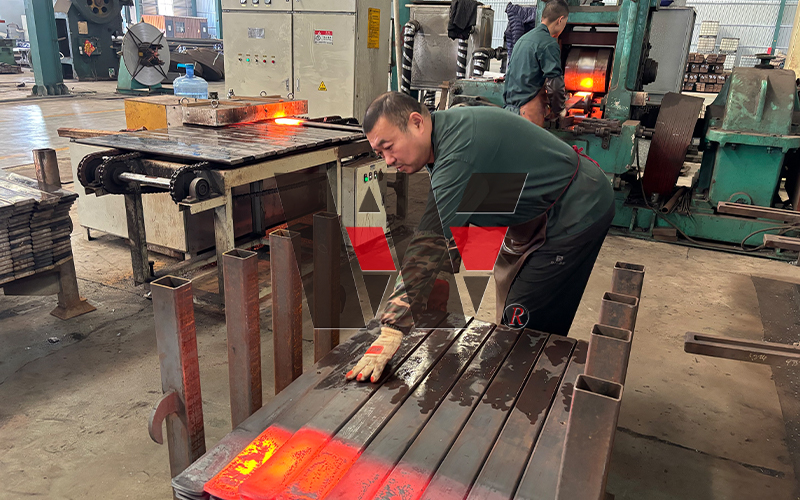
Every station in a spring production line produces a measurable signal, and the difference between older and newer equipment is largely about whether that signal gets captured. A punching press generates a force curve on every stroke. A furnace holds a temperature profile across its full cycle. A quenching bath has an oil temperature that drifts batch to batch. None of this is new physics — what's new is recording it automatically, station by station, instead of relying on a operator glancing at a dial.
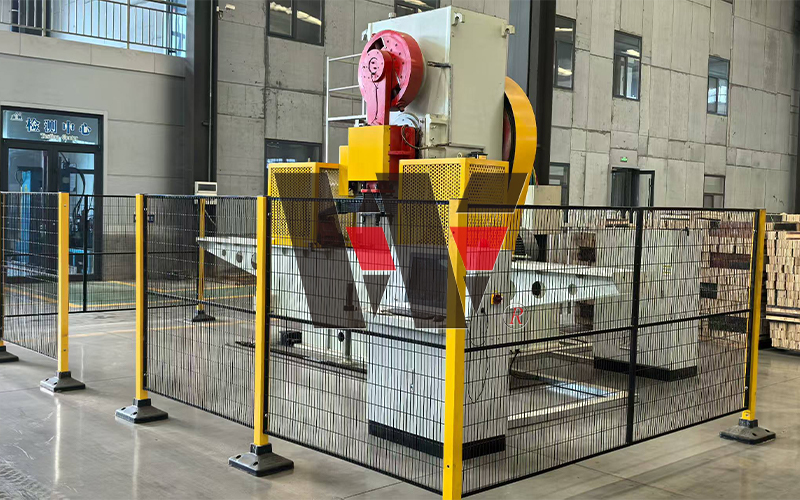
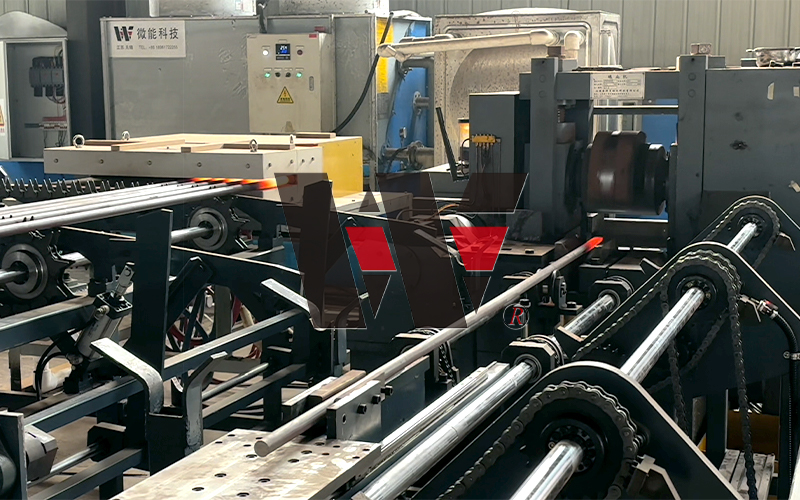
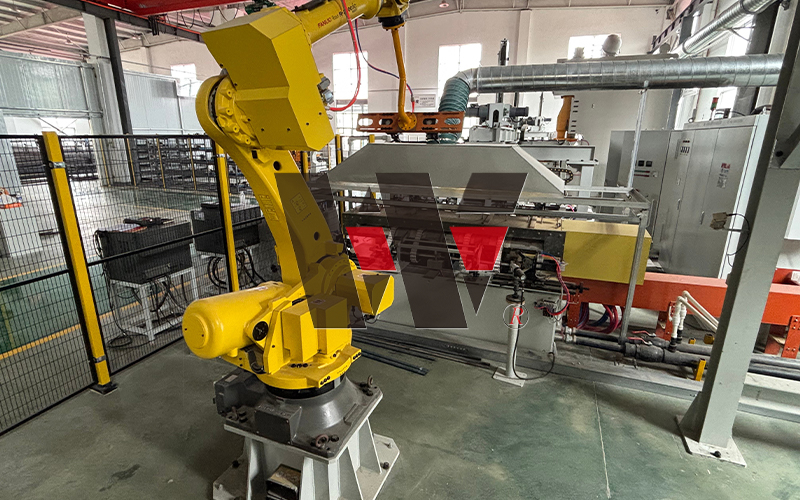
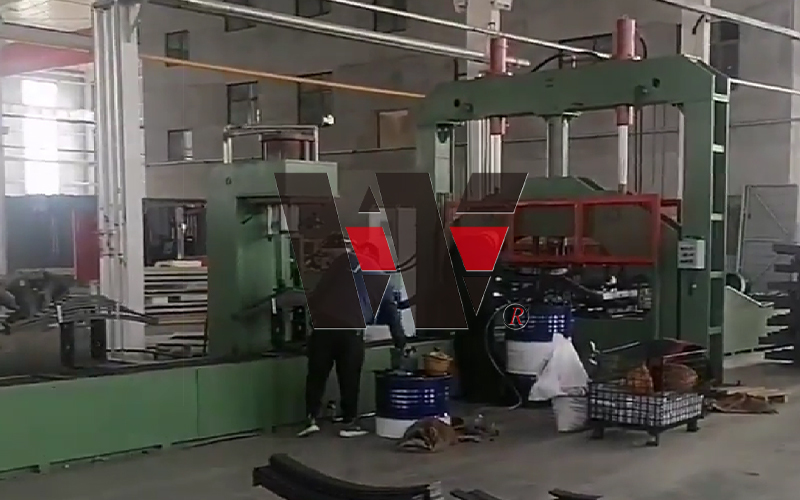
Once that data is captured, it stops being a record and starts being a control input. A fully automatic leaf spring blanking and punching line that logs force curves per stroke can flag a die wearing out before it produces an out-of-spec part. A fully automatic leaf spring heat treatment production line that tracks furnace temperature continuously can catch a drifting zone before it hardens a whole batch incorrectly. The equipment doesn't just do the work anymore — it reports on its own performance while doing it.
Predictive Maintenance: Catching Failures Before They Happen
Unplanned downtime on a spring production line is expensive in a specific way: it doesn't just stop one machine, it stalls every station downstream of it. A press that seizes mid-shift can idle an entire heat treatment and assembly sequence behind it. Predictive maintenance addresses this by tracking wear indicators — vibration, motor load, cycle time drift — and flagging a developing problem while there's still time to schedule a fix instead of reacting to a breakdown.
Research on predictive maintenance under Industry 4.0 frameworks points to a consistent pattern: combining sensor data with analytics lets manufacturers act on equipment condition before failure occurs, rather than following a fixed maintenance calendar that often services healthy equipment and misses failing equipment in between visits, as this review of predictive maintenance planning models lays out. For a multi-station spring line, that difference tends to show up directly in overall equipment effectiveness, since a single unplanned stop rarely stays contained to one machine.
For more on what's driving these upgrades across the wider equipment category, see this related piece on the core driving forces behind recent spring equipment upgrades.
Digital Twins for Line Design and Process Optimization
Commissioning a new spring production line used to mean building it, running it, and adjusting parameters on the physical equipment until output stabilized — an expensive way to learn what should have been known beforehand. A digital twin changes that sequence. It's a virtual model of the line that mirrors the real equipment closely enough to simulate throughput, station timing, and even furnace heat curves before a single physical part runs through it.
For a facility adding a new station or reconfiguring an existing sequence, this matters most during ramp-up. Testing a change in the model first, rather than on the shop floor, cuts the number of physical trial runs needed to reach stable output — the same logic that's driving broader adoption of simulation tools across automotive manufacturing more generally. Applied to spring lines specifically, it means fewer scrapped batches during commissioning and a faster path from installation to full-rate production.
Data Traceability: Turning Process Records into Quality Proof
Automotive OEMs increasingly ask suppliers not just to meet a spec, but to prove it — with records tied to the specific batch, station, and process parameters that produced a given part. A production log that shows furnace temperature, quenching time, and press tonnage for every serial number turns a quality claim into something auditable, which matters when a warranty question or a field failure traces back to a specific production window.
This is where equipment-level data and finished-part verification meet. A fatigue testing machine for verifying batch quality generates the performance data that, combined with the process records from earlier stations, gives a manufacturer a complete chain from raw material to tested output — the kind of traceability that's becoming a baseline expectation rather than a differentiator.
Where Wuxi Weineng's Equipment Fits Into This Shift
None of this works without equipment designed to generate and expose the data in the first place. A production line that can't report its own furnace temperature curve or press force history can't be made predictive no matter how good the analytics software behind it is — the data simply isn't there to analyze. That's the practical starting point for any manufacturer evaluating what to upgrade first.
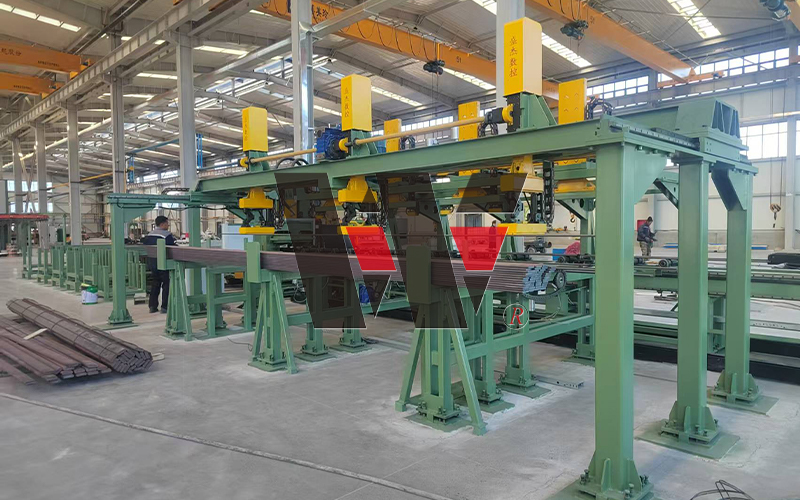
Our own equipment lineup — from automated blanking and punching lines through heat treatment and into final assembly — is built around this same principle. A leaf spring assembly system line that tracks its own cycle data and integrates cleanly with upstream stations gives a manufacturer the visibility this shift toward smart, digital production actually depends on, without requiring a separate retrofit project to bolt sensors onto equipment that wasn't built to carry them.
 [email protected]
 +86-18961722255


 English
 русский
 Español
 Automotive Suspension Spring Production Line Turnkey Solutions