Heavier Battery Packs Are Changing the Load Equation
A mid-size EV battery pack can weigh anywhere from roughly 350 to 700 kilograms, sitting low in the chassis and adding static load that a comparable combustion vehicle simply doesn't carry. That extra mass doesn't distribute itself evenly across the suspension either — it shifts the load-bearing target for every spring in the system upward, often by 15% to 25% compared to what the same platform would need without a battery pack.
Academic research modeling EV chassis performance under both static and dynamic loading has found that dynamic forces from road input can multiply the static load several times over at the suspension mounting points, which raises the practical bar for spring load ratings well above the vehicle's parked weight alone, as this structural performance evaluation of EV chassis under static and dynamic loads shows. For manufacturers, that means a suspension spring production line built for higher load ratings is no longer a niche configuration — it's closer to the baseline spec for EV platforms.
Higher-Strength Alloys Demand Tighter Heat Treatment Control
To carry more load without simply making the spring bigger and heavier, manufacturers are turning to chrome-silicon and chrome-vanadium alloy grades that support higher stress levels than standard carbon spring steel. These alloys don't forgive sloppy heat treatment the way older, lower-strength grades sometimes did. A few degrees of error in austenitizing temperature, or an inconsistent quench, shows up as a measurable gap in fatigue life rather than a marginal quality issue.
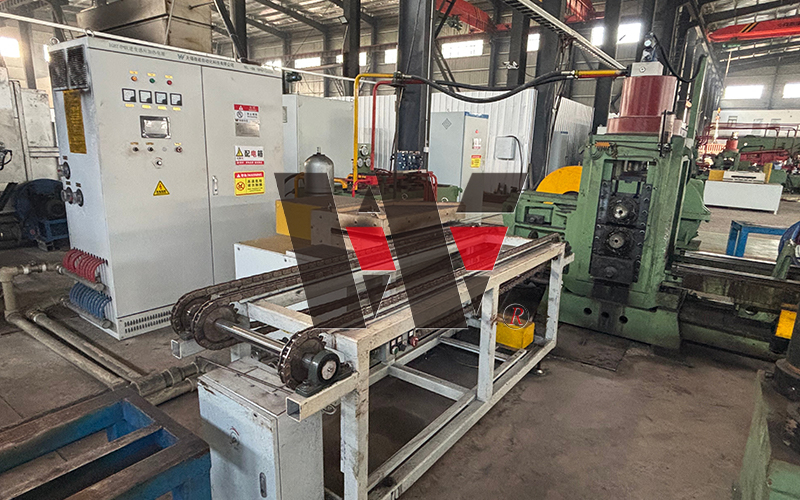
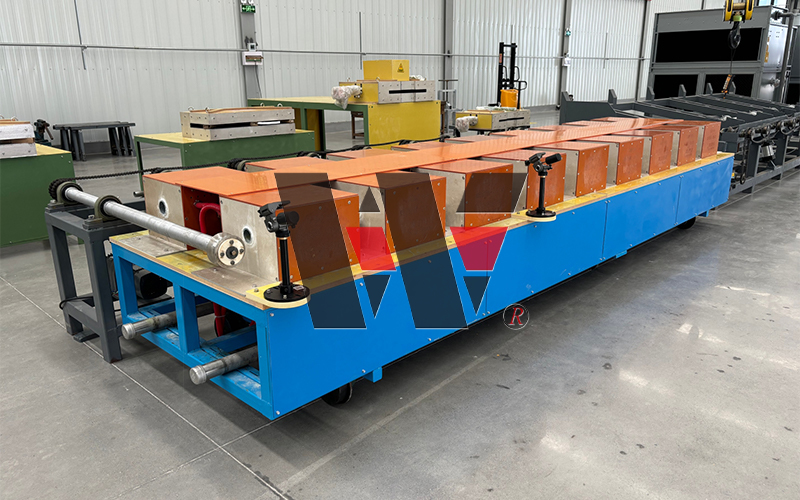
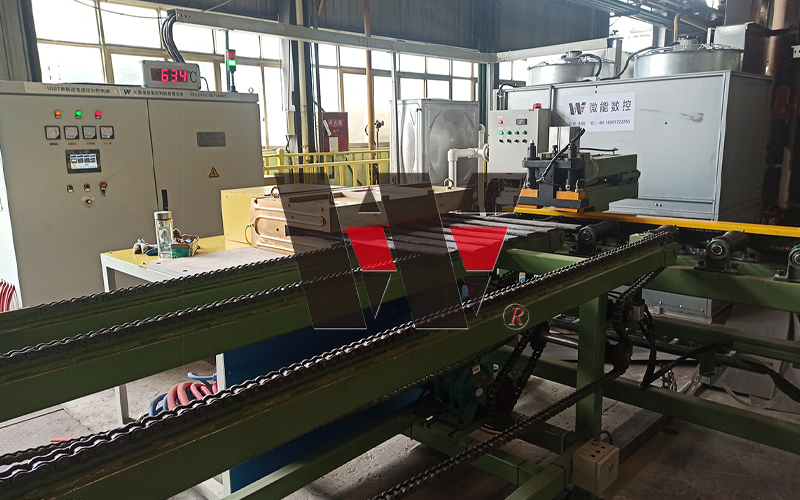
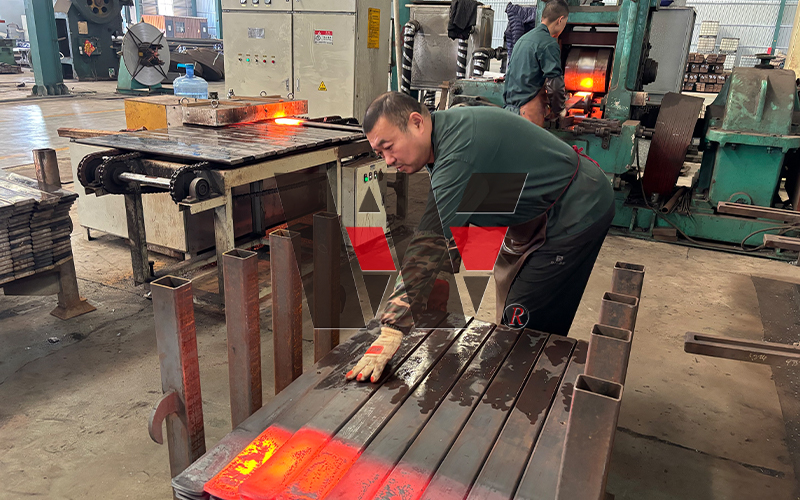
That narrower margin is exactly why furnace consistency matters more on EV-spec production than it did before. A dedicated quenching furnace for higher-strength spring steel, paired with a tempering furnace for consistent post-quench control, gives a manufacturer the repeatability these alloys need. Preheating stages matter just as much here — uneven preheat before final hardening is a common source of batch-to-batch variation, which is where automobile spring end induction heating equipment earns its keep.
Thinner Cross-Sections, Higher Stress: The Forming Precision Challenge
Weight reduction and higher load capacity pull in opposite directions, and the industry's answer has been thinner wire diameters combined with higher-strength steel to hold the same or greater load in a smaller cross-section. That trade-off puts more pressure on the forming stage. A rolling or coiling process that tolerates a small dimensional variation on a standard-duty spring can push a thinner, higher-stress EV spring outside its safe operating window.
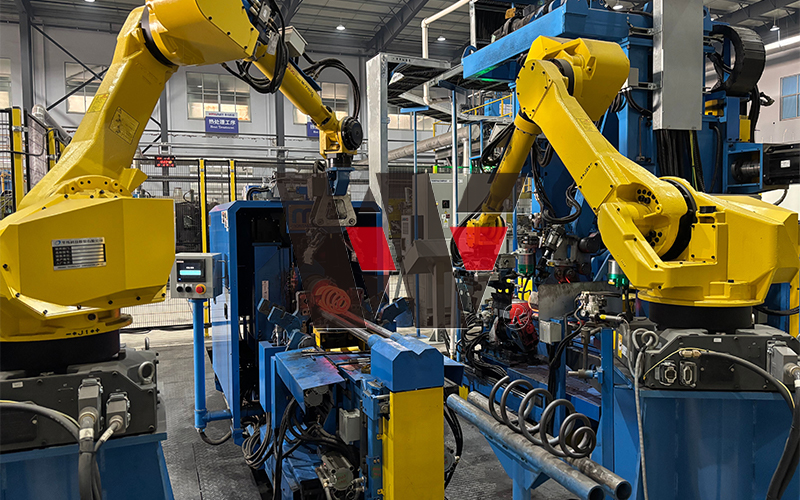
Consistency at the forming stage becomes the difference between a spring that meets its rated load and one that fails early under real-world cycling. A hot-coiled spring production line for precision forming that holds tight tolerances across every coil in a batch is what keeps a thinner, higher-strength design from turning into a reliability problem in the field.
No Engine Noise to Hide Behind: Why NVH Consistency Now Matters More
A combustion engine masks a certain amount of road and suspension noise simply by running. Remove that engine, and every clunk, squeak, or slight vibration from the suspension becomes noticeably more audible in the cabin — which is part of why EV programs tend to set stricter noise, vibration, and harshness targets than the combustion vehicles built on similar platforms.
For spring manufacturing, that raises the bar on dimensional and surface consistency across every part in a batch, not just the average. A spring that's slightly out of tolerance might have gone unnoticed in a combustion vehicle's overall noise floor; in an EV, the same variation can surface as a customer complaint. Manufacturing consistency has effectively become part of the NVH specification, even though it's rarely written that way in the drawing.
Fatigue Verification Becomes Non-Negotiable
Every factor above — higher load, thinner sections, higher-strength alloy — compounds risk in the same direction: a design that performs well in simulation but hasn't been verified under real cyclic loading. That's a costly assumption to get wrong on a component that fails catastrophically rather than gracefully.
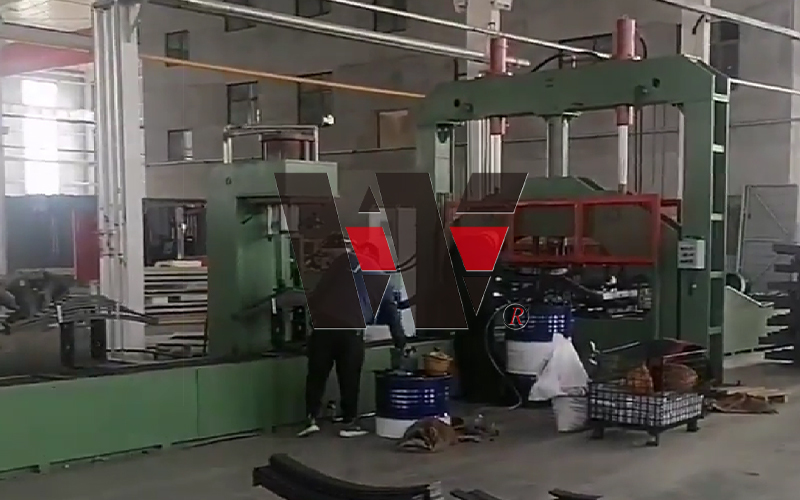
Running batches through a fatigue testing machine to verify performance under higher stress is what closes the loop between a heat treatment and forming process that looks correct on paper and one that's been confirmed to hold up under the load conditions an EV suspension actually sees. For EV-spec production, this step has moved from a periodic sampling check to something closer to a standard part of the production sign-off.
What This Means for Production Line Selection
Taken together, these shifts point toward the same conclusion: a production line built for standard-duty suspension springs isn't automatically suited to EV-spec output, even if it can technically produce a part that fits the same envelope. Furnace precision, forming tolerance, and testing capability all need to be evaluated against the higher, tighter targets EV platforms set, not just against what worked for combustion vehicle programs.
Manufacturers planning a new line or upgrading an existing one for EV suspension work are better served by evaluating heat treatment, forming, and testing stages as one connected system rather than sourcing each piece of equipment in isolation — since a bottleneck or inconsistency at any single stage undermines the load rating and fatigue performance the whole spring is built to deliver.
 [email protected]
 +86-18961722255


 English
 русский
 Español
 Automotive Suspension Spring Production Line Turnkey Solutions