Wuxi Weineng Automation Technology Co., Ltd. / Shandong Weineng Automation Technology Co., Ltd.
-
 [email protected]
-
 +86-18961722255


 English
 русский
 Español
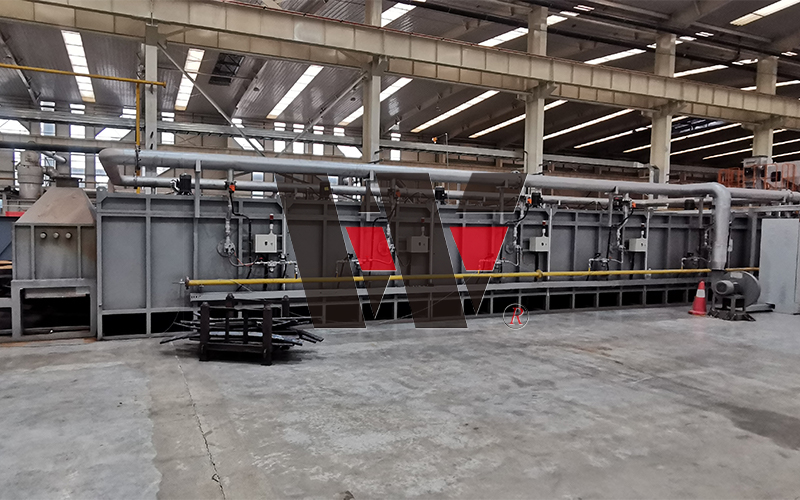
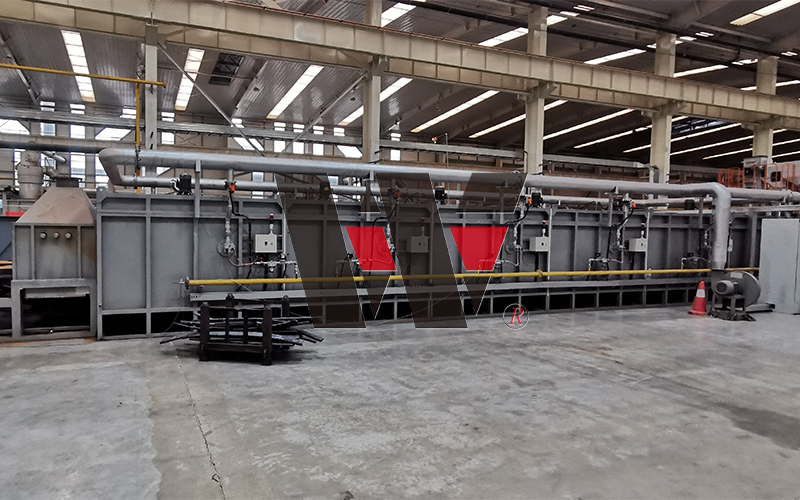
Tempering Furnace
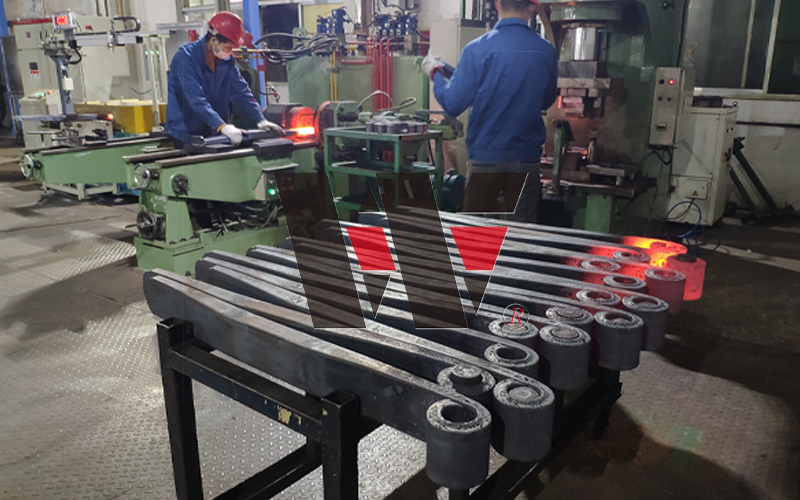
This tempering furnace is designed for independent operation or seamless integration into fully automatic heat treatment production lines.
The primary function of the equipment is to effectively eliminate internal stresses from the quenching process, optimizing the balance between hardness, toughness, and plasticity to enhance wear resistance and service life.
It demonstrates exceptional processing versatility, accommodating plate thicknesses from 1mm to 500mm, lengths up to 12,000mm, and widths up to 4,000mm, suitable for a wide range of component specifications.
With design power ranging from 10kW to 2,000kW, the system maintains high temperature precision between ±2°C and ±5°C and supports protective atmospheres like nitrogen or argon to prevent oxidation and ensure surface quality.
Engineered for energy efficiency and uniform heating, the furnace features multiple induction opening configurations—including single-sided, double-sided, and adjustable options—with production cycles flexible between 10 and 180 minutes.
| parameter scope | |
| Heating thickness range | 1 mm to 500 mm |
| Heating length range | 500 mm to 12000 mm |
| Heating width range | 100 mm to 4000 mm |
| Heating temperature range | 850 °C to 950 °C |
| Equipment design power | 10 kW to 2000 kW |
| Equipment production cycle time | 10 minutes to 180 minutes |
| Induction heater opening method | Single-sided opening, double-sided opening, annular opening, adjustable opening |
Advantages of tempering furnaces:
Stress relief: Tempering can effectively remove the internal stress generated during quenching, preventing the metal from cracking or deforming during subsequent processing.
Improved toughness and ductility: Tempered metals have better toughness and ductility, making them suitable for making parts that require high toughness.
Optimize hardness: Tempering can bring the hardness of metal to a balance point, neither too hard nor too soft, which is suitable for parts that require high strength and wear resistance.
Improved wear resistance: Tempered metal materials are more wear-resistant and can extend their service life.
Energy-saving and environmentally friendly: Modern tempering furnaces have been optimized in terms of energy consumption, making them more energy-efficient than traditional furnaces. They also have a better temperature control system, reducing exhaust emissions.
Common parameters of tempering furnaces:
Operating temperature: The tempering temperature is generally between 150℃ and 650℃, depending on the type of metal material and requirements.
Temperature control accuracy: Precise temperature control can ensure the tempering effect. Common temperature control accuracy is ±2℃ to ±5℃.
Heating methods: Common heating methods include electric heating, gas heating, and coal heating. Modern industry typically uses electric heating and gas heating.
Furnace capacity: The capacity of tempering furnaces can vary depending on the usage requirements. Common capacities include 100L, 200L, and 500L, while larger industrial-scale furnaces can have capacities of 1000L or more.
Heating uniformity: To ensure a good tempering effect, heating uniformity is very important. The furnace is usually designed with multiple temperature control points to ensure that heating is uniform in all parts.
Cooling methods: Cooling systems are generally divided into natural cooling, air cooling and water cooling, etc. Choosing the right cooling method can affect the properties of the metal after tempering.
Furnace atmosphere: Some tempering furnaces use protective atmospheres such as nitrogen and argon to prevent oxidation and improve workpiece quality.
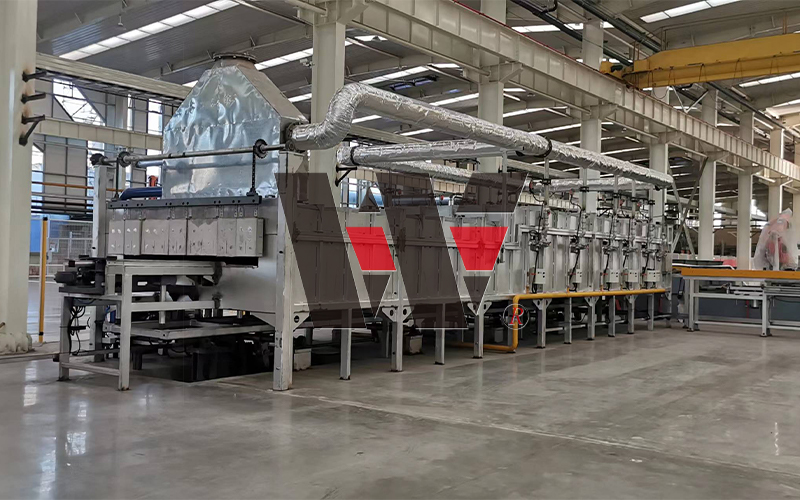
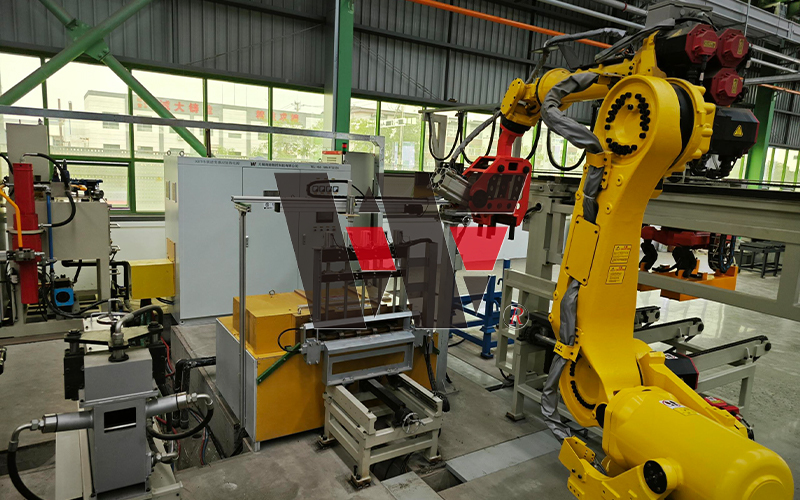
Related Products
About Us
Wuxi Weineng Automation Technology Co., Ltd.
Wuxi Weineng Automation Technology Co., Ltd. located in Wuxi, the Pearl of Taihu Lake, covers an area of 6,000 square meters and currently employs over 60 people. In 2016, the company's founding team began researching and developing complete sets of equipment for automotive leaf springs, hot-coiled springs, and stabilizer bars. Tempering Furnace Supplier in China. To date, they have been deeply involved in this industry for 10 years and are recognized as a specialized, innovative, and distinctive enterprise in this field by the Ministry of Industry and Information Technology.
The company integrates R&D, production, sales, and service. Its main products include complete sets of automotive leaf spring equipment and stabilizer bar equipment, including stabilizer bar end induction heating equipment, stabilizer bar thermoforming induction heating equipment, hollow stabilizer bar double-end induction heating equipment, hollow bar resistance conduction heating production lines, stabilizer bar secondary vulcanization production lines, and hot-coiled spring equipment. The company also provides users with complete induction heating automated production lines. Tempering Furnace Factory in China.
Over the years, the company has served leading domestic enterprises such as Shanghai China Spring Manufacturing Co., Ltd., Huawei Technology Co., Ltd., Zhejiang Meili Technology Co., Ltd., Zhejiang Jinsheng Auto Parts Co., Ltd., Chengdu ThyssenKrupp Fawer Spring Co., Ltd., Pinghu ThyssenKrupp (Pinghu) Automotive Stabilizer Bar Co., Ltd., and Liaoyang ThyssenKrupp Fawer Spring Co., Ltd., earning high praise for its products and services. Furthermore, the company has exported its equipment to countries such as Turkey, South Korea, India, Brazil, Egypt, Dubai, Iran, Africa, Tunisia and Morocco. "Professionalism, precision, innovation, and integrity" are the development concepts that the company has always adhered to. While continuously strengthening its own scientific research capabilities, it has formed stable industry-university-research cooperation with many universities. It has been repeatedly rated as a high-tech enterprise and a specialized and innovative enterprise. In the future, the company will continue to deepen its research and development in the automotive leaf spring, automotive guide arm, automotive stabilizer bar and spring industry equipment, provide the spring industry with more professional, intelligent and sophisticated equipment products, and contribute to the high-quality development of the global automotive leaf spring, automotive stabilizer bar and hot-coil spring industries.
The company integrates R&D, production, sales, and service. Its main products include complete sets of automotive leaf spring equipment and stabilizer bar equipment, including stabilizer bar end induction heating equipment, stabilizer bar thermoforming induction heating equipment, hollow stabilizer bar double-end induction heating equipment, hollow bar resistance conduction heating production lines, stabilizer bar secondary vulcanization production lines, and hot-coiled spring equipment. The company also provides users with complete induction heating automated production lines. Tempering Furnace Factory in China.
Over the years, the company has served leading domestic enterprises such as Shanghai China Spring Manufacturing Co., Ltd., Huawei Technology Co., Ltd., Zhejiang Meili Technology Co., Ltd., Zhejiang Jinsheng Auto Parts Co., Ltd., Chengdu ThyssenKrupp Fawer Spring Co., Ltd., Pinghu ThyssenKrupp (Pinghu) Automotive Stabilizer Bar Co., Ltd., and Liaoyang ThyssenKrupp Fawer Spring Co., Ltd., earning high praise for its products and services. Furthermore, the company has exported its equipment to countries such as Turkey, South Korea, India, Brazil, Egypt, Dubai, Iran, Africa, Tunisia and Morocco. "Professionalism, precision, innovation, and integrity" are the development concepts that the company has always adhered to. While continuously strengthening its own scientific research capabilities, it has formed stable industry-university-research cooperation with many universities. It has been repeatedly rated as a high-tech enterprise and a specialized and innovative enterprise. In the future, the company will continue to deepen its research and development in the automotive leaf spring, automotive guide arm, automotive stabilizer bar and spring industry equipment, provide the spring industry with more professional, intelligent and sophisticated equipment products, and contribute to the high-quality development of the global automotive leaf spring, automotive stabilizer bar and hot-coil spring industries.
News
-
Industry News Oct. 16. 2026
-
Industry News Oct. 10. 2026
-
Industry News Sep. 28. 2026
-
Do You Have Any Questions?
Let's
Discuss! -
Quick
Home Products / Equipment About Us Services Application News Contact Us -
Product Categories
Automobile Leaf Spring Complete Equipment Automobile Stabilizer Bar Complete Equipment Automobile Spring Complete Equipment Automotive guide arm complete equipment Oil Drilling Pipe Complete Equipment
-
Email Us
[email protected] [email protected] -
Address
Yangxiyuan Village, Luoshe Town, Huishan District, Wuxi City, Jiangsu Province, China -
Call Us Now
+86-18151713891 +86-18961722255 +86-18961507976 -
WhatsApp
+86-18151713891 +86-18961507976
Copyright © 2026 by Wuxi Weineng Automation Technology Co., Ltd. All Rights Reserved.
 Custom Tempering Furnace Factory
Custom Tempering Furnace Factory