Wuxi Weineng Automation Technology Co., Ltd. / Shandong Weineng Automation Technology Co., Ltd.
-
 [email protected]
-
 +86-18961722255


 English
 русский
 Español
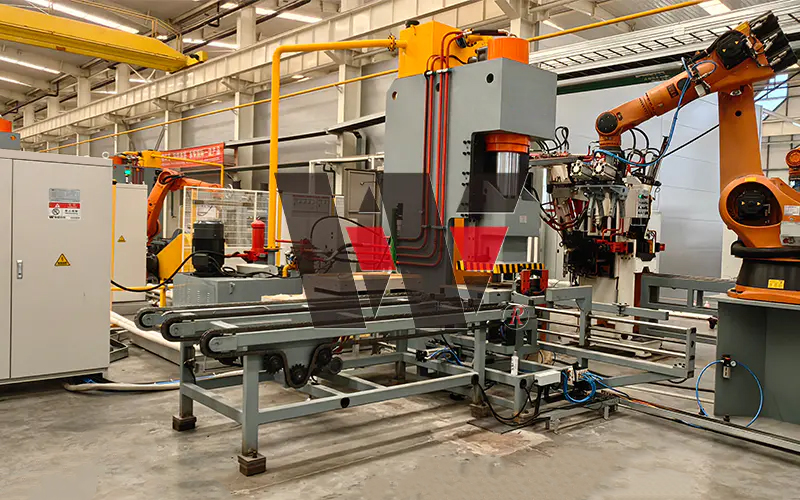
Fully Automatic Leaf Spring Ear Curling Production Line
Multi-functional Integrated Processing: Specifically designed for automotive leaf spring end processing, this line efficiently handles plain curling, plain wrapping, center curling, and center wrapping, offering exceptional production flexibility.
Superior Machining Precision: Featuring a high-rigidity mainframe, crank-swing clamping heads, and precise stroke pressing technology, the line ensures excellent ear shape, roundness, and gap quality. The inner diameter tolerance is kept within 0.3mm, and the center distance tolerance reaches ±1.5mm.
High Automation and Intelligent Control: Controlled by a Siemens PLC system and an HMI touchscreen, the line allows operators to simply input product parameters for automatic setup. It achieves a production efficiency of 3-5 heads per minute and supports continuous three-shift operations.
Integrated Precision Induction Heating: The line integrates advanced induction heating systems, maintaining precise leaf spring heating temperatures at 975±25℃ (or 950±30℃ depending on requirements), providing optimal conditions for forming.
Lean Data Management: The control cabinet is equipped with digital meters featuring communication ports, supporting the collection and management of production data, fault alarms, and maintenance schedules for digital factory integration.
| Steel plate thickness | ≤ 25mm |
| Maximum board width | 120 mm |
| Inner diameter of rolled ear | Φ 25 — Φ 130 mm |
| Ear inner diameter | Φ 50 — Φ 160 mm |
| Ear inner diameter / ear plate thickness | > 1.2 5 |
| The distance between the centers of the two ears is | 850-2000 mm (central positioning). |
| 300 — 2200 mm (end positioning) | |
| The tolerance for the center distance between the two ears is ±1.5 mm . | |
| The inner diameter tolerance of the rolled ear is 0.3 mm . | |
| Processed varieties include flat rolled ear, flat wrapped ear, center rolled ear, and center wrapped ear. | |
| The ear-rolling method involves rolling the ear in one go. | |
| Production efficiency | 3-5 heads/minute |
| The required heating temperature for leaf springs is 975±25℃. | |
| Arrangement | left-cut, right-roll |
| Total power | 30KW |
Equipment Uses
This machine is used to produce flat rolled ears, flat wrapped ears, center rolled ears, and center wrapped ears at the ends of automotive leaf springs. The equipment is highly rigid and capable, and can be used for bracket rolled ear production with high efficiency.
Equipment composition: one set
One set of ear-rolling main unit, one set of head-cutting main unit, hydraulic system and electrical control system, etc.
Other technical requirements for equipment
1. The control cabinet is equipped with an exhaust fan and an electricity meter with a data output communication port for convenient data acquisition and management. It is designed with information modules for production operation, fault alarm feedback, maintenance and other functions.
2. The equipment allows users to input product parameters via a touchscreen, and the control system automatically sets the equipment's operation.
3. The equipment is capable of continuous operation, allowing for three shifts of production per day;
4. The PLC uses Siemens products;
5. The main electrical control components are Chint products;
6. The pneumatic components are from airTAC.
7. The main hydraulic valves are products of Beijing Huade Technology.
8. Equipment color: Paint according to the equipment color swatch provided by the customer or use RAL6011 (fruit green).
Equipment environmental requirements
1. Compressed air source: pressure ≥ 0.5 MPa;
2. Power supply: Three-phase four-wire: AC380V, 50Hz;
3. Factory ambient temperature: 10~50℃. It also has good ventilation and a relative humidity of 40-75%.
4. The cooling water temperature of the hydraulic system shall not exceed 35℃.
Equipment technical data
| 1. Plan view, foundation map | 1 copy |
| 2. Electrical schematic diagram, wiring diagram, hydraulic schematic diagram | 1 copy |
| 3. Operating instructions (must include lubrication diagram, maintenance guidelines, and layout diagram) | 1 copy |
| 4. Consumable parts diagram (consumable parts list) | 1 copy |
| 5. List of purchased parts and instruction manuals for major purchased components | 1 copy |
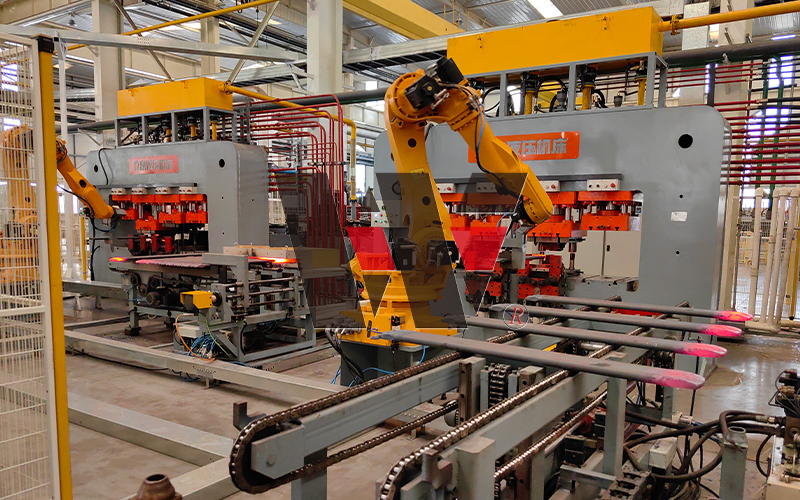
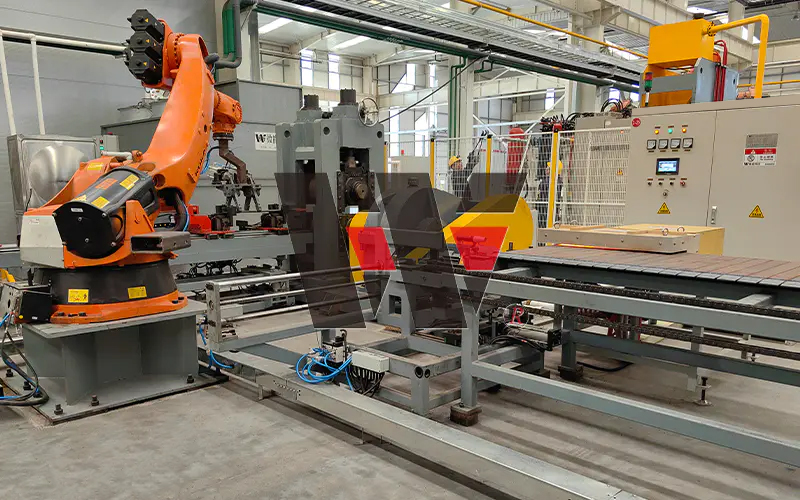
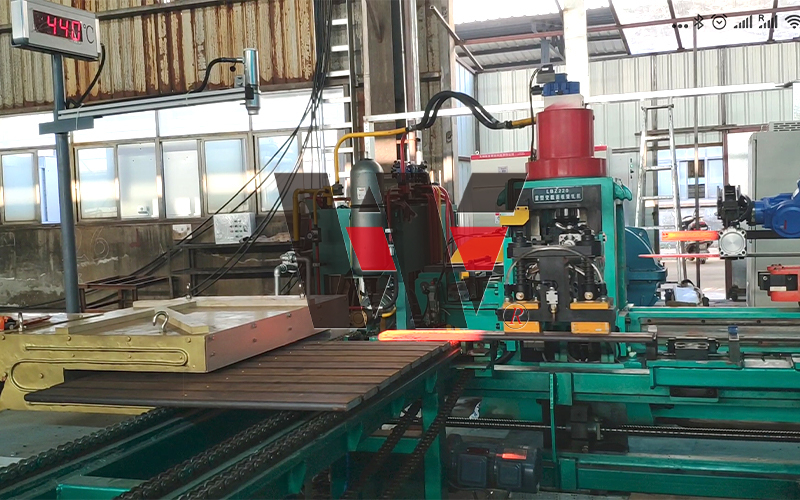
Related Products
About Us
Wuxi Weineng Automation Technology Co., Ltd.
Wuxi Weineng Automation Technology Co., Ltd. located in Wuxi, the Pearl of Taihu Lake, covers an area of 6,000 square meters and currently employs over 60 people. In 2016, the company's founding team began researching and developing complete sets of equipment for automotive leaf springs, hot-coiled springs, and stabilizer bars. Fully Automatic Leaf Spring Ear Curling Production Line Supplier in China. To date, they have been deeply involved in this industry for 10 years and are recognized as a specialized, innovative, and distinctive enterprise in this field by the Ministry of Industry and Information Technology.
The company integrates R&D, production, sales, and service. Its main products include complete sets of automotive leaf spring equipment and stabilizer bar equipment, including stabilizer bar end induction heating equipment, stabilizer bar thermoforming induction heating equipment, hollow stabilizer bar double-end induction heating equipment, hollow bar resistance conduction heating production lines, stabilizer bar secondary vulcanization production lines, and hot-coiled spring equipment. The company also provides users with complete induction heating automated production lines. Fully Automatic Leaf Spring Ear Curling Production Line Factory in China.
Over the years, the company has served leading domestic enterprises such as Shanghai China Spring Manufacturing Co., Ltd., Huawei Technology Co., Ltd., Zhejiang Meili Technology Co., Ltd., Zhejiang Jinsheng Auto Parts Co., Ltd., Chengdu ThyssenKrupp Fawer Spring Co., Ltd., Pinghu ThyssenKrupp (Pinghu) Automotive Stabilizer Bar Co., Ltd., and Liaoyang ThyssenKrupp Fawer Spring Co., Ltd., earning high praise for its products and services. Furthermore, the company has exported its equipment to countries such as Turkey, South Korea, India, Brazil, Egypt, Dubai, Iran, Africa, Tunisia and Morocco. "Professionalism, precision, innovation, and integrity" are the development concepts that the company has always adhered to. While continuously strengthening its own scientific research capabilities, it has formed stable industry-university-research cooperation with many universities. It has been repeatedly rated as a high-tech enterprise and a specialized and innovative enterprise. In the future, the company will continue to deepen its research and development in the automotive leaf spring, automotive guide arm, automotive stabilizer bar and spring industry equipment, provide the spring industry with more professional, intelligent and sophisticated equipment products, and contribute to the high-quality development of the global automotive leaf spring, automotive stabilizer bar and hot-coil spring industries.
The company integrates R&D, production, sales, and service. Its main products include complete sets of automotive leaf spring equipment and stabilizer bar equipment, including stabilizer bar end induction heating equipment, stabilizer bar thermoforming induction heating equipment, hollow stabilizer bar double-end induction heating equipment, hollow bar resistance conduction heating production lines, stabilizer bar secondary vulcanization production lines, and hot-coiled spring equipment. The company also provides users with complete induction heating automated production lines. Fully Automatic Leaf Spring Ear Curling Production Line Factory in China.
Over the years, the company has served leading domestic enterprises such as Shanghai China Spring Manufacturing Co., Ltd., Huawei Technology Co., Ltd., Zhejiang Meili Technology Co., Ltd., Zhejiang Jinsheng Auto Parts Co., Ltd., Chengdu ThyssenKrupp Fawer Spring Co., Ltd., Pinghu ThyssenKrupp (Pinghu) Automotive Stabilizer Bar Co., Ltd., and Liaoyang ThyssenKrupp Fawer Spring Co., Ltd., earning high praise for its products and services. Furthermore, the company has exported its equipment to countries such as Turkey, South Korea, India, Brazil, Egypt, Dubai, Iran, Africa, Tunisia and Morocco. "Professionalism, precision, innovation, and integrity" are the development concepts that the company has always adhered to. While continuously strengthening its own scientific research capabilities, it has formed stable industry-university-research cooperation with many universities. It has been repeatedly rated as a high-tech enterprise and a specialized and innovative enterprise. In the future, the company will continue to deepen its research and development in the automotive leaf spring, automotive guide arm, automotive stabilizer bar and spring industry equipment, provide the spring industry with more professional, intelligent and sophisticated equipment products, and contribute to the high-quality development of the global automotive leaf spring, automotive stabilizer bar and hot-coil spring industries.
News
-
Industry News Oct. 16. 2026
-
Industry News Oct. 10. 2026
-
Industry News Sep. 28. 2026
-
Do You Have Any Questions?
Let's
Discuss! -
Quick
Home Products / Equipment About Us Services Application News Contact Us -
Product Categories
Automobile Leaf Spring Complete Equipment Automobile Stabilizer Bar Complete Equipment Automobile Spring Complete Equipment Automotive guide arm complete equipment Oil Drilling Pipe Complete Equipment
-
Email Us
[email protected] [email protected] -
Address
Yangxiyuan Village, Luoshe Town, Huishan District, Wuxi City, Jiangsu Province, China -
Call Us Now
+86-18151713891 +86-18961722255 +86-18961507976 -
WhatsApp
+86-18151713891 +86-18961507976
Copyright © 2026 by Wuxi Weineng Automation Technology Co., Ltd. All Rights Reserved.
 Custom Fully Automatic Leaf Spring Ear Curling Production Line Factory
Custom Fully Automatic Leaf Spring Ear Curling Production Line Factory